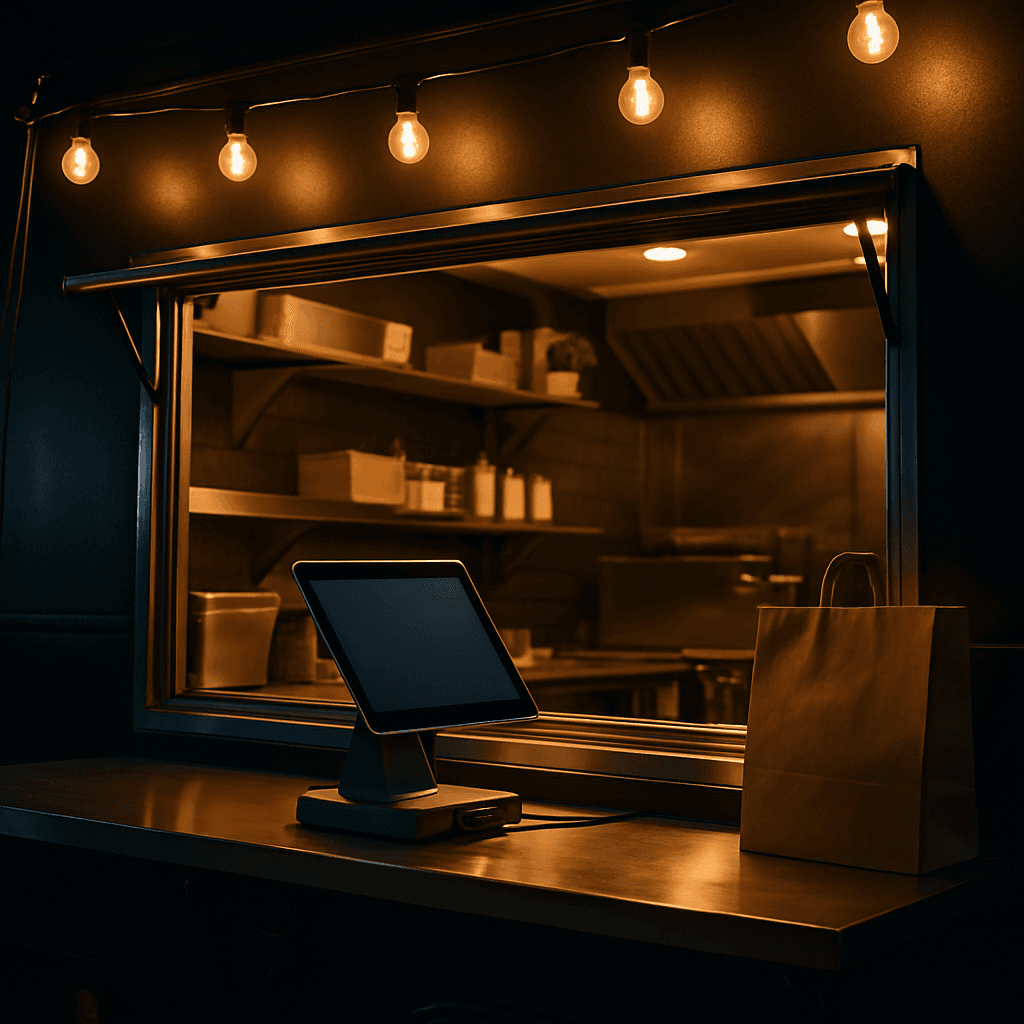
Best Power Station for Food Trucks and Vendors (2026)
The short answer: a 2,000Wh-class station such as the Bluetti Elite 200 V2 ($899) or Jackery Explorer 2000 v2 ($899 on sale) is enough for a light-service cart: POS, lighting, a small fridge, and phone charging. If you run a full-size commercial refrigerator or freezer, a 4,000Wh unit such as the EcoFlow DELTA Pro 3 ($2,799) is the safer fit, because commercial cold storage uses far more than the 60-150W people often assume. No portable station should run a griddle, fryer, or full oven. Keep that on propane or a dedicated generator.
What a Vendor Setup Needs
- Enough watt-hours for a full service day, or a plan to recharge in between shifts.
- Enough continuous output for everything running at once, including compressor start-up surges.
- Silent, emission-free operation, which is useful at a service window and where local rules limit generators.
- A fast recharge, because you often have only overnight (or a few hours) at a commissary or home.
Real Refrigeration Loads (This Is Where People Under-Size)
Small-cooler numbers (60-150W average) fit a countertop or dorm fridge, not a commercial reach-in. For a reference point, ENERGY STAR sets maximum daily energy use for qualifying commercial solid-door units (ENERGY STAR criteria):
| Unit | Formula | Example | Max per day | Average draw |
|---|---|---|---|---|
| Solid-door refrigerator, 15-30 ft³ | 0.05V + 0.45 kWh | 23 ft³ | 1.6 kWh | about 67W |
| Solid-door freezer, 15-30 ft³ | 0.12V + 2.248 kWh | 20 ft³ | 4.65 kWh | about 194W |
Those are maximums for efficient (ENERGY STAR) models under test conditions. Non-qualifying units use more, and real service with frequent door openings uses more still. A single reach-in freezer can therefore consume more than a 2,000Wh station holds in a day, so confirm the label wattage and daily kWh of your actual equipment before buying. For cold holding, the FDA Food Code sets 41°F (5°C) or below for time/temperature control for safety foods, so refrigeration is not optional to lose.
Estimating Your Load
Use the labeled wattage of each device, not a guess; our food truck wattage guide shows the step-by-step method. Typical numbers:
| Equipment | Typical running watts |
|---|---|
| POS tablet and card reader | 10-20W |
| String/task lighting (LED) | 20-60W |
| Countertop or small undercounter fridge | 60-150W average |
| Commercial reach-in refrigerator | up to about 70W average if ENERGY STAR qualified; more if not |
| Commercial reach-in freezer | up to about 200W average if ENERGY STAR qualified; more if not |
| Blender (intermittent) | 300-1,000W |
| Induction burner | 1,000-1,800W |
An induction burner at 1,800W empties a 2,000Wh station in roughly an hour, so it does not belong on one for a full day. Griddles, fryers, and ovens typically exceed what a portable unit can support and should stay on propane or a generator.
Our Top Picks
Specs are from each brand's site, checked October 3, 2026. Measured figures are from StorageReview (Elite 200 V2) and OutdoorGearLab (Jackery 2000 v2, DELTA Pro 3). We have not tested these ourselves.
| Bluetti Elite 200 V2 | Jackery Explorer 2000 v2 | Anker C2000 Gen 2 | EcoFlow DELTA Pro 3 | |
|---|---|---|---|---|
| Capacity | 2,073.6Wh | 2,042Wh | 2,048Wh | 4,096Wh |
| Measured usable | 1.91kWh | about 1,710-1,740Wh | no test found | 3,790Wh |
| Output | 2,600W | 2,200W | 2,400W | 4,000W (6,000W X-Boost), 120/240V |
| Weight | 53.4 lb | 38.9 lb | 41.7 lb | 114.1 lb |
| Full recharge on AC | about 1.4 hours | 2.5 hours | 88 min (58 min with solar) | 3.2 hours (80% in 50 min) |
| Price | $899 | $899 (sale) | $999.99 | $2,799 |
Light-service carts and vendors (POS, lights, small fridge, phone charging): the Bluetti Elite 200 V2 gives the most capacity per dollar and the fastest AC refill, and 1,000W of solar input helps at outdoor markets. The Jackery Explorer 2000 v2 (OutdoorGearLab ranked it #1 of 14) is 14 lb lighter, which matters if you load and unload every day. The Anker C2000 Gen 2 (see our F2000 review for how it relates to the older model) sits in the middle on weight and recharges fastest when you have AC and solar together.
Full-size cold storage or heavier days: the EcoFlow DELTA Pro 3 holds twice the energy, supports 240V, and can expand, but it weighs 114 lb. Expect it to live in the truck, not move with you. For a still larger system, see the EcoFlow Delta Pro Ultra.
Runtime Math for a Typical Day
Using measured usable energy (about 1,900Wh for the Elite 200 V2 class, about 3,790Wh for the DELTA Pro 3):
| Setup | Daily need | Fits |
|---|---|---|
| Light cart: POS 120Wh + lighting 240Wh + small fridge 640Wh + phones 30Wh | about 1,030Wh (about 1,290Wh with a 25% margin) | Any 2,000Wh unit, with margin |
| Same cart, with the small fridge swapped for an efficient reach-in refrigerator (390Wh + 1,600Wh) | about 2.0 kWh | A 2,000Wh unit is marginal; a DELTA Pro 3 is comfortable |
| Same cart plus a reach-in freezer (390Wh + 1,600Wh + 4,650Wh) | about 6.6 kWh | More than one unit, or a generator or shore power |
Recharging Between Shifts
Most vendors recharge overnight on AC. From the table above, a 2,000Wh-class unit refills in about 1.5 to 2.5 hours, and the DELTA Pro 3 in about 3.2 hours, so an overnight plug-in is enough. For back-to-back events without overnight power, carry a second unit, expand capacity, or add solar, rather than stretching one unit across several days.
Health Department and Fire Marshal Considerations
Rules vary by city and county. Food inspectors and fire marshals may have requirements for equipment near cooking areas, cord management, and where batteries or generators sit relative to propane and your service window. Ask your local health department and fire marshal before your first inspection. Keep the unit and cables organized, away from cooking heat and grease; that is often a literal inspection point.
Seasonal Vendors: Storage Between Seasons
If you only operate seasonally, don't leave the station at whatever charge it had at the end of the season. Store it at roughly 50-60% charge and check on it periodically; see our maintenance guide for storage best practices so it's ready when the season starts.
Disclosure: WattStation HQ may earn a commission if you purchase through links on this page, at no extra cost to you. This does not affect our rankings — see our editorial policy.
Frequently Asked Questions
What size power station does a food truck need?
For a light-service cart (POS, lighting, a small fridge, phones), about 1,300Wh with a 25% margin, so a 2,000Wh-class unit. A commercial reach-in refrigerator can use up to about 1.6 kWh per day even when efficient, and a reach-in freezer up to about 4.65 kWh, so those need a larger unit or more than one. Check each appliance's label for its real number.
Can a power station run a food truck's main cooking equipment?
Generally no. Griddles, fryers, and ovens typically draw more than a portable station can sustain across a service day. Keep cooking on propane or a dedicated generator and use battery power for lighting, POS, refrigeration, and small appliances.
Is a power station allowed at farmers markets and festivals where generators are banned?
Many events that restrict gas generators for noise or emissions allow battery stations because they are silent and emission-free. Confirm with the specific event's rules, since policies vary by venue.
How do I keep food cold if the power station runs out?
Cold-hold at 41°F (5°C) or below per the FDA Food Code. Plan a backup, such as ice or a second unit, and check your local health department's rules on what to do if cold holding fails during service.
Related Articles
 Comparisons & Buying Guides
Portable Power Station vs. Whole-Home Battery System: Which Do You Actually Need?
A Tesla Powerwall costs $11,500-$16,000+ installed. A portable power station covers most of the same essentials for a fraction of that. Here's how to actually decide.
 Comparisons & Buying Guides
Power Bank vs. Power Station: What's the Real Difference?
They both store and dispense electricity, but a power bank and a power station aren't interchangeable. Here's what actually separates them and which one you need.
 Comparisons & Buying Guides
Can You Rent a Portable Power Station Instead of Buying One?
Renting is a real option if you only need backup power for a single trip or event. Here's where to actually rent one, real costs, and when renting beats buying.