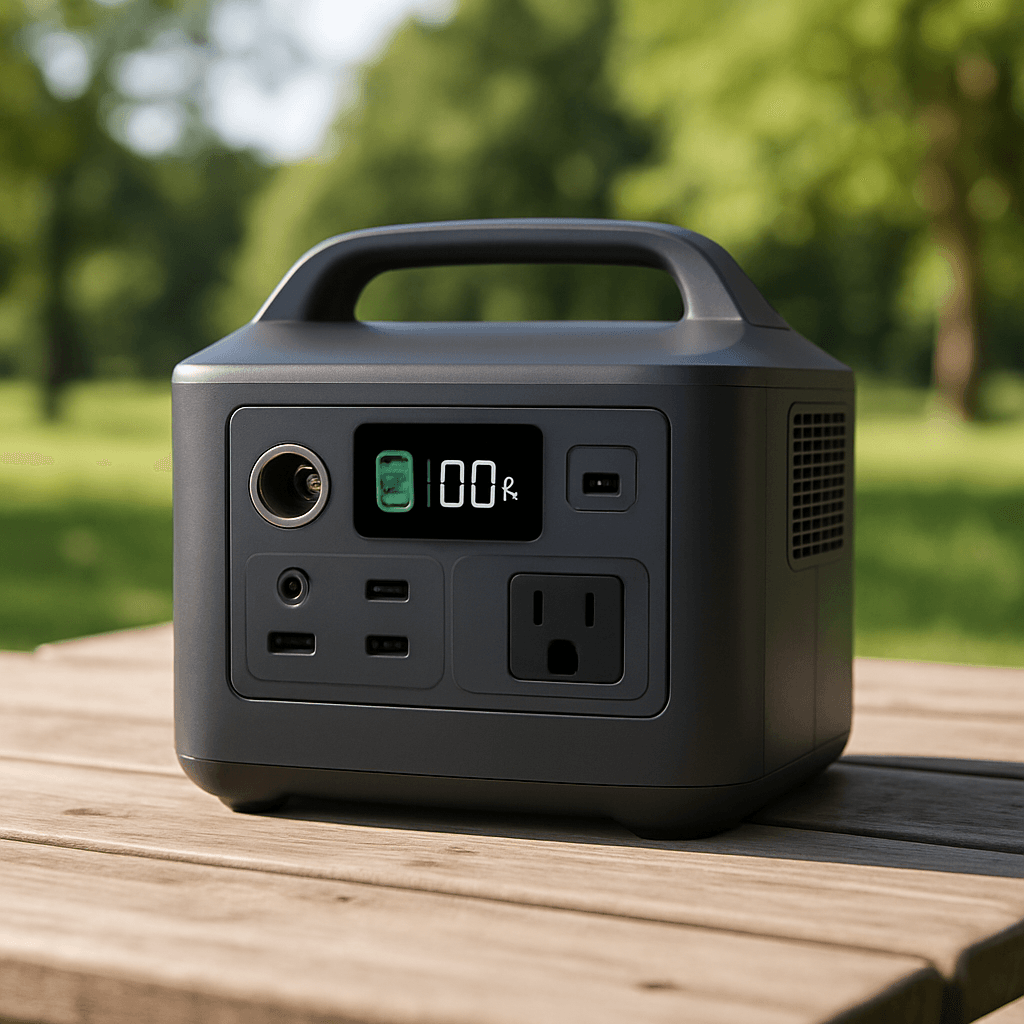
Anker SOLIX C1000 Review: Gen 1 Analysis and How Gen 2 Compares
This page contains affiliate links. See our affiliate disclosure.
The short answer: the original Anker SOLIX C1000 is a solid 1,056Wh unit with 1,800W of output, and it is the only version of the C1000 that can add an expansion battery (taking it to 2,112Wh). But for most buyers the newer C1000 Gen 2 is the better purchase: it is lighter, charges faster, offers 2,000W, and OutdoorGearLab's testing recommends it over the original. Buy the Gen 1 only if you specifically need expansion or the built-in light, and ideally at a deep discount. Last Black Friday it sold for $499, 50% off its $999 list price, per Electrek.
Spec Sheet (Gen 1)
Specs are cross-checked against Anker's official SOLIX C1000 page; test figures come from OutdoorGearLab's review (May 2025), an independent test we did not run ourselves.
| Spec | Value |
|---|---|
| Capacity | 1,056Wh (expandable to 2,112Wh with the BP1000 battery) |
| Measured usable AC energy | 897Wh (85% of rated), per OutdoorGearLab |
| Continuous AC output | 1,800W (2,400W surge) |
| Battery chemistry | LiFePO4, 3,000 cycles to 80% |
| Weight | 28.4 lb (Anker); 28.65 lb as measured |
| AC recharge | Anker: under 1 hour, 43 minutes to 80%. Measured: 88 minutes standard, 65 minutes in ultra-fast mode |
| Max solar input | 600W |
| Ports | 6 AC outlets, 2 USB-A, 2 USB-C (100W and 30W), 12V car port |
| Warranty | 5 years |
| Price | $999 list; $499 at Black Friday 2025 |
What Independent Testing Found
OutdoorGearLab scored the original C1000 66/100. It praised the fast charging, display, UPS capability, and built-in light. Its listed drawbacks: a "loud fan" (it called it "one of the loudest models tested," particularly near maximum output) and a high price. Note the charging gap: Anker's spec is a full charge in under an hour, while OutdoorGearLab measured 88 minutes on standard charging and 65 minutes with ultra-fast mode switched on.
Gen 1 vs Gen 2
| C1000 (Gen 1) | C1000 Gen 2 | |
|---|---|---|
| Capacity | 1,056Wh | 1,024Wh |
| AC output | 1,800W (2,400W surge) | 2,000W |
| Measured usable | 897Wh (85%) | 890Wh (87%) |
| AC recharge (measured) | 88 min (65 ultra-fast) | 56 min (49 ultra-fast) |
| Weight | 28.65 lb | 25.2 lb |
| Expansion battery | Yes, to 2,112Wh | No |
| Built-in light | Yes | No |
| Fan | "One of the loudest" | "Frustratingly loud" near max |
| OutdoorGearLab score | 66 | 70 (Best Value for Most People) |
| Price seen | $499 (Black Friday 2025) | about $429 (Amazon deals, 2026) |
Both are good value, and both have loud fans at high loads. The Gen 2 gives up expansion and the light in exchange for lower weight, faster charging, and a lower street price. See our best power stations under $500 for how it compares with the Jackery, Bluetti, and EcoFlow alternatives.
The Tradeoffs
- 1,056Wh is enough for essentials, not whole-home backup on its own, though the BP1000 expansion battery can double it.
- The fan is loud under heavy load in independent testing; it is not a unit to run in a bedroom at full output.
- Full list price is not competitive. The value case depends on a sale, which has been frequent but is not guaranteed.
What You Can Actually Run On It
Based on the measured 897Wh of usable energy:
- Mini fridge (80W average): about 11 hours
- Full-size refrigerator (150W average): about 6 hours
- CPAP, 40W without humidifier, 8-hour nights: about 2.8 nights (about 1.4 with a heated humidifier)
- Laptop charging (about 55Wh per charge): about 16 charges
- Window AC (900W): about 1 hour
Calculate your specific needs with our wattage sizing guide.
Final Verdict
The original C1000 remains a capable, well-specified unit, and its expansion option is a real advantage that the Gen 2 dropped. For most buyers, though, the Gen 2 offers more output, faster charging, and a lower price, so we would buy that unless the expansion battery matters to you. It suits budget-conscious buyers who still want serious output: apartment dwellers, campers, and CPAP users who want headroom to run a mini fridge or a space heater briefly alongside medical equipment.
Disclosure: WattStation HQ may earn a commission if you purchase through links on this page, at no extra cost to you. This does not affect our rankings — see our editorial policy.
Frequently Asked Questions
Does the Anker SOLIX C1000 support an expansion battery?
The original (Gen 1) does: Anker's BP1000 expansion battery doubles capacity to 2,112Wh. The Gen 2 does not support expansion.
Should I buy the C1000 or the C1000 Gen 2?
Most buyers should choose the Gen 2. In OutdoorGearLab's July 2026 testing it was lighter (25.2 lb versus 28.65 lb), charged in 56 minutes versus 88, and cost less. Choose the Gen 1 only if you need expansion or the built-in light.
What is SurgePad and how does it work?
SurgePad is Anker's technology for briefly boosting output above the rated continuous wattage (up to 2,400W from an 1,800W base) to handle the startup surge of motor-driven appliances like fridges and pumps without tripping the unit.
Is the SOLIX C1000 worth buying at full price?
No. At the $999 list price, several competitors offer comparable or better value. Its case rests on sales: it was $499 at Black Friday 2025, and the Gen 2 has been around $429.
Related Articles
 Power Station Reviews
Jackery Explorer 2000 v2 Review: Light, Quiet, and Strong Value at $899
The Jackery Explorer 2000 v2 packs 2,042Wh and 2,200W into 38.9 lb. Independent test data, current prices, runtimes, and how it compares with the Bluetti Elite 200 V2 and Anker C2000 Gen 2.
 Power Station Reviews
EcoFlow Delta Pro 3 Review: EcoFlow's New Flagship Analyzed
4,096Wh, 4,000W and 120/240V output at $2,799 (list $3,699). Independent test data, runtimes, expansion, warranty terms, and who actually needs this much power.
 Power Station Reviews
Renogy Lycan 5000 Review: Off-Grid Power Analyzed
The Renogy Lycan 5000 pairs a wheeled, rugged design with expandable capacity for serious off-grid use. Full specs, runtime estimates, and who it's for.