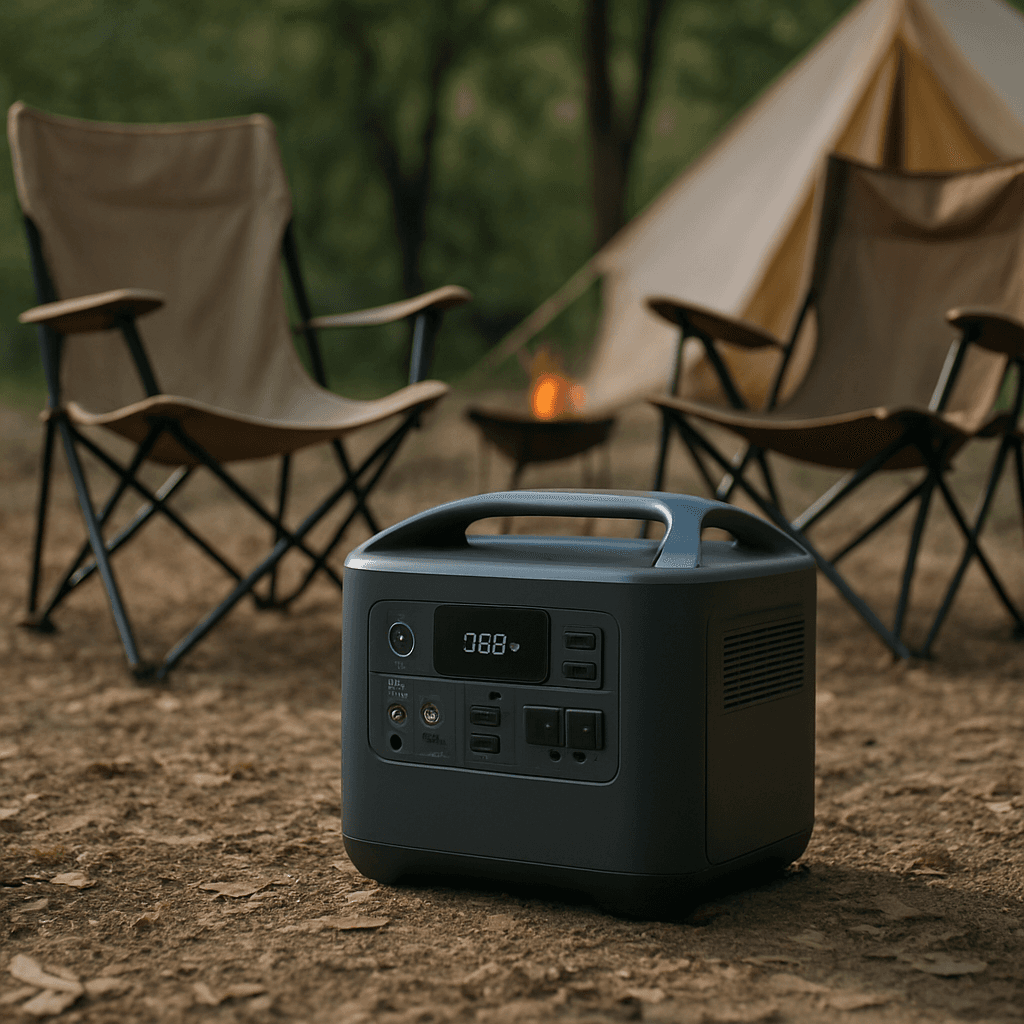
Goal Zero Yeti 1500X Review: Discontinued, and What Replaced It
The short answer: the Goal Zero Yeti 1500X is discontinued. Goal Zero's own product page now reads "No Longer Available", and the company has replaced it with the Yeti 1500, which uses LiFePO4 cells and lists at $1,499.95. If you own a 1500X it is still a capable 1,516Wh station, but if you are shopping today, buy the new Yeti 1500 or a competitor, and treat any remaining 1500X stock or used listings as a discount-only purchase. (If you own a Yeti 3000X, see our recall notice; it is a different model.)
Key Specs: 1500X vs Its Replacement
Specs are cross-checked against Goal Zero's Yeti 1500X page and its Yeti 1500 page (October 3, 2026).
| Spec | Yeti 1500X (discontinued) | Yeti 1500 (current, LiFePO4) |
|---|---|---|
| Capacity | 1,516Wh | 1,505Wh |
| Battery chemistry | NMC (lithium nickel manganese cobalt) | LiFePO4, 4,000 cycles |
| AC output | 2,000W (3,500W surge) | 2,000W (3,600W surge) |
| Weight | 45.64 lb | Check Goal Zero's page |
| AC recharge | About 12.5 hours with the stock charger (PCWorld) | About 1.1 hours (Goal Zero) |
| Water resistance | Not listed | IPX4 |
| Warranty | 2 years | Check Goal Zero's page |
| Price | Regular $1,499.95 (no longer sold new) | $1,499.95 |
What Independent Testing Found
The Yeti 1500X. PCWorld's 2023 review measured 1,267Wh delivered at a 200W load (83% of rated) and 1,093Wh at an 800W load (72%). It also reported about 12.5 hours to recharge with the stock charger and a weight of about 45 lb, at a $1,799.95 price at the time. Both the efficiency drop under load and the slow stock charger are weak points next to current LiFePO4 stations.
The Yeti 1500 LiFePO4. OutdoorGearLab measured 1,320Wh usable from the new unit, 89% of rated, noticeably better than the old unit's loaded results. For the same $1,499.95 you get 4,000 rated cycles and a fast charge. We have not tested either ourselves.
How It Compares at the Same Price
| Goal Zero Yeti 1500 | Bluetti Elite 200 V2 | Jackery Explorer 2000 v2 | EcoFlow DELTA 2 Max | |
|---|---|---|---|---|
| Capacity | 1,505Wh | 2,073.6Wh | 2,042Wh | 2,048Wh |
| Price seen | $1,499.95 | $899 | $899 (sale) | $1,029 |
| $ per rated Wh | $1.00 | $0.43 | $0.44 | $0.50 |
For about $600 less, you get about 540Wh more capacity from Bluetti or Jackery. The Goal Zero's case rests on its established brand, its accessory ecosystem, and the IPX4 rating, not on value. See our best power stations under $1,000.
Where the 1500X Still Holds Up
- Output: 2,000W continuous with a 3,500W surge handles power tools and most household appliances.
- Ecosystem: Goal Zero sells its own solar panels and accessories. Confirm compatibility with Goal Zero before buying accessories for either model.
- Track record: a well-known brand with long-running support.
Where It Falls Short
- NMC chemistry gives shorter cycle life and lower thermal stability than the LiFePO4 now standard across Jackery, EcoFlow, Anker, and Bluetti.
- Slow charging: a 12.5-hour stock recharge is far behind current stations that fill in about an hour.
- Loaded efficiency: 72% of rated capacity at 800W in PCWorld's test.
- 2-year warranty, versus 5 years from most competitors.
What This Actually Runs
Based on PCWorld's measured 1,267Wh at 200W (use about 1,093Wh for loads near 800W):
- Mini fridge (80W average): about 15 hours
- Full-size refrigerator (150W average): about 8 hours
- CPAP, 40W without humidifier, 8-hour nights: about 4 nights (about 2 with a heated humidifier)
- Laptop charging (about 55Wh per charge): about 23 charges
The new LiFePO4 Yeti 1500 delivers about 1,320Wh by OutdoorGearLab's measurement, or about 4.1 CPAP nights. An earlier version of this page said 32+ nights; that treated hours as nights. Use our wattage sizing guide for your own devices.
Who Should Still Consider a 1500X
Existing owners and buyers who find one at a deep discount and already own Goal Zero panels. Everyone else should compare the current Yeti 1500 with the LiFePO4 options in our ranked comparison and the EcoFlow Delta 2 Max or Bluetti Elite 200 V2.
Disclosure: WattStation HQ may earn a commission if you purchase through links on this page, at no extra cost to you. This does not affect our rankings — see our editorial policy.
Frequently Asked Questions
Is the Goal Zero Yeti 1500X still available?
Not new from Goal Zero. Its product page lists it as "No Longer Available", and it has been replaced by the Yeti 1500 with a LiFePO4 battery. Third-party retailers and used listings may still have stock.
Is NMC battery chemistry unsafe compared to LiFePO4?
Not inherently when properly engineered and used as directed, but NMC has lower thermal stability and a shorter cycle life than LiFePO4, which is why nearly the whole industry has moved to LiFePO4.
Is the new Yeti 1500 worth it over the 1500X?
Yes if you want a Goal Zero: it has the same capacity and output, LiFePO4 cells rated for 4,000 cycles, IPX4, and a roughly 1.1-hour AC recharge, at the same $1,499.95 list price as the 1500X. Against other brands it costs $1.00 per Wh versus roughly $0.43-0.50 for the 2,000Wh units above.
Related Articles
 Power Station Reviews
Jackery Explorer 2000 v2 Review: Light, Quiet, and Strong Value at $899
The Jackery Explorer 2000 v2 packs 2,042Wh and 2,200W into 38.9 lb. Independent test data, current prices, runtimes, and how it compares with the Bluetti Elite 200 V2 and Anker C2000 Gen 2.
 Power Station Reviews
EcoFlow Delta Pro 3 Review: EcoFlow's New Flagship Analyzed
4,096Wh, 4,000W and 120/240V output at $2,799 (list $3,699). Independent test data, runtimes, expansion, warranty terms, and who actually needs this much power.
 Power Station Reviews
Renogy Lycan 5000 Review: Off-Grid Power Analyzed
The Renogy Lycan 5000 pairs a wheeled, rugged design with expandable capacity for serious off-grid use. Full specs, runtime estimates, and who it's for.