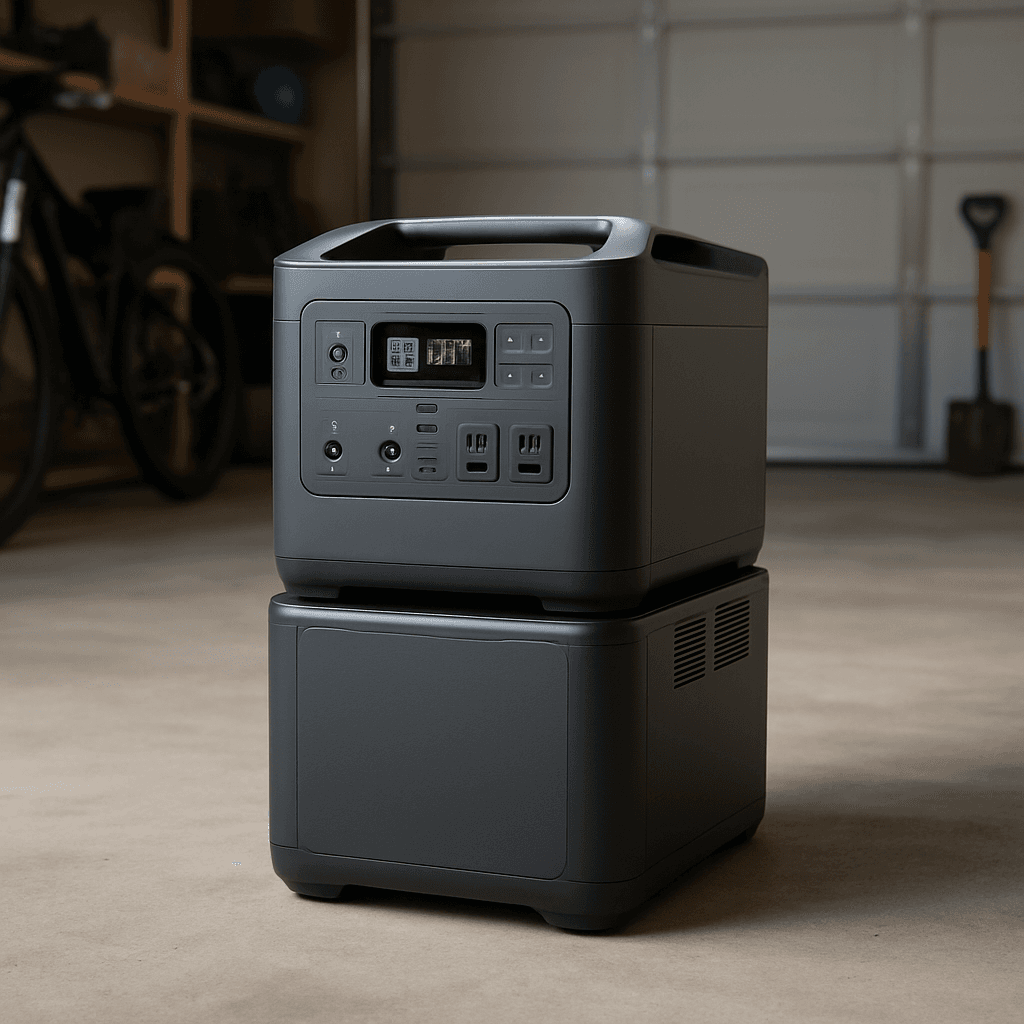
Jackery Explorer 2000 Plus Review: Expandable Capacity Explained
This page contains affiliate links. See our affiliate disclosure.
The short answer: the Jackery Explorer 2000 Plus is the right Jackery if you want to start at 2,042Wh and expand to 12kWh with up to five add-on batteries, or you need 3,000W of continuous output. If you don't need expansion, Jackery's newer Explorer 2000 v2 is the better buy: OutdoorGearLab says the Plus "has largely been rendered obsolete" by it, ranked the 2000 v2 #1 of 14 power stations, and Jackery's fall sale prices the v2 at $899. The Plus remains the only unit in Jackery's 2,000Wh lineup that scales into whole-home territory.
Spec Sheet
Specs are cross-checked against Jackery's official Explorer 2000 Plus page; test figures come from OutdoorGearLab's May 2025 review, an independent test we did not run ourselves.
| Spec | Value |
|---|---|
| Capacity | 2,042Wh (expandable to 12kWh with 5 battery packs) |
| Measured usable AC energy | 1,678Wh (83% of rated), per OutdoorGearLab |
| Continuous AC output | 3,000W |
| Battery chemistry | LiFePO4 |
| Weight | 62.3 lb (OutdoorGearLab) |
| AC recharge | 95 minutes for a full charge (1,290 Wh per hour, measured) |
| Solar recharge | About 2 hours with six 200W SolarSaga panels (Jackery); about 21 hours with a single 100W panel (measured) |
| Noise | Rated around 30dB in quiet charging mode (Jackery) |
| Price | $1,999 list (OutdoorGearLab, May 2025); check Jackery for the current price |
| Warranty | 3 years plus a 2-year extension under Jackery's policy for the 2000 Plus series, with conditions (policy) |
What Independent Testing Found
OutdoorGearLab scored the 2000 Plus 81/100. Its pros: "ample power for camping and most off-grid and blackout power needs," quick charging, and strong solar support. Its cons: weight (62.3 lb), price, and a "flimsy wheel and handle design." The measured 1,678Wh is 83% of the rated capacity, in line with the other large units it tested (it measured 75-93% across 14 power stations).
Jackery Explorer 2000 Plus vs 2000 v2
| Explorer 2000 Plus | Explorer 2000 v2 | |
|---|---|---|
| Capacity | 2,042Wh | 2,042Wh |
| Continuous output | 3,000W | 2,200W |
| Measured usable | 1,678Wh (83%) | about 1,710-1,740Wh (84%) |
| Weight | 62.3 lb | 38.9 lb |
| AC recharge (measured) | 95 minutes | 2.5 hours |
| Expansion | Yes, to 12kWh | No |
| OutdoorGearLab score | 81 | 81 (ranked #1) |
| Price seen | $1,999 list | $899 (fall sale through Oct 5, 2026) |
The Plus charges faster and offers more output and expansion, but weighs 23 lb more and costs far more. Most buyers will not use the expansion path, which is the reason to choose the v2. See our best power stations under $1,000 for the full comparison.
Strengths and Tradeoffs
Where it earns its keep:
- Whole-home scalability. Five expansion batteries reach 12kWh, which rivals dedicated home battery systems, starting from a single unit.
- 3,000W continuous output handles window AC units and power tools.
- Fast charging: a measured 95-minute full AC recharge, quicker than the cheaper v2.
- Strong solar support when paired with a full SolarSaga array.
Where it asks more of you:
- Cost. The expansion batteries are a significant added expense, and the base unit's list price is more than double the v2's sale price.
- Weight. At 62.3 lb it is stationary once you expand it, not a camping unit.
- Solar math. The 2-hour solar figure assumes a six-panel, 1,200W array; with one 100W panel, expect about 21 hours.
What This Actually Runs (Base Unit, 1,678Wh Measured)
- Full-size refrigerator (150W average): about 11 hours
- Full-size refrigerator (250W peak-average): about 6.7 hours
- Window AC (900W): about 1.9 hours
- Mini fridge (80W average): about 21 hours
- CPAP, 40W without humidifier, 8-hour nights: about 5.2 nights (about 2.6 with a heated humidifier)
Multiply roughly by your expansion battery count for a scaled system. See our wattage sizing guide for a custom calculation.
Bottom Line
Choose the Explorer 2000 Plus if you want a serious 2,000Wh-plus unit now with a credible path to whole-home backup later, and you don't mind the weight and price. If you won't expand, the cheaper, lighter 2000 v2 is the better value. Compare the expansion path with the EcoFlow Delta 2 Max, which has similar base capacity with a lower expansion ceiling (6,144Wh).
Disclosure: WattStation HQ may earn a commission if you purchase through links on this page, at no extra cost to you. This does not affect our rankings — see our editorial policy.
Frequently Asked Questions
Do I have to buy all 5 expansion batteries at once?
No. You can add expansion batteries incrementally as your budget and backup needs allow. The base unit is fully functional on its own, and each additional battery simply adds capacity.
Can I run central air conditioning on this unit?
Central AC units typically require far more than 3,000W to start due to compressor surge, so this is not a fit for whole-home central AC backup. It handles window and portable AC units and most other household circuits well.
Is the Explorer 2000 Plus still worth buying?
Only if you need its expansion path or 3,000W of output. OutdoorGearLab found the newer 2000 v2 comparable on capacity and ranked it first, at a much lower price and with 23 lb less weight, though the v2 cannot expand.
Related Articles
 Power Station Reviews
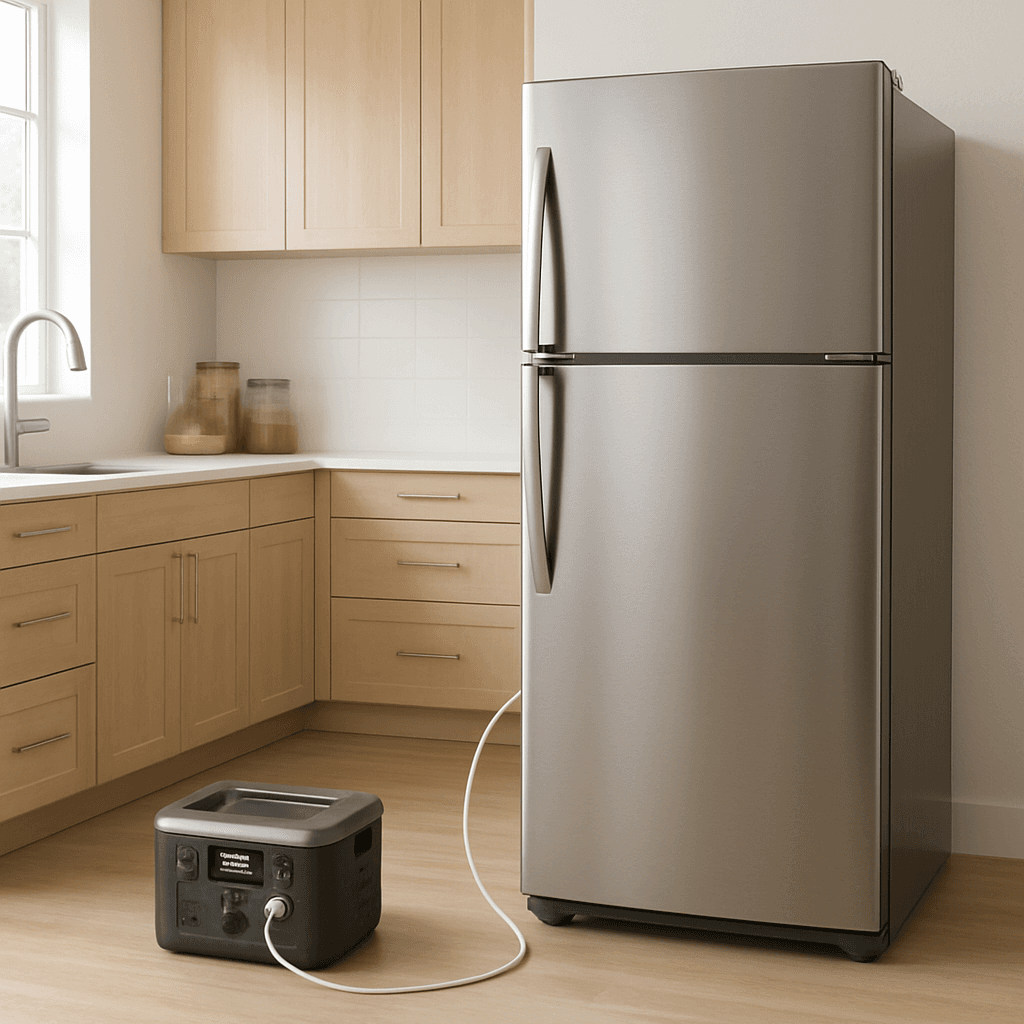
Jackery Explorer 2000 v2 Review: Light, Quiet, and Strong Value at $899
The Jackery Explorer 2000 v2 packs 2,042Wh and 2,200W into 38.9 lb. Independent test data, current prices, runtimes, and how it compares with the Bluetti Elite 200 V2 and Anker C2000 Gen 2.
 Power Station Reviews
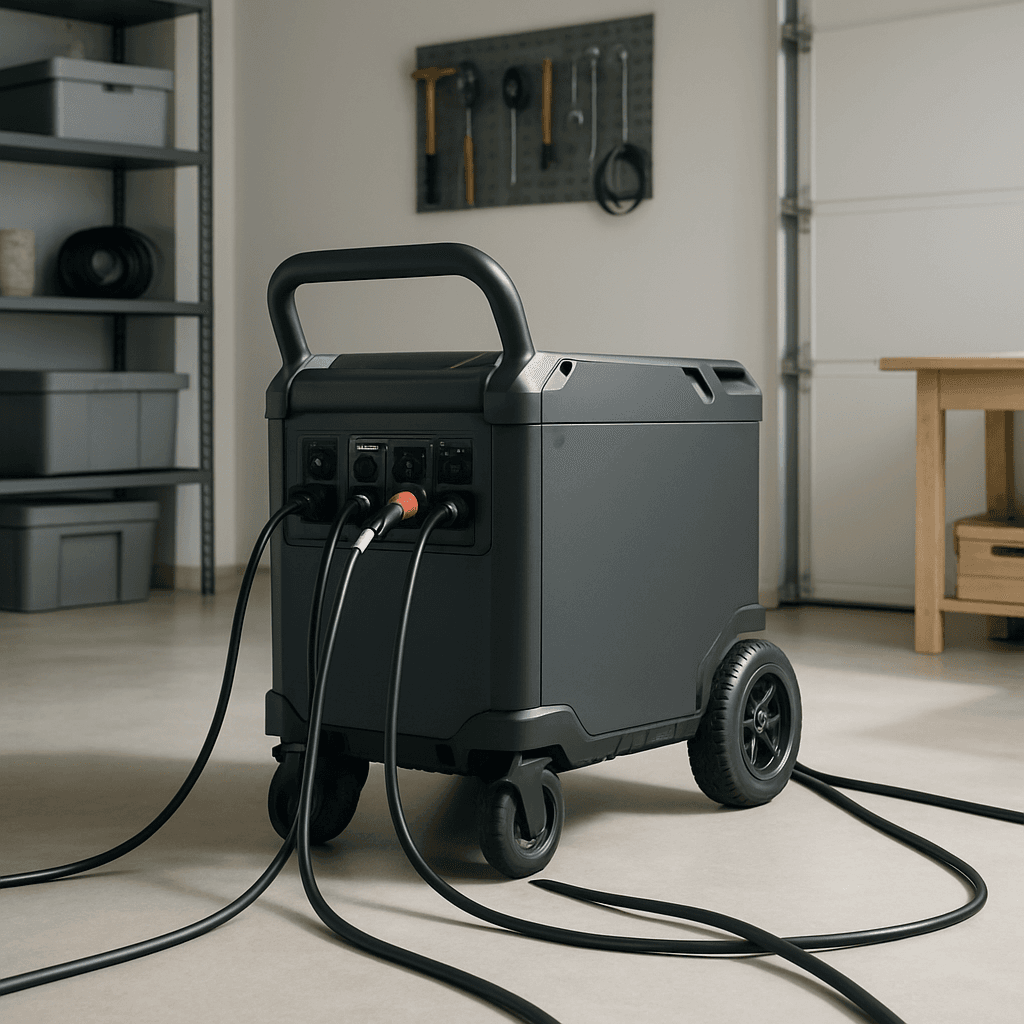
EcoFlow Delta Pro 3 Review: EcoFlow's New Flagship Analyzed
4,096Wh, 4,000W and 120/240V output at $2,799 (list $3,699). Independent test data, runtimes, expansion, warranty terms, and who actually needs this much power.
 Power Station Reviews
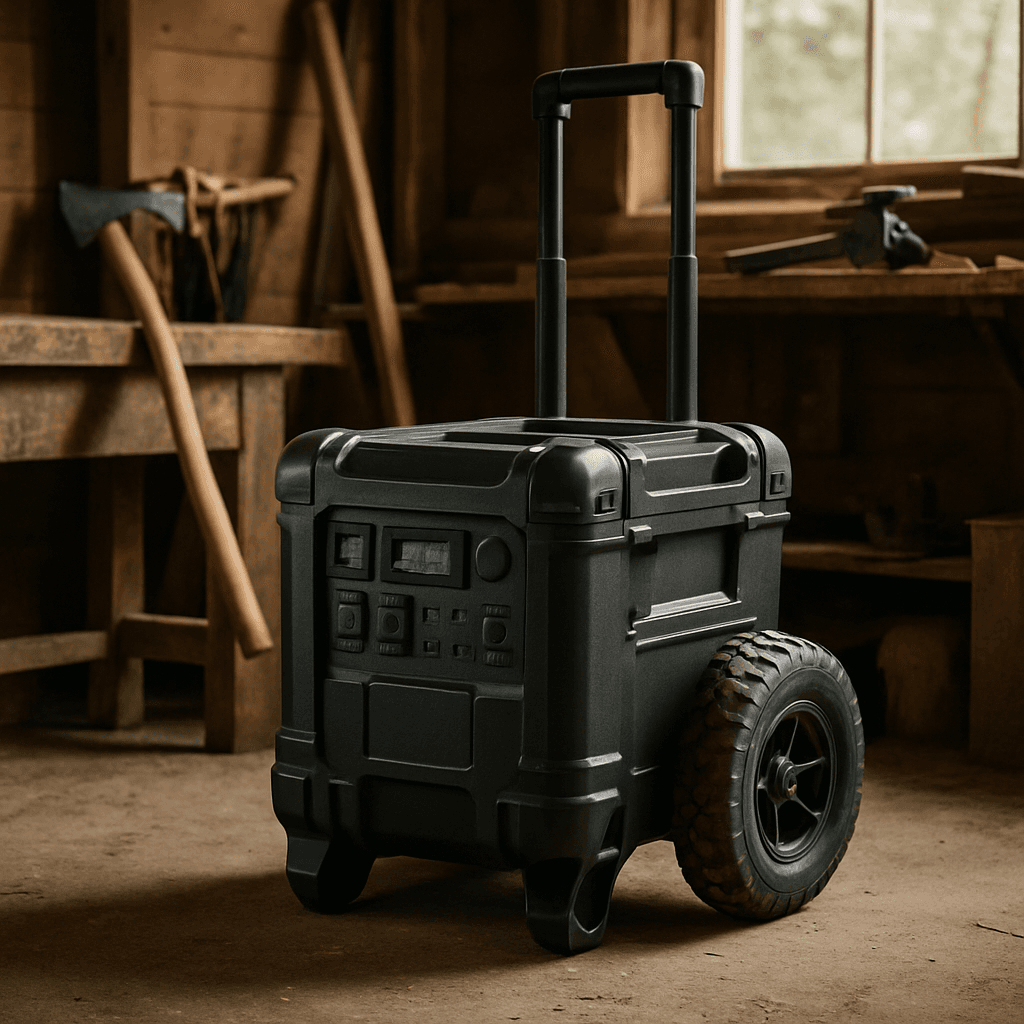
Renogy Lycan 5000 Review: Off-Grid Power Analyzed
The Renogy Lycan 5000 pairs a wheeled, rugged design with expandable capacity for serious off-grid use. Full specs, runtime estimates, and who it's for.