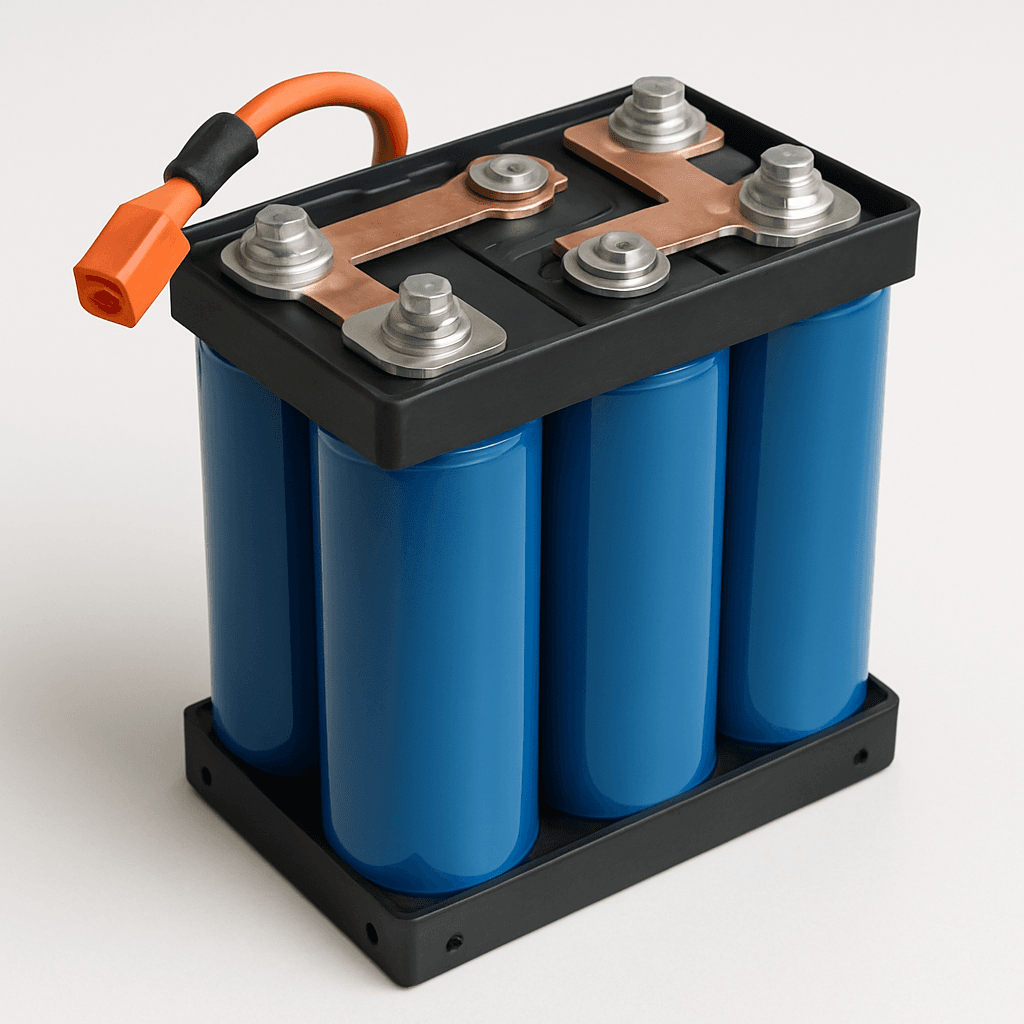
LiFePO4 Battery Guide: Why It's the Safer Choice
If you've shopped for a power station in the last few years, you've seen "LiFePO4" listed as a key spec. Here's a complete, practical guide to what it actually means and why nearly the entire industry has standardized on it.
What Is LiFePO4?
LiFePO4 (lithium iron phosphate) is a lithium-ion battery chemistry variant that trades some energy density for significantly improved thermal stability, cycle life, and overall safety compared to older lithium-ion chemistries like NMC (nickel manganese cobalt). See our lithium-ion vs LiFePO4 comparison for the direct side-by-side breakdown, or our watt-hours vs. watts explained guide for how capacity and chemistry relate to the numbers on the spec sheet.
Why It's the Safer Choice
LiFePO4's cathode material is inherently more thermally stable, meaning it's significantly less prone to thermal runaway (the dangerous chain reaction responsible for most serious lithium battery fire incidents) even under stress conditions like physical damage, overcharging, or extreme heat. This is the core reason it's become the standard for products, like power stations, that see frequent full-cycle use and travel to varied environments.
Longevity Advantage
LiFePO4 batteries typically rate for 3,000-6,000+ charge cycles to 80% capacity retention, compared to 500-1,000 cycles for older lithium-ion chemistry — see our battery lifespan guide for how this translates into real-world years of service.
The Tradeoff: Weight
LiFePO4's lower energy density means a LiFePO4 battery is somewhat heavier than an equivalent-capacity lithium-ion battery — this is why LiFePO4 power stations are generally a bit heavier per watt-hour than older lithium-ion alternatives, a worthwhile tradeoff for most buyers given the safety and longevity gains.
How to Verify a Power Station Uses LiFePO4
Reputable manufacturers list battery chemistry directly in the product spec sheet. If a listing doesn't specify chemistry at all, treat that as a caution flag — nearly every current-production mainstream power station from Jackery, EcoFlow, Bluetti, and Anker uses LiFePO4, and any listing avoiding the mention is worth extra scrutiny.
Is Any Current Power Station Still Using Older Chemistry?
A few older models, like the now-discontinued Goal Zero Yeti 1500X, use NMC chemistry (Goal Zero's replacement Yeti 1500 is LiFePO4) — worth understanding the tradeoff if you come across one secondhand or on clearance, since the shorter cycle life and reduced thermal stability are real, measurable differences.
Recycling and End-of-Life
LiFePO4 batteries shouldn't go in household trash — like other lithium batteries, they need to go through a battery recycling program. Many electronics retailers and battery specialty stores accept lithium batteries for recycling, and some manufacturers, including several power station brands, offer their own take-back or recycling guidance for end-of-life units. Check your power station manufacturer's site for their specific recycling program before disposing of an old unit, and never puncture, crush, or incinerate a lithium battery of any chemistry.
LiFePO4 vs. Lead-Acid: The Comparison Most Guides Skip
Most buying guides compare LiFePO4 only against older lithium-ion (NMC) — see our lithium-ion vs. LiFePO4 comparison for that specific breakdown. But if you're coming from an older RV, boat, or off-grid solar setup, the comparison that actually matters is against lead-acid (AGM/flooded):
| Factor | LiFePO4 | Lead-Acid (AGM/flooded) |
|---|---|---|
| Cycle life (to 80%) | 3,000-6,000+ | 300-500 |
| Energy density | Moderate | Low (heaviest per Wh) |
| Depth of discharge | 95-100% usable | ~50% usable (shortens life beyond that) |
| Typical real-world lifespan | 8-10+ years | 2-5 years |
The depth-of-discharge difference is the one most people underestimate: a lead-acid battery's "rated capacity" is misleading, since only about half of it is usable without seriously shortening the battery's life, while LiFePO4 can be discharged much closer to empty repeatedly without that same penalty — a 100Ah lead-acid battery and a 100Ah LiFePO4 battery are not actually equivalent in usable energy.
Real-World Signs of a Well-Made LiFePO4 Pack
Not all LiFePO4 packs are built to the same standard, even though the underlying chemistry is the same. Look for:
- A listed cycle rating with a specific number, not just "long-lasting" marketing language — see our battery lifespan guide for what a trustworthy number looks like.
- A real safety certification cited (UL 2743 or equivalent), not generic "military-grade" claims — see our safety guide for what certifications actually mean.
- A stated warranty length that's proportional to the cycle rating — a 6,000-cycle claim paired with only a 1-year warranty is a mismatch worth questioning.
- A documented battery management system (BMS) that handles overcharge, over-discharge, and thermal protection — reputable brands describe this directly rather than treating it as an afterthought.
Frequently Asked Questions
Is LiFePO4 more expensive than older lithium-ion batteries?
Historically LiFePO4 carried a cost premium, but pricing has largely equalized as it's become the industry standard — most current mainstream power stations use LiFePO4 without a significant price penalty compared to older-chemistry alternatives.
Can LiFePO4 batteries still catch fire?
The risk is significantly lower than older lithium-ion chemistry, but no battery technology is entirely risk-free — following basic safety practices (avoiding extreme heat, using manufacturer chargers, buying certified products) further minimizes an already low risk. See our power station safety guide for full guidance.
Related Articles
 Solar & Technical Guides
5 Number Calculator for Solar Panel Sizing on Portable Power Stations
Size solar panels for a portable power station with five numbers: daily Wh, sun hours, a loss factor, panel watts, and your station's input limit. Worked examples, tested against real recharge times.
 Solar & Technical Guides
Calculate Watt Hours Fast: Turn a 20,000mAh Power Bank into 74 Wh
Watt-hours = amp-hours × volts. Here's how to convert mAh to Wh, size a battery from your device list, and why the number on the label is never what you actually get.
 Solar & Technical Guides
Size Pure Sine Wave Inverters Right: Use the 3-4x Surge Rule
A pure sine wave inverter needs headroom for startup surge, not just running watts. Here's how to size one correctly, and when you can skip it entirely.