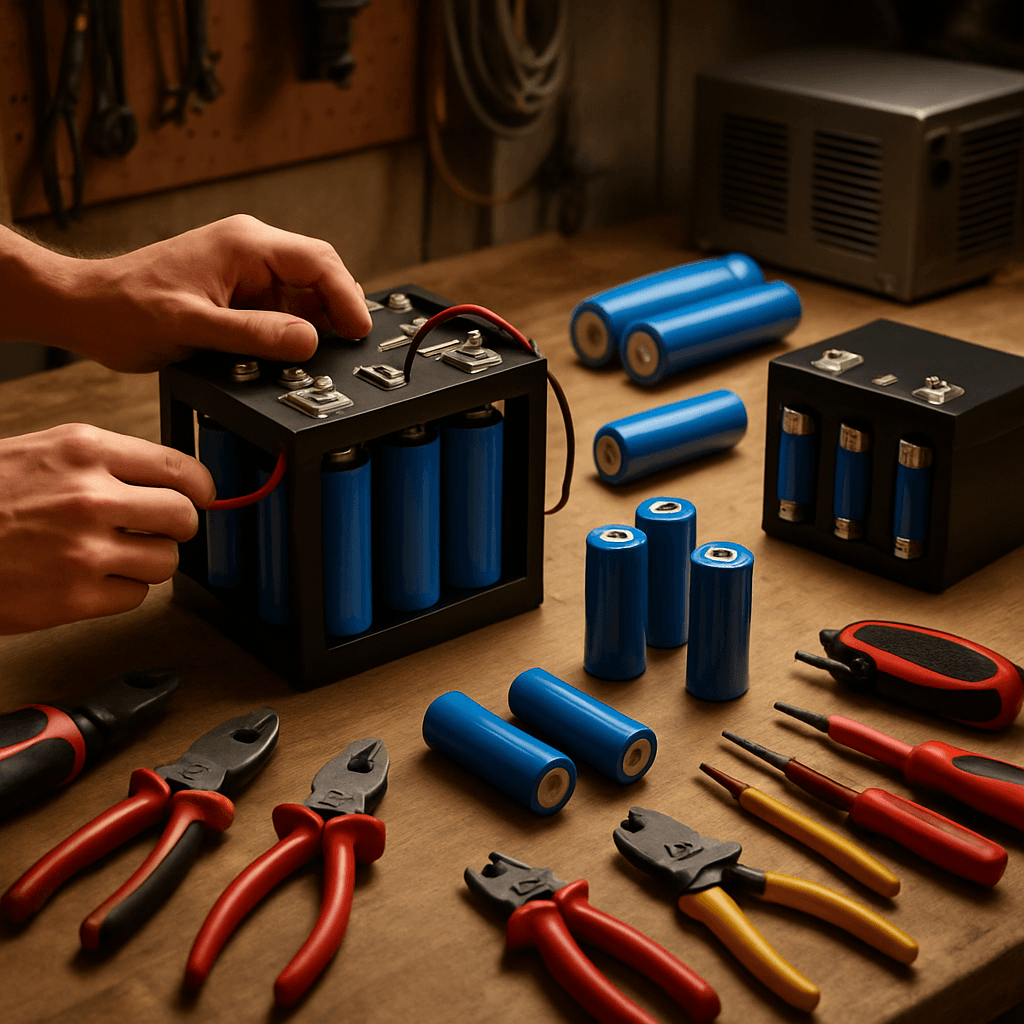
Point Zero Energy Titan Review: DIY Solar Generator
The short answer: the Point Zero Energy Titan is a modular solar generator: a 3,000W inverter base that you load with one or more battery modules, each about 2,200Wh. It costs roughly $3,000 in a basic configuration, according to a January 2025 hands-on from Green Citizen, and independent lab data is scarce. It makes sense if you want swappable modules and a semi-permanent off-grid system; for plug-and-play backup, a mainstream station is cheaper and better documented.
Key Specs
Point Zero Energy's site refused connections when we tried to verify it on October 3, 2026, so the figures below come from Green Citizen's Titan write-up (January 2025) and our earlier check of Point Zero Energy's Titan product pages. Confirm current configurations and prices on the manufacturer's site. We did not test the Titan, and we did not find a lab test of it.
| Spec | Value |
|---|---|
| Inverter output | 3,000W continuous |
| Battery modules | About 2,200Wh each, sold in Titan NMC and Titan LFP versions |
| Weight | About 31 lb for the base; about 66 lb with one battery; about 35 lb per extra battery |
| Solar input | Up to 2,000W |
| Price | About $3,000 in a basic configuration (Green Citizen, Jan 2025) |
An earlier version of this page described the Titan as LiFePO4 only. Point Zero Energy sells both an NMC battery and an LFP battery for it, so check which one you are ordering. NMC cells have shorter cycle life and lower thermal stability than LFP (see our LiFePO4 vs lithium-ion guide).
How It Compares
| Point Zero Titan (1 battery) | Bluetti Elite 200 V2 | EcoFlow DELTA Pro 3 | |
|---|---|---|---|
| Capacity | About 2,200Wh | 2,073.6Wh | 4,096Wh |
| AC output | 3,000W | 2,600W | 4,000W |
| Weight | About 66 lb | 53.4 lb | Check EcoFlow's page |
| Price seen | About $3,000 | $899 | $2,799 |
With one battery module the Titan costs around $1.36 per Wh, several times a mainstream 2,000Wh unit. Its value depends on modularity (adding or swapping 2,200Wh modules) and the 2,000W solar input, not on cost per Wh.
Where It Excels
- Modular design: add a battery module and about 2,200Wh to the system; the base unit is lighter to move on its own.
- 3,000W inverter handles power tools and pumps.
- High solar input of up to 2,000W.
- Made for semi-permanent installations rather than portable use.
Where It Asks More of You
- Price: about $3,000 for a starting configuration.
- Limited independent testing, so we cannot give you measured usable capacity or efficiency.
- Weight: 66 lb with a single battery, and each extra module adds about 35 lb.
- Specialist ecosystem: a smaller support and accessory network than the big four, and a site that was unreachable for us on the day of checking.
- NMC or LFP choice to get right at purchase.
What This Actually Runs
Per 2,200Wh module, assuming about 85% usable (roughly 1,870Wh) since we found no measured figure:
- Full-size refrigerator (150W average): about 12 hours
- Space heater (1,500W): about 1.2 hours
- CPAP, 40W without humidifier, 8-hour nights: about 5.8 nights (about 2.9 with a heated humidifier)
Multiply by the number of batteries for a larger system. Use our wattage sizing guide.
The Right Buyer
Technically inclined buyers who want a modular, upgradeable off-grid or backup system and will spend time on configuration. For a proven plug-and-play system, compare the Jackery Explorer 2000 Plus or the Bluetti AC200L. For a wider field, see our best solar generator for off-grid cabins guide.
Disclosure: WattStation HQ may earn a commission if you purchase through links on this page, at no extra cost to you. This does not affect our rankings — see our editorial policy.
Frequently Asked Questions
Is the Point Zero Energy Titan LiFePO4?
Only if you choose the LFP battery. Point Zero Energy sells both Titan NMC and Titan LFP battery modules, so check the listing before you order.
How much does a Point Zero Energy Titan cost?
About $3,000 for a basic configuration, according to a January 2025 Green Citizen write-up. Prices vary by configuration, so confirm on Point Zero Energy's site.
Is the Titan harder to set up than a Jackery or EcoFlow unit?
Yes, generally. A modular system involves more decisions up front, such as battery chemistry, number of modules, and solar wiring, than a sealed plug-and-play station.
Related Articles
 Power Station Reviews
Jackery Explorer 2000 v2 Review: Light, Quiet, and Strong Value at $899
The Jackery Explorer 2000 v2 packs 2,042Wh and 2,200W into 38.9 lb. Independent test data, current prices, runtimes, and how it compares with the Bluetti Elite 200 V2 and Anker C2000 Gen 2.
 Power Station Reviews
EcoFlow Delta Pro 3 Review: EcoFlow's New Flagship Analyzed
4,096Wh, 4,000W and 120/240V output at $2,799 (list $3,699). Independent test data, runtimes, expansion, warranty terms, and who actually needs this much power.
 Power Station Reviews
Renogy Lycan 5000 Review: Off-Grid Power Analyzed
The Renogy Lycan 5000 pairs a wheeled, rugged design with expandable capacity for serious off-grid use. Full specs, runtime estimates, and who it's for.