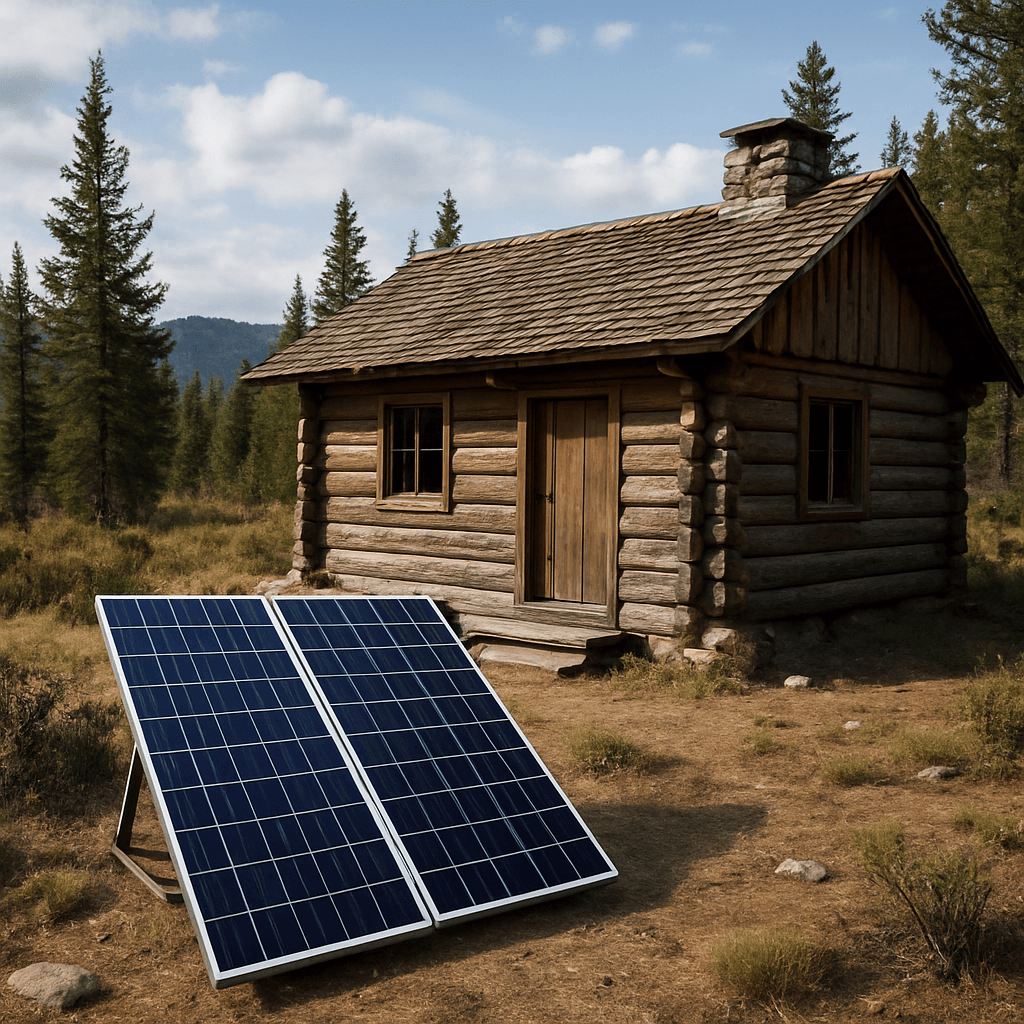
Best Solar Generator for Off-Grid Cabins (2026): Sizing and Picks
The short answer: for a weekend cabin, a 2,000Wh-class station you can expand later, such as the Bluetti Elite 200 V2 ($899, expands to 8,192Wh, 1,000W solar input), is the best value. For part-time cabins that need a fridge and a water pump every day, step up to the Jackery Explorer 2000 Plus (to 12kWh, 3,000W) or the EcoFlow DELTA Pro 3 ($2,799, 4-48kWh, 120/240V). For full-time off-grid living, a portable station is the entry point, and a purpose-built system such as the DELTA Pro Ultra or Renogy Lycan is the more realistic target. First, size your load: it decides everything else.
Step 1: Budget Your Daily Energy
Cabin loads (lights, water pump, refrigeration, devices) add up faster than a camping trip. Here is an illustrative budget; replace each line with your own equipment's label values (a refrigerator's EnergyGuide label lists kWh per year, so divide by 365 for daily use).
| Load | Watts | Hours/day | Wh/day |
|---|---|---|---|
| LED lighting | 40W | 5 | 200 |
| Efficient refrigerator (about 440 kWh/year label) | n/a | n/a | about 1,200 |
| Water pump | 150W | 1 | 150 |
| Laptops and phones | n/a | n/a | 150 |
| Router and small electronics | 10W | 24 | 240 |
| Occasional power tool | 500W | 1 | 500 |
| Subtotal | about 2,440 | ||
| With a 25% margin | about 3,050 |
Check your peak load too: if a pump, microwave, or tool can run together, the unit's output rating needs to cover the sum. Many well pumps run on 240V, which most portable stations cannot supply; the DELTA Pro 3 and Pro Ultra can.
Step 2: Size the Solar Array
Use this formula (it matches our solar recharge time guide):
Array watts = daily Wh ÷ (peak sun hours × 0.75)
The 0.75 covers wiring, charge-controller, heat, and battery losses. For a 3,050Wh day:
| Peak sun hours per day | Array needed |
|---|---|
| 5 hours (typical summer or sunny region) | about 810W |
| 4 hours | about 1,020W |
| 3 hours (winter or cloudy region) | about 1,360W |
Most of the continental US averages roughly 4-6 peak sun hours a day over the year, and winter is much lower than summer (the Department of Energy notes that radiation varies by season and location). Size for your worst season if you live there year-round. An older rule of thumb on this page said a 3,000Wh/day cabin needs 600-750W of solar; that ignores system losses, which is why we corrected it.
Also check the unit's maximum solar input: the array can't exceed it. The Bluetti Elite 200 V2 and EcoFlow DELTA 2 Max accept 1,000W; the OUPES Mega 5 accepts 2,100W; the Point Zero Titan up to 2,000W.
Our Picks by Cabin Type
Specs are from each brand's site, checked October 3, 2026, unless noted. We have not tested these ourselves; measured figures are attributed to the lab that took them.
| Capacity (expandable to) | Output | Solar input | Price | Best for | |
|---|---|---|---|---|---|
| Bluetti Elite 200 V2 | 2,073.6Wh (8,192Wh) | 2,600W | 1,000W | $899 | Weekend or small cabins on a budget |
| EcoFlow DELTA 2 Max | 2,048Wh (6,144Wh) | 2,400W | 1,000W | $1,029 | Cabins already in the EcoFlow ecosystem |
| Jackery Explorer 2000 Plus | 2,042Wh (12kWh) | 3,000W | Check Jackery (its 2-hour figure uses six 200W panels) | Check Jackery | Part-time cabins that want to scale |
| EcoFlow DELTA Pro 3 | 4,096Wh (4-48kWh) | 4,000W, 120/240V | Check EcoFlow | $2,799 (list $3,699) | Full-time or well-pump cabins |
| OUPES Mega 5 | 5,040Wh (45.36kWh) | 4,000W | 2,100W | $3,499 (sold out on Oct 3) | Large batteries per box |
| Renogy Lycan 5000 | about 5,120Wh with expansion | 2,400W+ | Renogy MPPT | $2,500+ | Wheeled, semi-permanent setups using Renogy panels |
| EcoFlow DELTA Pro Ultra | 6kWh (90kWh) | 7.2kW | up to 16.8kW | $4,099 base | Whole-property systems with a Smart Home Panel |
OutdoorGearLab's July 2026 test measured 3,790Wh usable from the DELTA Pro 3 (93% of rated) and about 1,710-1,740Wh from the Jackery 2000 v2, and StorageReview measured 1.91kWh from the Elite 200 V2. The Jackery 2000 v2 ($899 on sale) is lighter but cannot expand, so it suits a weekend cabin you will not grow. The Point Zero Energy Titan is a modular option for technically inclined owners (about $3,000, roughly 2,200Wh per module). For a tiny-house-sized cabin see our tiny house power guide.
Weekend vs Full-Time
A weekend-only cabin can use a smaller array because the battery has days to refill between visits. For full-time living, size for the daily budget above and add a buffer. Per-Wh prices are lowest in the 2,000Wh class (about $0.43-0.50), and rise for bigger units (about $0.68-0.69 for the DELTA Pro 3 and Mega 5), so buying two mid-size units can cost less than one large one, with the tradeoff of more wiring and no 240V.
Backup for Extended Cloudy Stretches
Even a well-sized system needs a plan for several overcast days: extra battery capacity, a generator for occasional recharging, or both. Cabins at northern latitudes or in frequently overcast regions should size beyond the baseline above. In a long cloudy stretch, solar output can fall to 10-25% of rated power, per our solar guide.
Disclosure: WattStation HQ may earn a commission if you purchase through links on this page, at no extra cost to you. This does not affect our rankings — see our editorial policy.
Frequently Asked Questions
Can I run a full cabin entirely on a portable power station and solar?
For lighting, a water pump, refrigeration, and device charging, yes with proper sizing. For electric heating or a full kitchen, most cabins use propane or wood heat instead of battery power for those loads.
How much solar do I need for a cabin?
Divide your daily watt-hours by peak sun hours times 0.75. A cabin using 3,050Wh a day needs about 810W of panels at 5 peak sun hours and about 1,360W at 3. Check that your power station's maximum solar input can accept the array.
How much solar do I need for a weekend-only cabin vs. full-time living?
A weekend cabin can use a smaller array since the battery has days to recharge between visits. Full-time living needs the array sized for sustained daily use, often several times larger than a weekend-only setup.
Is a portable power station enough for full-time off-grid living?
It can be for modest loads, but full-time use cycles the battery daily, so look for LiFePO4 units with warranties of at least 5 years. For high loads or a 240V well pump, a purpose-built system like the DELTA Pro Ultra, or an installed inverter and battery bank, is usually a better long-term fit.
Related Articles
 Comparisons & Buying Guides
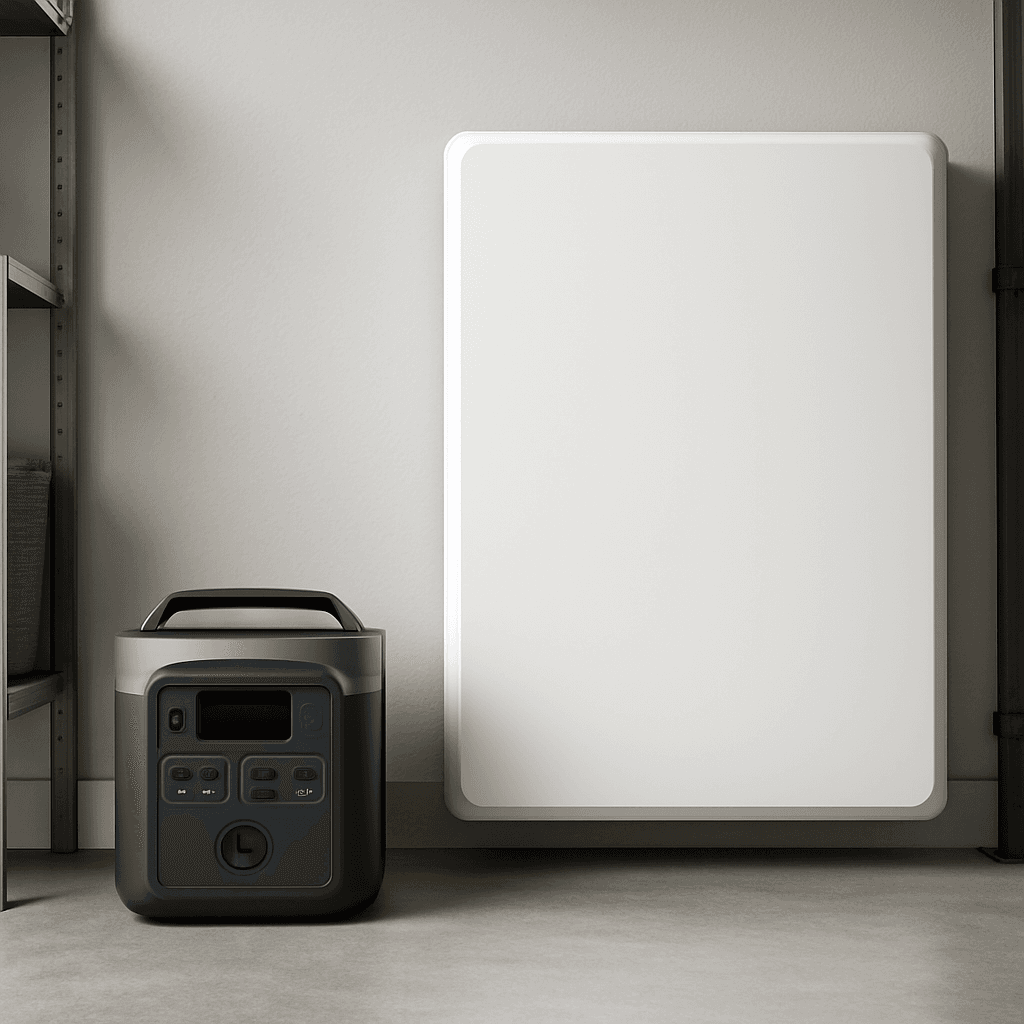
Portable Power Station vs. Whole-Home Battery System: Which Do You Actually Need?
A Tesla Powerwall costs $11,500-$16,000+ installed. A portable power station covers most of the same essentials for a fraction of that. Here's how to actually decide.
 Comparisons & Buying Guides
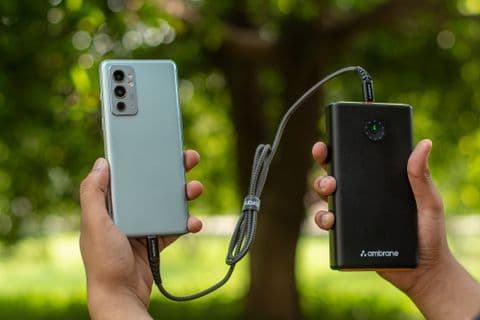
Power Bank vs. Power Station: What's the Real Difference?
They both store and dispense electricity, but a power bank and a power station aren't interchangeable. Here's what actually separates them and which one you need.
 Comparisons & Buying Guides
Can You Rent a Portable Power Station Instead of Buying One?
Renting is a real option if you only need backup power for a single trip or event. Here's where to actually rent one, real costs, and when renting beats buying.