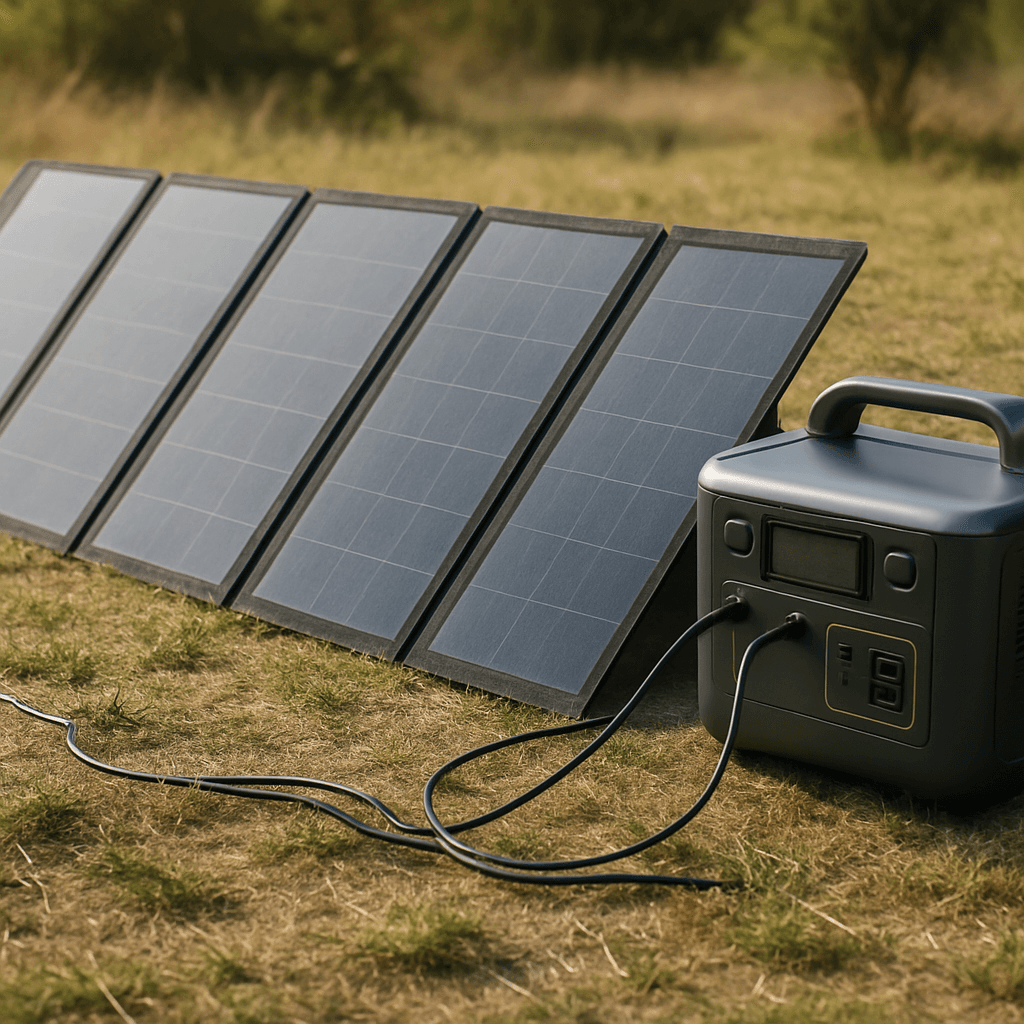
How to Connect Multiple Solar Panels to a Power Station (Series vs Parallel)
The short answer: wire panels in series (voltage adds, current stays the same) when your station's input has voltage headroom, and in parallel (current adds, voltage stays the same) when voltage is the limit or shade is likely. Either way, your array's total voltage and current must stay inside the station's solar input limits, and cold weather raises panel voltage by roughly 10% or more. The safest route for most buyers is a manufacturer-designed multi-panel kit with the right cables. If you build your own array, use the numbers below.
Series vs Parallel at a Glance
| Series | Parallel | |
|---|---|---|
| Voltage | Adds up | Stays at one panel's level |
| Current | Stays at one panel's level | Adds up |
| Power | Same total either way | Same total either way |
| Shade | One shaded panel drags down the whole string | A shaded panel affects only its own branch |
| Long cable runs | Better (lower current, less loss) | Worse (higher current, more loss) |
| Needs | Voltage headroom under the station's maximum | Connectors, cables and fuses rated for the total current |
| Typical pick | Open sites, longer cable runs | Shaded sites, stations with a low voltage ceiling |
The Numbers You Need
Two numbers on each panel's label matter most: Voc (open-circuit voltage, the highest voltage the panel produces) and Isc (short-circuit current, the highest current). On the station, find the maximum input voltage, maximum current, and maximum watts in the manual or on the port. For example, Jackery's 1000 Plus lists a DC input of 12-60V with 22A and 800W maximum. Other stations differ, so check yours.
Worked Example 1: Two Panels
Two identical 100W panels, each with Vmp 18V, Imp 5.5A, Voc 22V and Isc 6A:
| Wiring | Voltage (Vmp / Voc) | Current (Imp / Isc) | Power |
|---|---|---|---|
| Series | 36V / 44V | 5.5A / 6A | about 198W |
| Parallel | 18V / 22V | 11A / 12A | about 198W |
Against a 12-60V, 22A, 800W input, both fit. Series (44V Voc) leaves a smaller voltage margin; parallel (12A Isc) leaves plenty of current margin.
Worked Example 2: Four Panels (Series-Parallel)
Four of the same panels as two series strings joined in parallel ("2S2P") give about 36V (44V Voc) and 11A (12A Isc), for roughly 396W. You get higher voltage than pure parallel and more current than a single series string, which is how most larger portable arrays are built.
Cold Weather Raises Voltage
Panel voltage rises as temperature falls, by roughly 0.3% per degree Celsius for typical panels. Check the panel datasheet for its exact temperature coefficient. For a 22V panel, a drop from 25°C (77°F) to -10°C (14°F) adds about 10%, taking it to about 24V. In series, two panels go from 44V to about 48V. Leave headroom under the station's maximum voltage so a cold clear morning cannot push the array over the limit. This is the most common cause of tripped protection and damaged charge controllers.
Step by Step
- Get the numbers: the station's maximum voltage, current and watts, and each panel's Voc, Isc, Vmp and Imp.
- Match the panels: the same model and wattage, ideally from one manufacturer. In a series string the lowest-current panel limits the string.
- Choose the wiring: series if there is voltage headroom (with cold-weather margin); parallel if voltage is tight or shade is likely; series-parallel for larger arrays.
- Check the totals: total Voc (corrected for cold) under the station's maximum voltage; total Isc under its maximum current; total watts, noting that most stations simply limit the excess.
- Pick the hardware: an MC4 Y-branch or combiner rated for the total current, cables of the right gauge, and adapters if the station uses a proprietary connector.
- Protect it: guides differ on exact fusing, but panels in parallel generally need a fuse or breaker per branch (often sized around 125-150% of panel Isc) once you have three or more branches. Follow your panels' and station's manuals.
- Connect safely: cover the panels or work in low light, connect the panels to each other first, plug into the station last, and unplug in reverse order.
Cables and Distance
Longer runs lose more power, and higher current loses more than lower current. For runs beyond a few feet, series wiring (higher voltage, lower current) wastes less, and thicker cable helps. Keep runs as short as practical and use the gauge recommended for your array's current.
Common Mistakes That Damage Equipment
- Exceeding the maximum input voltage with too many panels in series, especially in the cold.
- Mixing different panels in one string, which drags everything down to the weakest panel; never mix voltages in parallel.
- Undersized Y-connectors or cable for the combined current in parallel, which can overheat.
- Connecting or disconnecting panels in full sun with the system live, which risks arcing.
- Assuming brand compatibility. Third-party panels often need an adapter; OutdoorGearLab noted the Jackery Explorer 2000 v2 does.
Which Is Better for Your Station?
Check your station's solar input first. Our solar panel sizing guide lists maximum solar input for popular stations (400W on the Jackery 2000 v2, 1,000W on the Bluetti Elite 200 V2 and EcoFlow DELTA 2 Max) and shows how many watts of panels you actually need. To estimate charge time with your combined wattage, use our solar recharge time guide. If a panel lists only volts and amps, our watts to amps calculator converts them. Not sure which panels to buy? See best solar panels to pair with your power station.
Disclosure: WattStation HQ may earn a commission if you purchase through links on this page, at no extra cost to you. This does not affect our rankings — see our editorial policy.
Frequently Asked Questions
Should I connect solar panels in series or parallel to a power station?
Use series when your station has voltage headroom and you want less loss over long cables; use parallel when voltage is the limit or shade is likely. Either way, keep total voltage (corrected for cold) and total current inside the station's input limits.
Can I mix different wattage panels in one array?
It is generally not recommended. In series, the lowest-current panel limits the string, and in parallel mismatched voltages cause problems. Use matched panels from the same model line.
Can I connect more panels than my station's rated solar input?
Often the station simply limits the extra wattage, but it depends on the brand, so check the manual. Never exceed the maximum voltage or current, and note that extra watts beyond the cap do not charge faster.
What cables do I need to combine panels?
Matched MC4-style extension cables and a Y-branch (parallel) or series jumpers, rated for the current, plus an adapter if the station uses a proprietary connector. Brand-sold multi-panel kits include the correct cables.
Power Stations We'd Look At for This
Picked from our reviews for this scenario. Prices change often, so check the current price before you buy.
This page contains affiliate links. See our affiliate disclosure.
Bluetti Elite 200 V2
4.5/5 in our review
EcoFlow Delta 2 Max
4.5/5 in our review
Jackery Explorer 2000 v2
4.5/5 in our review
Bluetti AC70
4.3/5 in our reviewRelated Articles
 Solar & Technical Guides
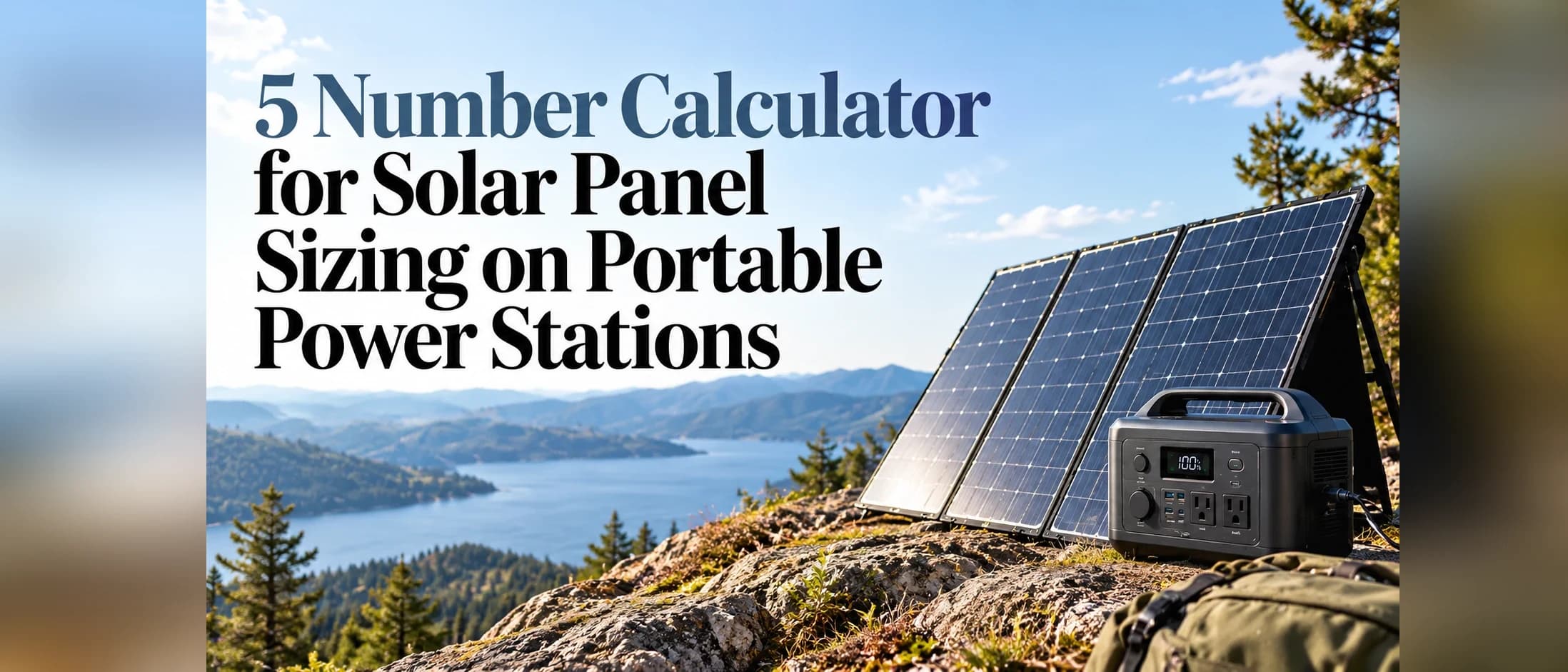
5 Number Calculator for Solar Panel Sizing on Portable Power Stations
Size solar panels for a portable power station with five numbers: daily Wh, sun hours, a loss factor, panel watts, and your station's input limit. Worked examples, tested against real recharge times.
 Solar & Technical Guides
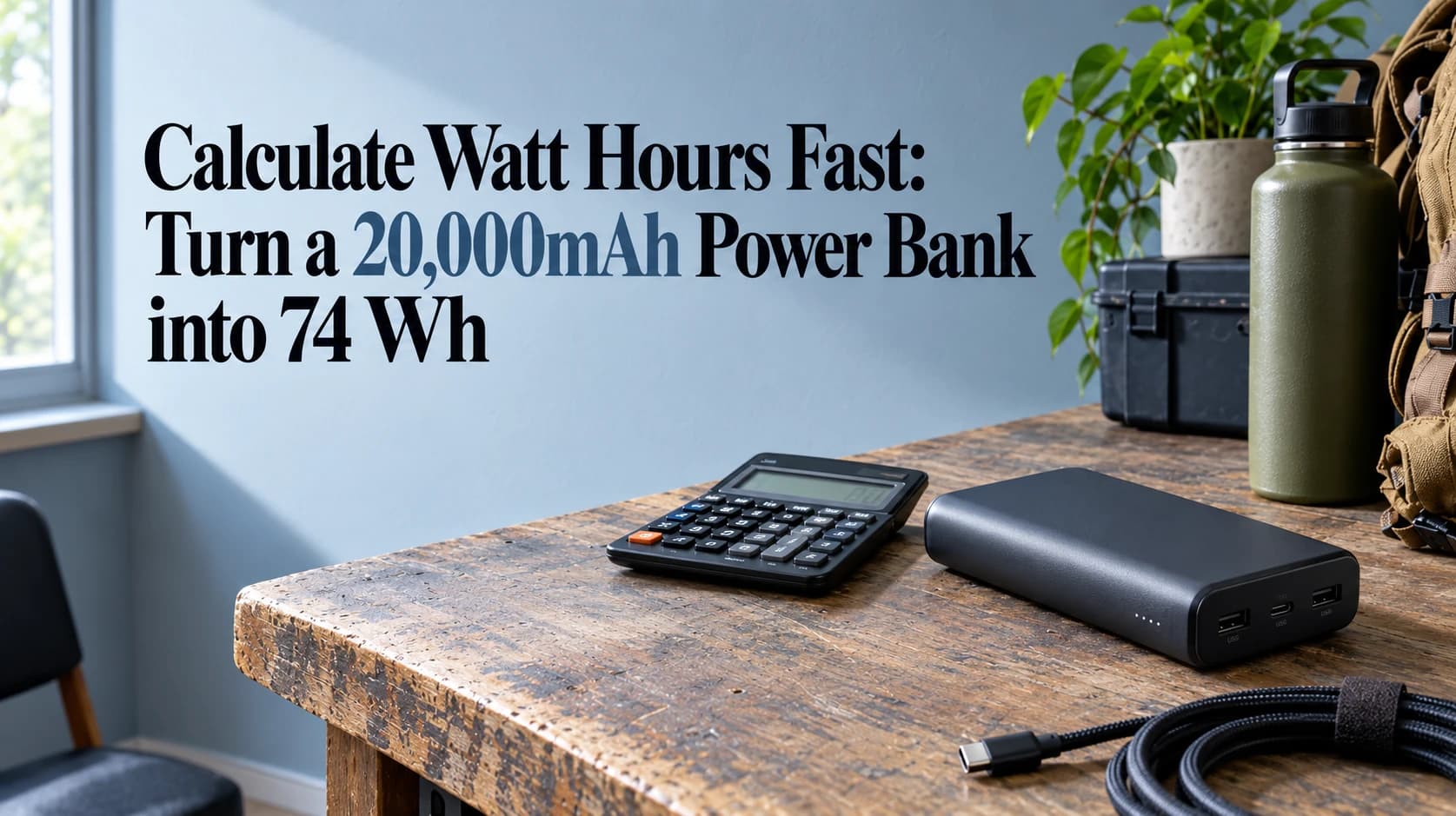
Calculate Watt Hours Fast: Turn a 20,000mAh Power Bank into 74 Wh
Watt-hours = amp-hours × volts. Here's how to convert mAh to Wh, size a battery from your device list, and why the number on the label is never what you actually get.
 Solar & Technical Guides
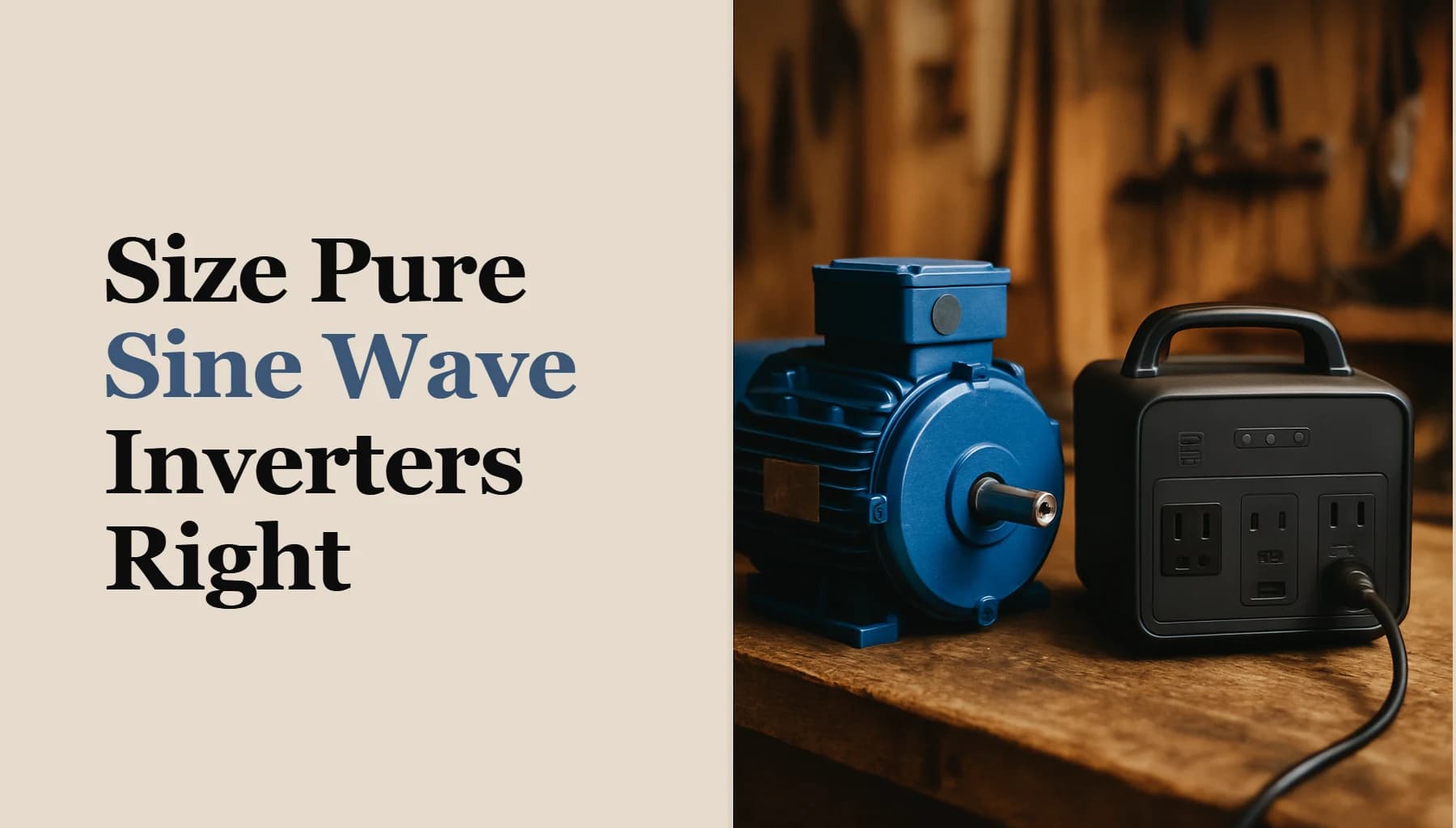
Size Pure Sine Wave Inverters Right: Use the 3-4x Surge Rule
A pure sine wave inverter needs headroom for startup surge, not just running watts. Here's how to size one correctly, and when you can skip it entirely.