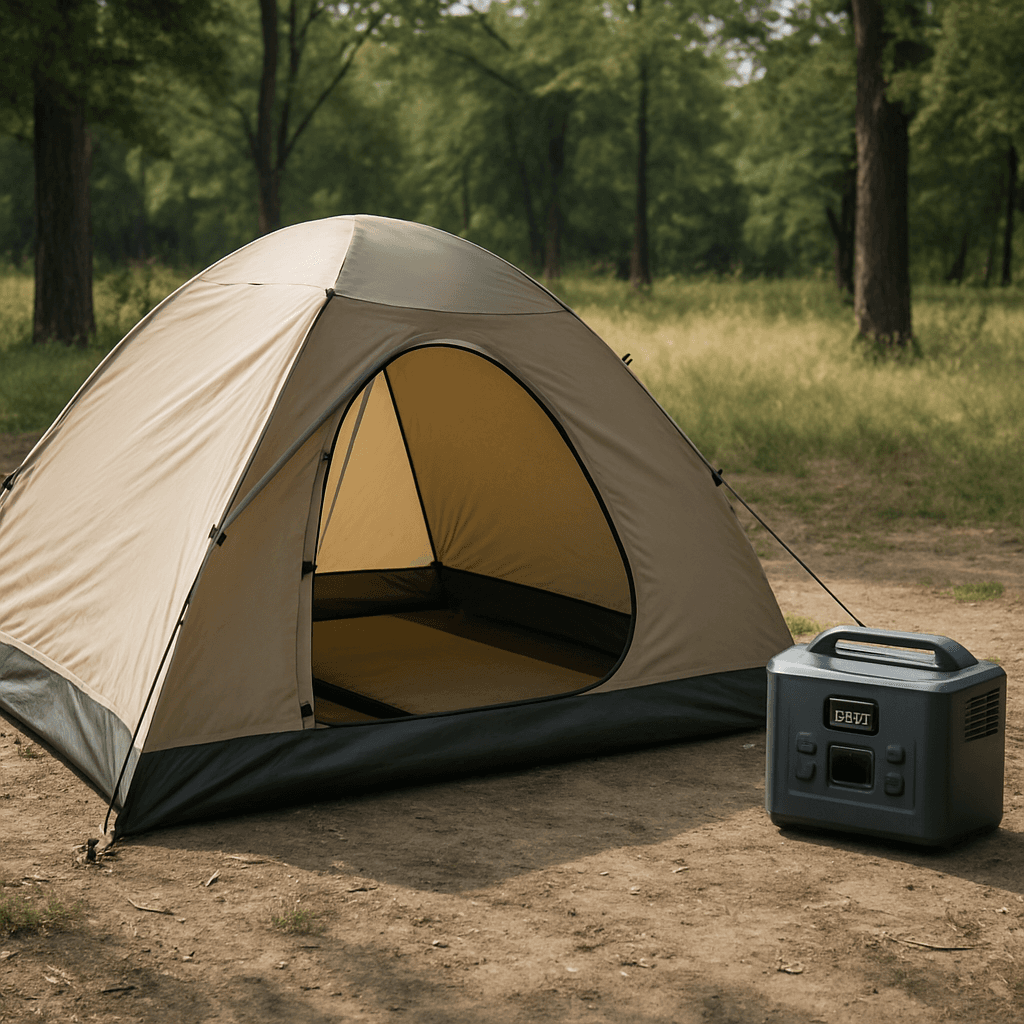
Bluetti AC70 Review: Best for Solo Campers?
This page contains affiliate links. See our affiliate disclosure.
The short answer: at $359 on Bluetti's own site, the AC70 is one of the cheapest ways to get a 768Wh LiFePO4 power station with 1,000W of output, 22.5 lb of weight, and a 5-year warranty. It is a strong middle ground between ultra-budget units like the EcoFlow River 3 and the 1,000Wh class, and a good fit for solo campers, small households, and a CPAP-plus-lights outage kit. Its main limits are capacity (about two nights of CPAP, not a week) and a 1,000W ceiling that rules out space heaters and microwaves.
Spec Sheet
Specs are cross-checked against Bluetti's official AC70 product page (checked October 3, 2026).
| Spec | Value |
|---|---|
| Capacity | 768Wh |
| Continuous AC output | 1,000W (2,000W in "Power Lifting" mode for resistive loads) |
| Battery chemistry | LiFePO4, 3,000+ cycles |
| Weight | 22.5 lb |
| Max solar input | 500W |
| Outlets | 7 |
| Warranty | 5 years |
| Price | $359 (Bluetti, Oct 3, 2026); about $499 at a January 2024 review |
What Independent Reviewers Measured
We have not tested the AC70 ourselves. We found no lab-measured usable capacity from a major outlet, so the runtimes below assume about 85% usable (roughly 650Wh), in line with the 82-93% that OutdoorGearLab measured on comparable units. What reviewers did report:
- Charging: NerdTechy (Jan 2024) recorded about 1 hour 45 minutes from empty to full on AC, about 5 hours on a 400W solar panel in mostly ideal conditions, and 8-9 hours from a 12V car port. Basic Tutorials (Sep 2024) measured just under 90 minutes on AC with a peak of 938W.
- Real loads: NerdTechy ran a Ninja air fryer at a steady 1,027W for 10 minutes without issue, and a toaster oven at just under 900W.
- UPS and noise: Basic Tutorials measured a UPS response of 20 ms and described the operation as "pleasantly quiet"; NerdTechy found the fan noticeable but not loud during AC charging.
How It Compares
| Bluetti AC70 | EcoFlow River 3 | Bluetti Elite 100 V2 | |
|---|---|---|---|
| Capacity | 768Wh | 245Wh | 1,024Wh |
| AC output | 1,000W | 300W (600W X-Boost) | 1,800W |
| Weight | 22.5 lb | 7.8 lb | 25 lb |
| Price seen | $359 | $239 | $489 |
| $ per rated Wh | $0.47 | $0.98 | $0.48 |
The AC70 costs roughly three times as much as the River 3 for more than three times the capacity, and 3 lb less than the Elite 100 V2 for 25% less capacity and $130 less. For the full under-$500 field, see our best power stations under $500.
Strengths and Tradeoffs
Where it earns its keep:
- Useful mid-range capacity for a weekend of camping or light apartment backup without the bulk of larger units.
- 1,000W output covers laptops, lighting, a mini fridge, and small appliances simultaneously, and reviewers ran air fryer and toaster-oven loads on it.
- LiFePO4 chemistry and a 5-year warranty at an accessible price.
- Light enough for car camping and van dwellers.
Where it comes up short:
- 768Wh will not cover a full-size fridge for more than a few hours.
- The 1,000W ceiling rules out space heaters, microwaves, and other high-draw appliances (except resistive loads in Power Lifting mode).
- It is not expandable, so you cannot add capacity later.
What This Actually Runs
Assuming about 650Wh of usable energy:
- Mini fridge (80W average): about 8 hours
- Full-size refrigerator (150W average): about 4 hours
- CPAP, 40W without humidifier, 8-hour nights: about 2 nights (about 1 night with a heated humidifier)
- Laptop charging (about 55Wh per charge): about 12 charges
- LED camping setup (30W): about 22 hours
Work out your own combination with our wattage sizing guide and CPAP guide.
Where It Fits in Bluetti's Lineup
The AC70 is an entry point into Bluetti's range, one step below the 2,000Wh-plus AC200L and the long-cycle-life Elite 200 V2. If you're deciding whether to start here and upgrade later, base it on your actual daily loads rather than your worst case: most solo campers and single-device medical backup users fit within 768Wh, and buying more just adds weight and cost.
Bottom Line
The AC70 fills its niche well: genuinely useful capacity at an accessible price, with a long warranty. It is the right pick for solo campers and van dwellers with modest daily power needs, and for anyone who wants meaningfully more capacity than an entry-level unit like the EcoFlow River 3 without paying the 1,000Wh price tag.
Disclosure: WattStation HQ may earn a commission if you purchase through links on this page, at no extra cost to you. This does not affect our rankings — see our editorial policy.
Frequently Asked Questions
Is the Bluetti AC70 big enough for a weekend camping trip?
Yes for a typical weekend of lighting, phone and laptop charging, and a small fan or cooler. Those loads add up to roughly 350-450Wh a day, so one charge covers about a day and a half to two days, and a solar panel can extend that.
How does the AC70 compare to the EcoFlow River 3?
The AC70 offers about three times the capacity and more than three times the output of the EcoFlow River 3 at a price about $120 higher. It is the better fit if you need to run a mini fridge or several devices at once; the River 3 is better if portability and price matter most.
How long does the AC70 take to charge?
Reviewers measured roughly 90 minutes to 1 hour 45 minutes for a full AC charge in standard mode, and Bluetti advertises a faster turbo mode. On a 400W solar panel expect around 5 hours in good sun.
Related Articles
 Power Station Reviews
Jackery Explorer 2000 v2 Review: Light, Quiet, and Strong Value at $899
The Jackery Explorer 2000 v2 packs 2,042Wh and 2,200W into 38.9 lb. Independent test data, current prices, runtimes, and how it compares with the Bluetti Elite 200 V2 and Anker C2000 Gen 2.
 Power Station Reviews
EcoFlow Delta Pro 3 Review: EcoFlow's New Flagship Analyzed
4,096Wh, 4,000W and 120/240V output at $2,799 (list $3,699). Independent test data, runtimes, expansion, warranty terms, and who actually needs this much power.
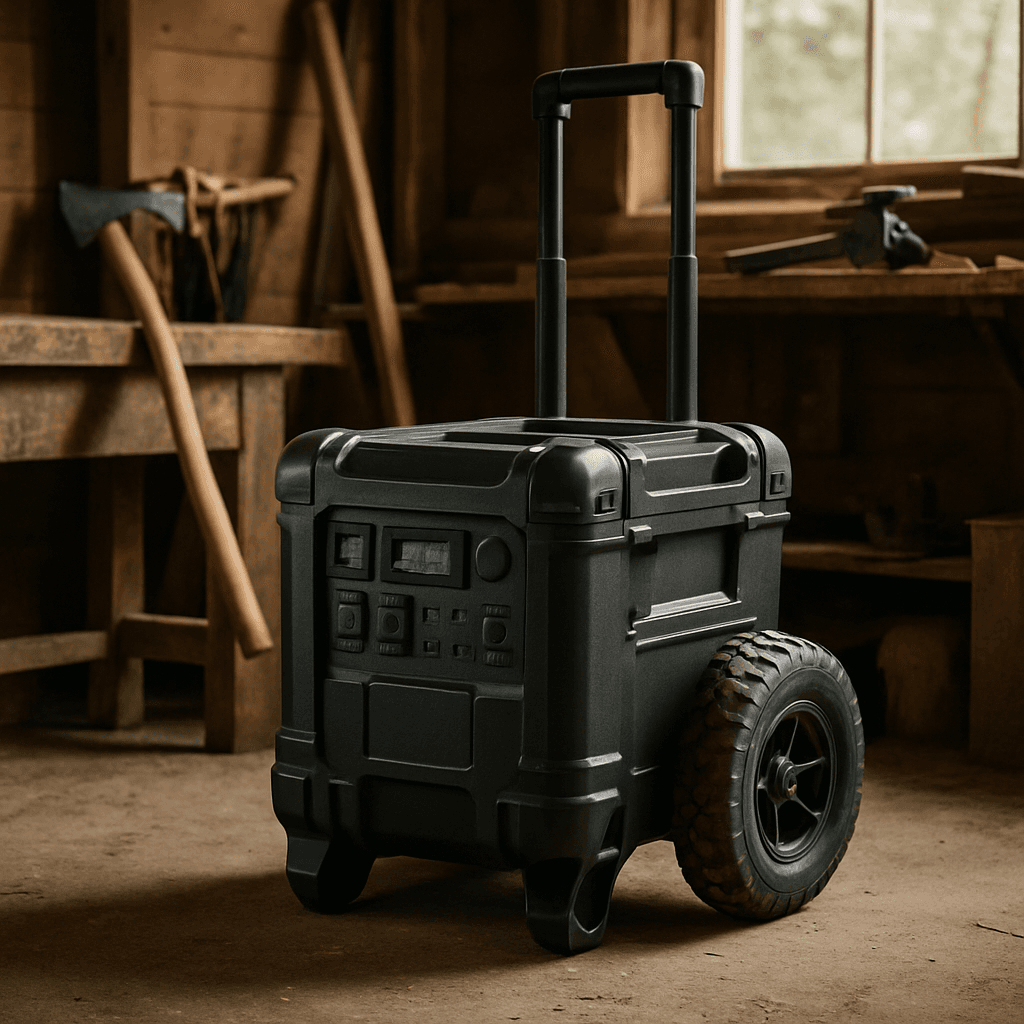 Power Station Reviews
Renogy Lycan 5000 Review: Off-Grid Power Analyzed
The Renogy Lycan 5000 pairs a wheeled, rugged design with expandable capacity for serious off-grid use. Full specs, runtime estimates, and who it's for.