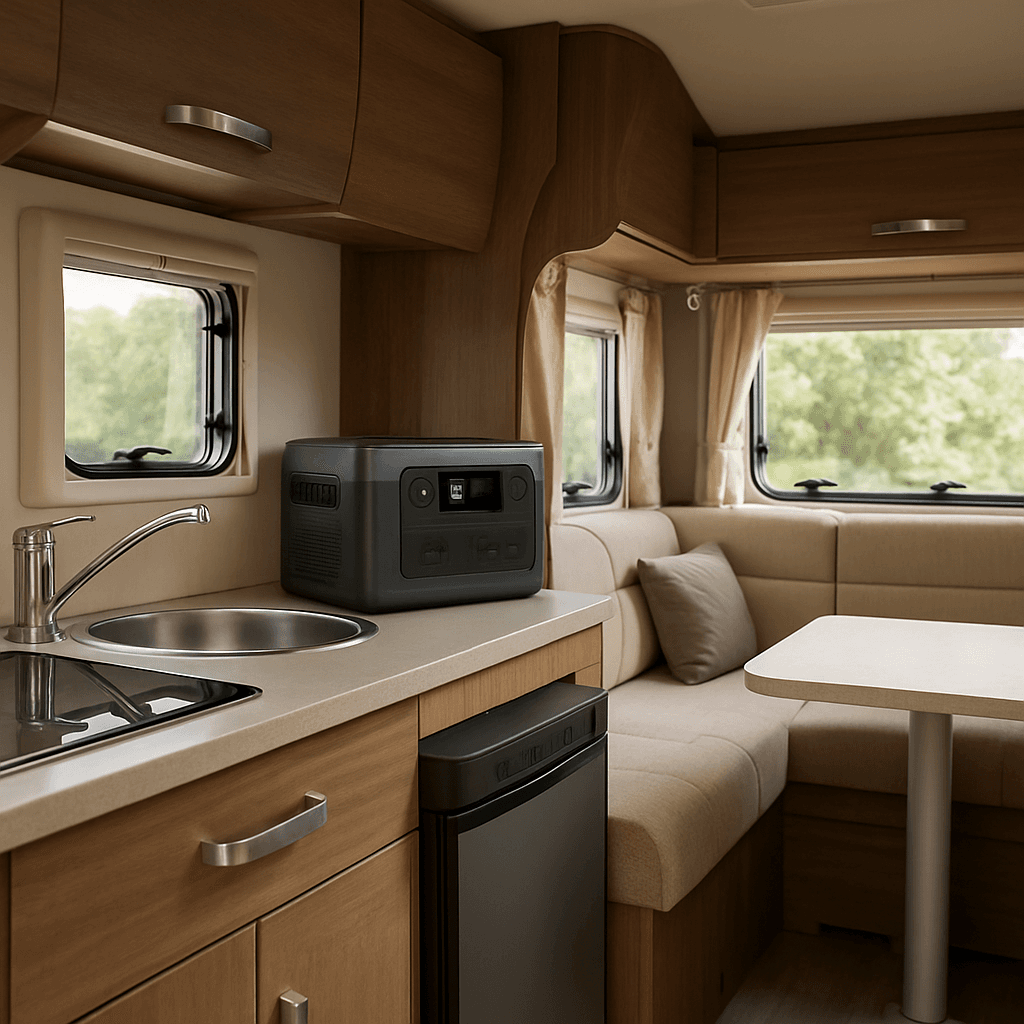
Best Power Station for RV Living 2026
RV living generally means more space and higher power demands than van life — think air conditioning, a full-size fridge, and multiple simultaneous appliances — which changes what to prioritize compared to a compact van build.
What RV Living Requires From a Power Station
- Higher continuous output than van life typically needs, to handle RV AC units and larger appliances
- A 30A RV-compatible outlet, ideally built in, to avoid extra adapters
- Enough capacity for a full-size or RV fridge running continuously, not just a mini fridge
- Solar compatibility if you'll be boondocking (camping without hookups) rather than staying at powered RV sites
- Enough headroom for an e-bike or e-scooter charge, if that's part of your RV setup — see our charging an electric bike guide for the extra capacity to budget
Our Top Picks for RV Living
Bluetti AC200L — 2,048Wh with a built-in 30A RV outlet and dual AC+solar charging. The most RV-specific pick on this list, purpose-built with the exact outlet RVers need.
EcoFlow Delta 2 Max — 2,048Wh expandable to 6,144Wh, 2,400W output. Best if you want to scale capacity over time as your RV power needs grow, particularly for full-time living.
Jackery Explorer 2000 Plus — 2,042Wh expandable to 12kWh, very quiet at ~30dB. The best pick for full-time RVers who want whole-RV-scale backup and appreciate quiet operation in a shared campground.
RV Hookups vs. Boondocking
If you primarily stay at powered RV sites with electrical hookups, a power station serves mainly as backup for power interruptions or boondocking side trips — a mid-capacity unit is often sufficient. If you boondock regularly, prioritize solar input capacity and consider an expandable system, since you won't have a reliable AC source to recharge from.
Don't Forget Solar for Full-Time Boondocking
For anyone boondocking regularly, pairing your power station with solar panels isn't optional — it's the only sustainable recharging method away from hookups. See our power station and solar panel bundle guide and our van life power setup guide (the sizing principles apply directly to RVs too, just scaled up).
RV Appliance Power Draw Reference
Before sizing a power station for RV use, know what you're actually trying to run. Real approximate running watts for common RV appliances:
| Appliance | Running Watts | Startup Surge |
|---|---|---|
| RV compressor fridge (12V/DC) | 40-100W | Minimal |
| RV residential fridge (AC) | 150-400W | Up to 1,200W |
| Microwave | 600-1,200W | None (resistive) |
| Coffee maker | 800-1,200W | None |
| RV AC unit (13,500 BTU) | 1,200-1,600W | Up to 3,500W+ |
| Water pump | 50-100W | Minimal |
| TV and entertainment system | 60-150W | Minimal |
| Laptop/phone charging | 15-65W each | None |
Add up what you'll realistically run simultaneously, not everything you own — most RVers don't run the AC and microwave at the same moment, and building your capacity plan around genuine overlap (not the theoretical maximum) avoids overbuying.
30-Amp vs. 50-Amp Service: What a Power Station Can Actually Replace
RV electrical systems are rated 30A or 50A at the shore power connection — a 30A RV service delivers roughly 3,600W (30A × 120V), while 50A RVs actually run two separate 120V/50A legs for up to 12,000W combined, since larger RVs with multiple AC units need that headroom. No portable power station on the market replaces full 50A service — that's a generator-or-hookup job. What a power station realistically replaces is 30A-equivalent coverage for essentials (fridge, water pump, outlets, one AC unit briefly) during boondocking or a hookup interruption, not simultaneous whole-RV operation at 50A capacity.
Frequently Asked Questions
Can a power station run RV air conditioning?
Some units can run smaller RV AC units briefly (1,200-1,500W range) on a full charge, but running AC for extended periods will drain even a large power station quickly. For heavy AC use, RV hookups or a generator remain more practical than battery power alone.
Do I need the 30A RV outlet specifically, or can I use an adapter?
An adapter works fine if your power station doesn't have a built-in 30A RV outlet, but a built-in outlet like the Bluetti AC200L's simplifies setup and removes one more thing to pack and potentially lose.
Related Articles
 Comparisons & Buying Guides
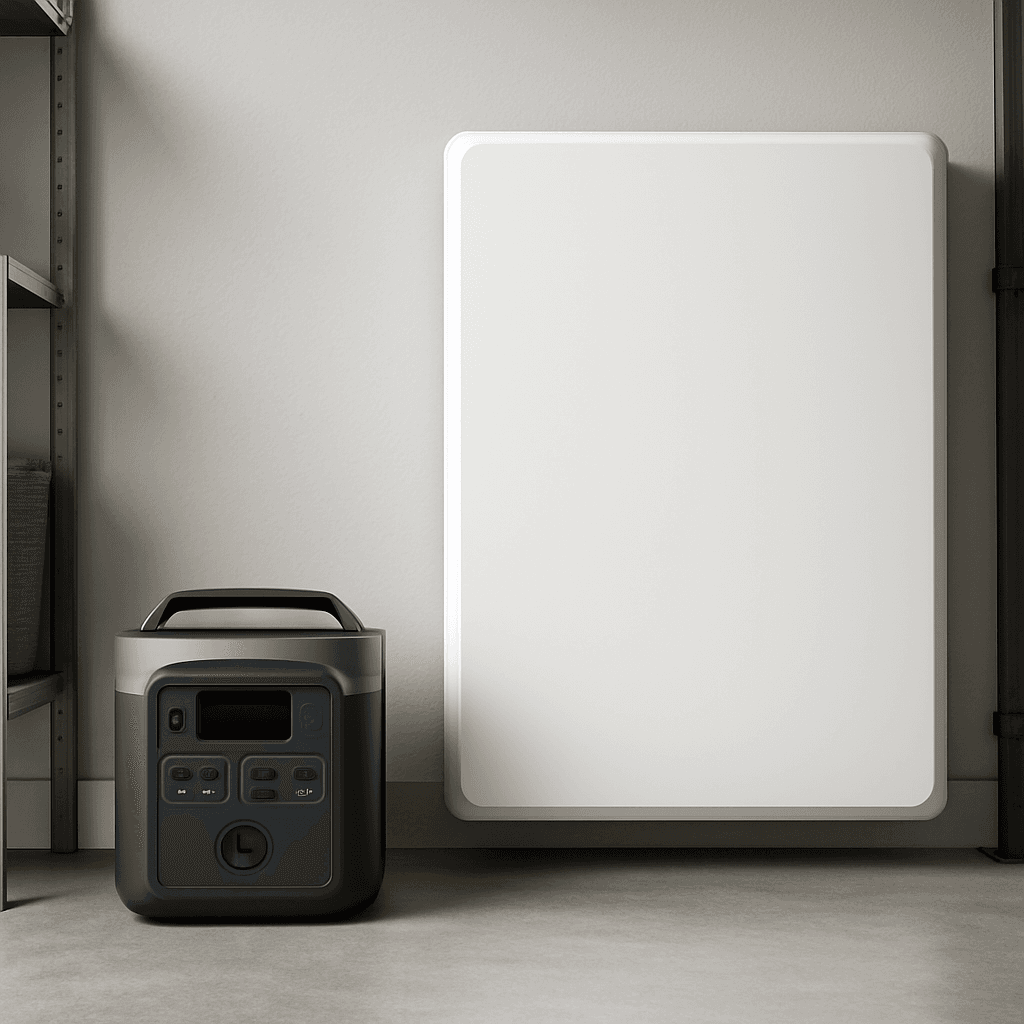
Portable Power Station vs. Whole-Home Battery System: Which Do You Actually Need?
A Tesla Powerwall costs $11,500-$16,000+ installed. A portable power station covers most of the same essentials for a fraction of that. Here's how to actually decide.
 Comparisons & Buying Guides
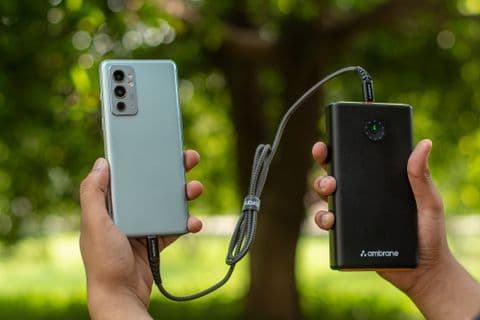
Power Bank vs. Power Station: What's the Real Difference?
They both store and dispense electricity, but a power bank and a power station aren't interchangeable. Here's what actually separates them and which one you need.
 Comparisons & Buying Guides
Can You Rent a Portable Power Station Instead of Buying One?
Renting is a real option if you only need backup power for a single trip or event. Here's where to actually rent one, real costs, and when renting beats buying.