Portable Power Stations for Van Life: Complete Setup Guide
Van life runs on power — your fridge, laptop, lights, water pump, and phone all depend on a system that has to work every single day, not just during the occasional outage. Here's how to build a setup that actually holds up to full-time use.
Step 1: Calculate Your Daily Energy Use
Add up the watt-hours you'll use in a typical day. A common van life daily load looks like this:
| Device | Watts | Hours/Day | Daily Wh |
|---|---|---|---|
| 12V compressor fridge | 50W avg | 24h (cycling) | ~600Wh |
| Laptop (remote work) | 65W | 6h | 390Wh |
| LED lighting | 20W | 4h | 80Wh |
| Water pump | 60W | 0.5h | 30Wh |
| Phone/device charging | 15W | 3h | 45Wh |
| Total | ~1,145Wh/day |
This is why most full-time van lifers land on a 1,000–2,000Wh power station paired with solar — it covers a realistic daily load with a buffer for cloudy days. See our full wattage sizing guide to customize this for your own setup. Many 12V van appliances list their draw in amps rather than watts — our watts to amps calculator converts them for this table.
Step 2: Choose the Right Power Station
For van life specifically, prioritize: LiFePO4 chemistry (handles daily deep cycling far better than older lithium-ion), a high solar input ceiling (400W+ ideally), and a form factor that fits your storage space and weight budget. The Jackery Explorer 1000 v2 is a strong lightweight pick; the EcoFlow Delta 2 Max suits vans with more storage space that want higher capacity and faster charging. If you split time between a van and a stationary setup, our tiny house power guide and RV living guide cover the overlapping considerations.
Step 3: Add Solar for Sustainable Charging
Shore power and driving alternator charging both work, but solar is what makes van life genuinely sustainable long-term without constantly hunting for outlets. Match your solar panel wattage as closely as possible to your power station's max solar input rating — undersizing means slow recharges, oversizing wastes money on unused capacity.
Step 4: Mount and Wire It Properly
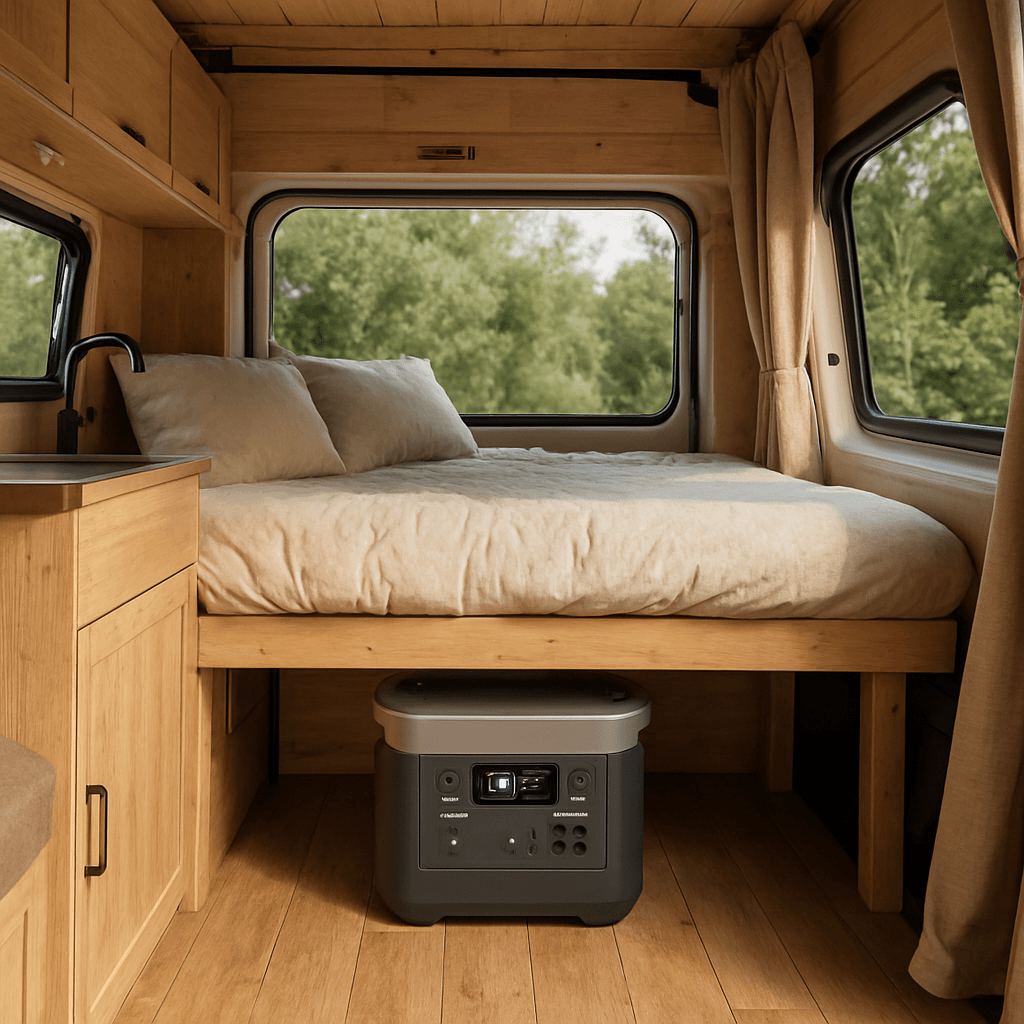
- Secure the power station so it can't shift or tip while driving — a strap or dedicated cubby works well.
- Keep it ventilated; avoid sealing it into an airtight cabinet, especially in hot climates.
- Run solar panel cables through a proper cable gland, not just a cracked window or door gap.
- Keep the unit somewhere accessible — you'll be checking charge level and plugging things in daily.
- If it charges overnight near where you sleep, know that the cooling fan can be noticeable during a fast AC charge in a small van's close quarters — see our noise levels guide for what to actually expect.
Daily Habits That Make Your System Last
- Charge opportunistically, not just when empty. Top off during sunny stretches rather than waiting for a low-battery warning.
- Position for sun, not just parking convenience, when solar charging is your main input.
- Monitor via the app so you always know your realistic runway before you need to find shore power.
- Avoid running the fridge and other loads simultaneously with a fast AC recharge unless your unit explicitly supports pass-through charging at full rate.
- Charging an e-bike alongside your other daily loads? See our guide on using a power station to charge an electric bike for the extra capacity to budget.
What About Backup for Bad Weather Stretches?
Multi-day cloudy or rainy stretches are the real stress test for a solar-dependent setup. Build in enough battery buffer (aim for 1.5–2 days of runway at your calculated daily use) so a few overcast days don't leave you scrambling for an RV park hookup.
Frequently Asked Questions
Can I run a van life setup on solar alone, with no shore power?
Yes, for most typical daily loads (1,000–1,500Wh/day), a properly sized power station with 300–400W of solar can stay charged indefinitely in most US climates outside of extended cloudy stretches or deep winter at northern latitudes.
How big a solar panel do I actually need for van life?
As a rule of thumb, match your panel wattage to roughly your daily Wh need divided by 4–5 peak sun hours. For a 1,145Wh/day load, that's roughly 230–290W of solar as a minimum — many van lifers round up to 300–400W to cover cloudy days.
Can I fly with my van life power station if I need to travel?
Almost certainly not — most power stations exceed the FAA's 160Wh airline limit by a wide margin. See our flying with a power station guide for the exact rules, and plan to buy or rent locally instead if you need power at your destination.
Related Articles
 Use Cases
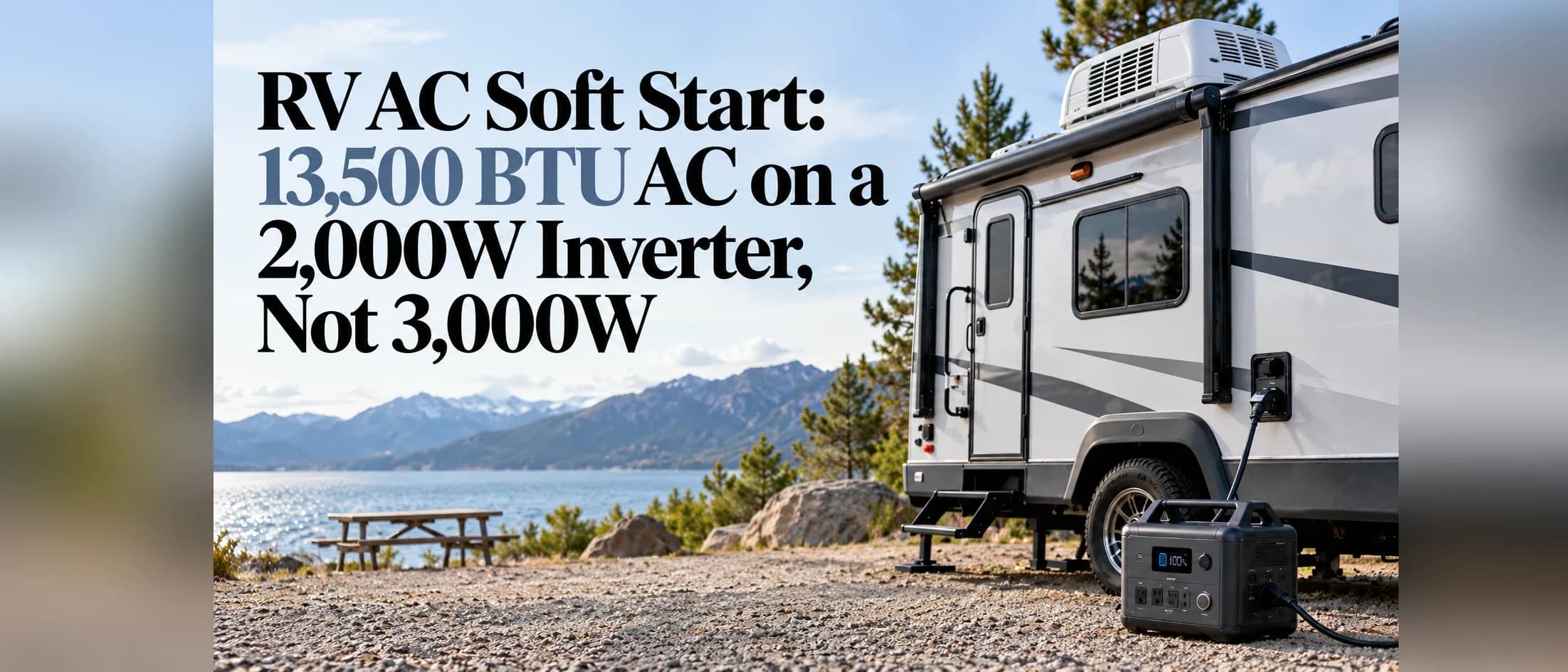
RV AC Soft Start: Run a 13,500 BTU AC on a 2,000W Inverter, Not 3,000W
A soft start can cut a 13,500 BTU RV air conditioner's startup surge by about two thirds. What that means for inverters and power stations, the real runtime math, costs, and when it is worth it.
 Use Cases
Can a Power Station Work as a UPS for Your Computer or Router?
Many power stations offer a UPS or EPS mode that switches to battery power during an outage. Here's how it actually works, and where it falls short of a dedicated UPS.
 Use Cases
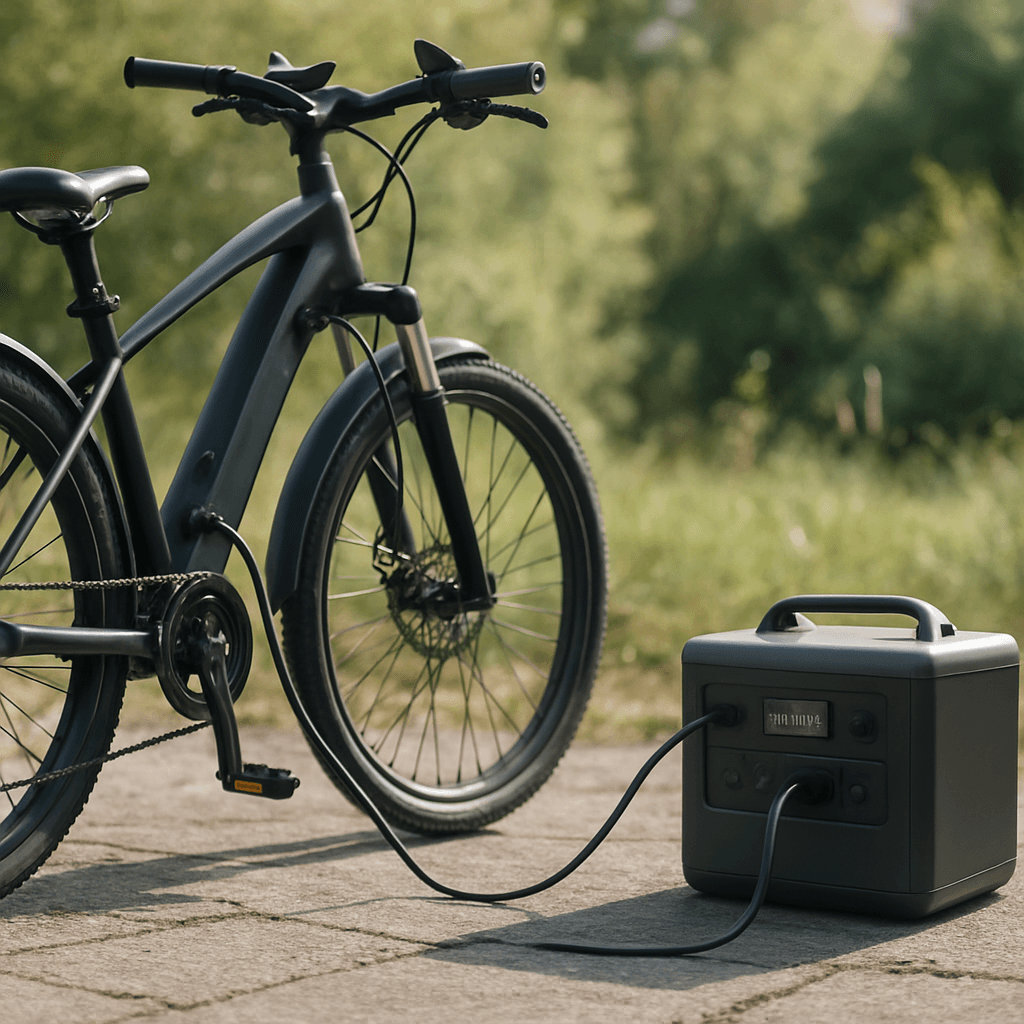
Using a Power Station to Charge an Electric Bike
E-bike charging away from home outlets is easier than you'd think with the right power station. Here's how to size one for your specific e-bike battery.