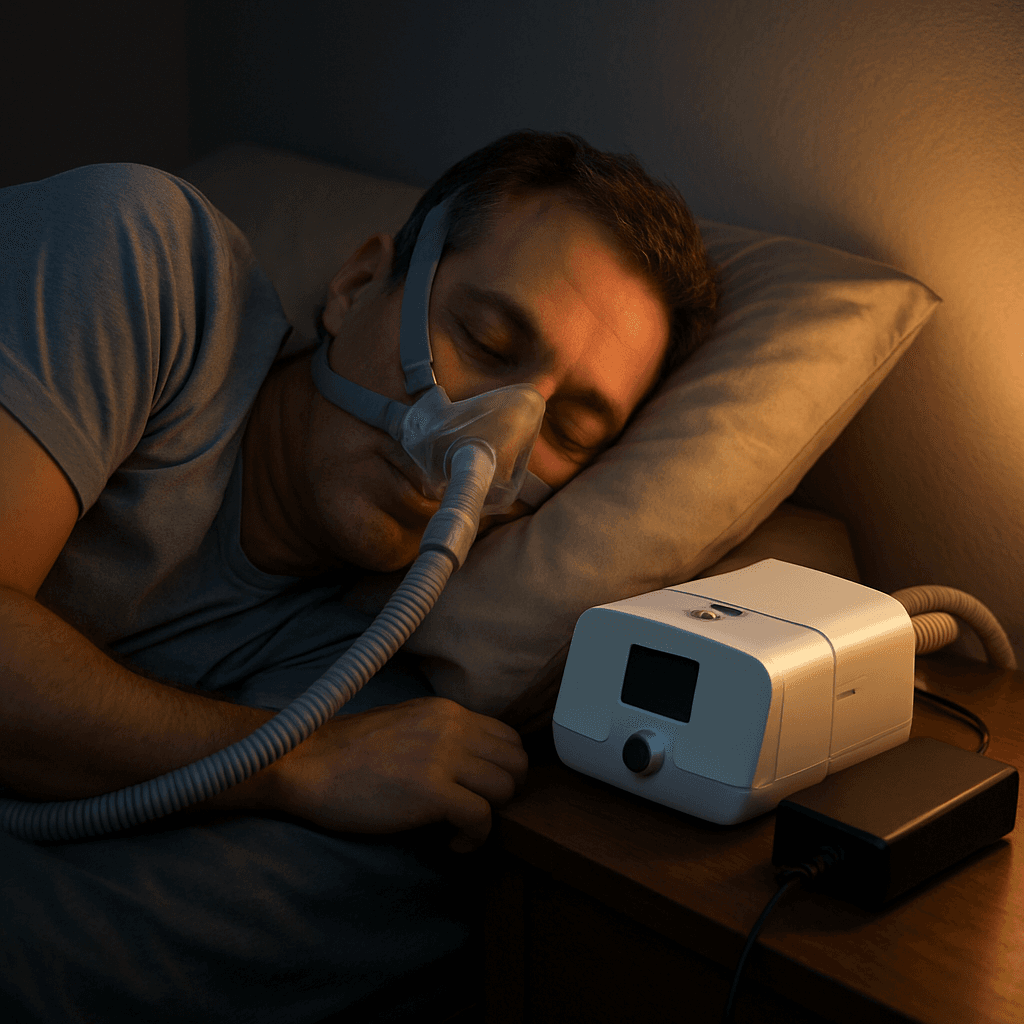
The short version: plug your CPAP's existing power brick directly into a power station's AC outlet — no special adapter needed. A basic CPAP (about 40W, no humidifier) uses roughly 320Wh over an 8-hour night, so a 500Wh power station covers about one night, a 1,000Wh unit about three nights, and a 2,000Wh unit about five. For the roughly 8 million Americans who use a CPAP machine nightly, a power outage isn't just an inconvenience — it can mean a night without sleep apnea treatment, which carries real health risks for people with moderate to severe apnea. The good news: CPAP machines draw relatively little power compared to most home appliances, so a mid-size power station keeps one running for multiple nights.
Correction, October 3, 2026: earlier versions of this guide overstated how many nights a power station runs a CPAP by roughly eight times (for example, "20–25 nights" for a 1,000Wh unit). The table and recommendations below use corrected math. If you sized a backup using the old numbers, please re-check it.
How Much Power Does a CPAP Actually Need?
Most CPAP machines draw between 30–60W without a humidifier running, and up to 80–100W with the heated humidifier active. Over an 8-hour night, 40W is 320Wh and 80W is 640Wh. That is low compared to appliances like a fridge (60–400W) or space heater (750–1,500W), which is why a mid-size power station can run a CPAP for several nights, but it is not so low that a tiny unit covers a full night.
How Long Will a Power Station Run My CPAP?
The formula: nights = usable watt-hours ÷ (CPAP watts × 8 hours). We assume 85% of the rated capacity is usable after inverter losses.
| Power Station Capacity | CPAP Only (no humidifier, ~40W) | CPAP + Humidifier (~80W) |
|---|---|---|
| 245Wh (e.g. EcoFlow River 3) | about 5 hours, less than one night | about 2.5 hours |
| 500Wh | about 1.3 nights | about 0.7 night (5 hours) |
| 768Wh (e.g. Bluetti AC70) | about 2 nights | about 1 night |
| 1,000Wh (e.g. Jackery Explorer 1000 v2) | about 2.8 nights | about 1.4 nights |
| 2,000Wh (e.g. EcoFlow Delta 2 Max) | about 5.4 nights | about 2.7 nights |
Your own CPAP's draw may be lower or higher; check the label on its power brick. Plug your own CPAP's wattage and power station capacity into our runtime calculator for an exact number, or see our wattage sizing guide for a full breakdown of the math.
Step-by-Step: Setting Up CPAP Backup Power
- Check your CPAP's power draw. Look at the label on the power brick (usually printed as "Output: XXW" or "XX.XV, X.XA") or your machine's user manual.
- Confirm your power station has a pure sine wave inverter. Nearly all modern power stations do, but this matters specifically for CPAP machines, since a modified sine wave can cause some CPAP motors to run hotter or louder.
- Plug the CPAP's existing power brick directly into the power station's AC outlet. No special adapter is needed for most machines — you use the exact same power supply you already use at home.
- Turn off the heated humidifier if you need to stretch runtime. This alone can roughly double how many nights you get from a single charge, as the table above shows.
- Keep the power station charged and ready, not stored empty. Recharge it after every use, the same way you'd treat a phone.
Which Power Station Size Should CPAP Users Buy?
Work backward from how many nights you need to cover. A 500Wh unit is enough for one night of CPAP only, 1,000Wh for about three nights, and roughly 2,000Wh for five. If you run the heated humidifier, double those capacities. If you also want to cover a fridge or other essentials during a longer outage, size up further or plan to recharge with solar panels — see our top-ranked power stations for options across every budget, or our dedicated best power stations for CPAP machines comparison for CPAP-specific picks.
Traveling With Your CPAP? A Power Station Isn't the Right Backup
A full-size power station is the right tool for home outages, but not for air travel: most exceed the FAA's 160Wh carry-on limit and can't fly at all. See our flying with a power station guide for the exact rules — for travel specifically, a dedicated CPAP battery (see below) or your machine's DC car adapter are the practical options instead.
Frequently Asked Questions
Can I run a CPAP with a DC battery adapter instead of AC?
Some CPAP models offer an optional DC adapter cable that skips the AC inverter entirely, slightly improving power efficiency. This is a nice-to-have but not necessary — running through the standard AC power brick works fine on any pure sine wave power station.
Will my travel CPAP battery be enough instead of a power station?
Dedicated CPAP travel batteries typically hold only 1–3 nights of charge and can't power anything else. A general-purpose power station costs slightly more but gives you multi-night CPAP backup plus the ability to run lights, charge phones, or power a mini fridge during the same outage.
Power Stations We'd Look At for This
Picked from our reviews for this scenario. Prices change often, so check the current price before you buy.
This page contains affiliate links. See our affiliate disclosure.
Bluetti AC70
4.3/5 in our review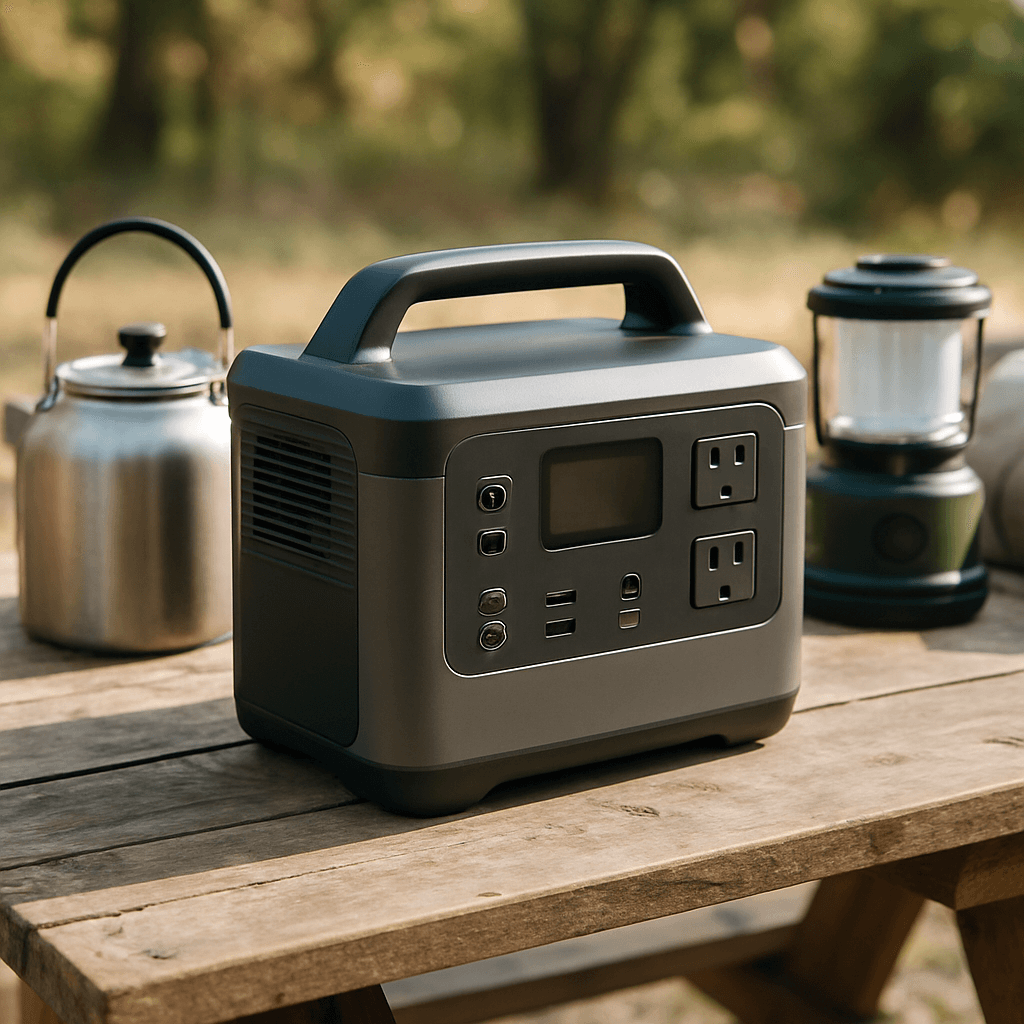
Jackery Explorer 1000 v2
4.4/5 in our review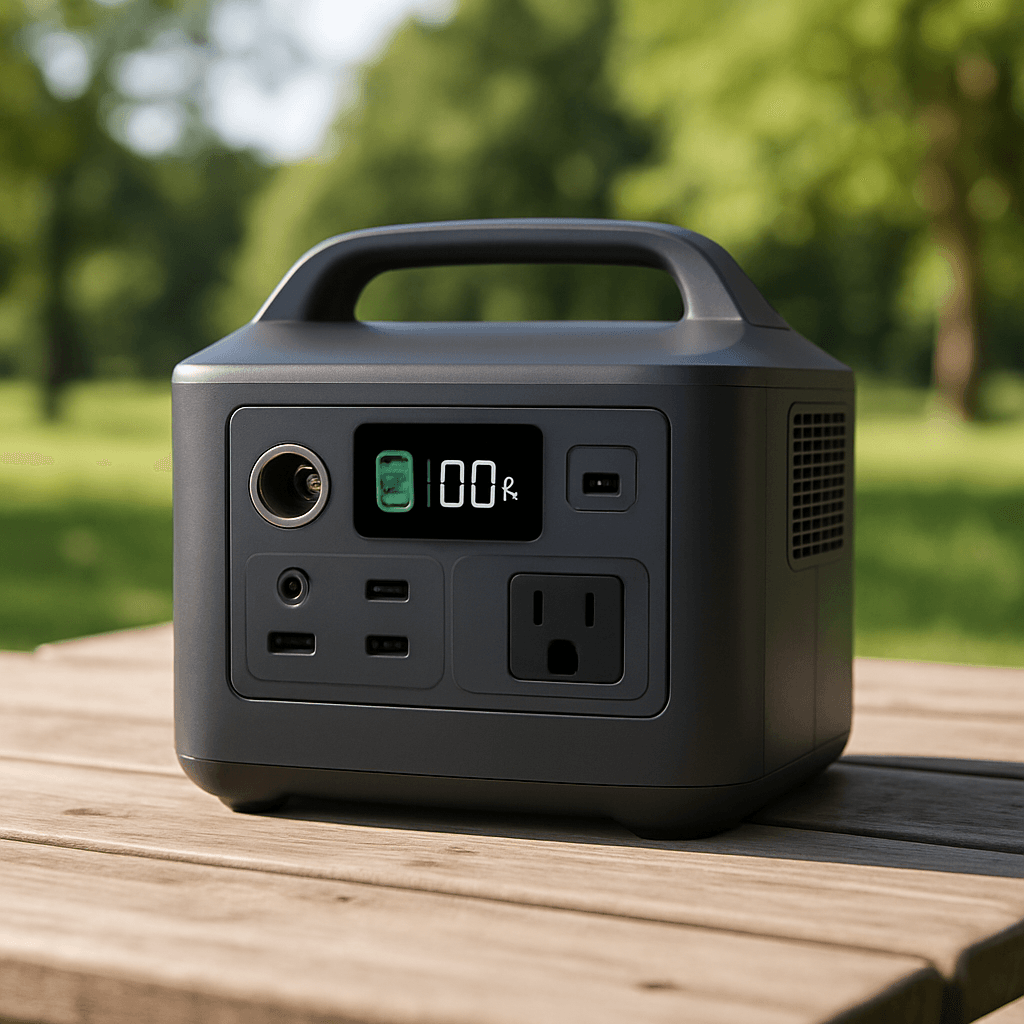
Anker SOLIX C1000
4.2/5 in our reviewRelated Articles
 Use Cases
RV AC Soft Start: Run a 13,500 BTU AC on a 2,000W Inverter, Not 3,000W
A soft start can cut a 13,500 BTU RV air conditioner's startup surge by about two thirds. What that means for inverters and power stations, the real runtime math, costs, and when it is worth it.
 Use Cases
Can a Power Station Work as a UPS for Your Computer or Router?
Many power stations offer a UPS or EPS mode that switches to battery power during an outage. Here's how it actually works, and where it falls short of a dedicated UPS.
 Use Cases
Portable Power Stations for Van Life: Complete Setup Guide
Everything you need to know to build a reliable power system for van life or full-time RV living, from sizing to solar to daily habits that make it last.