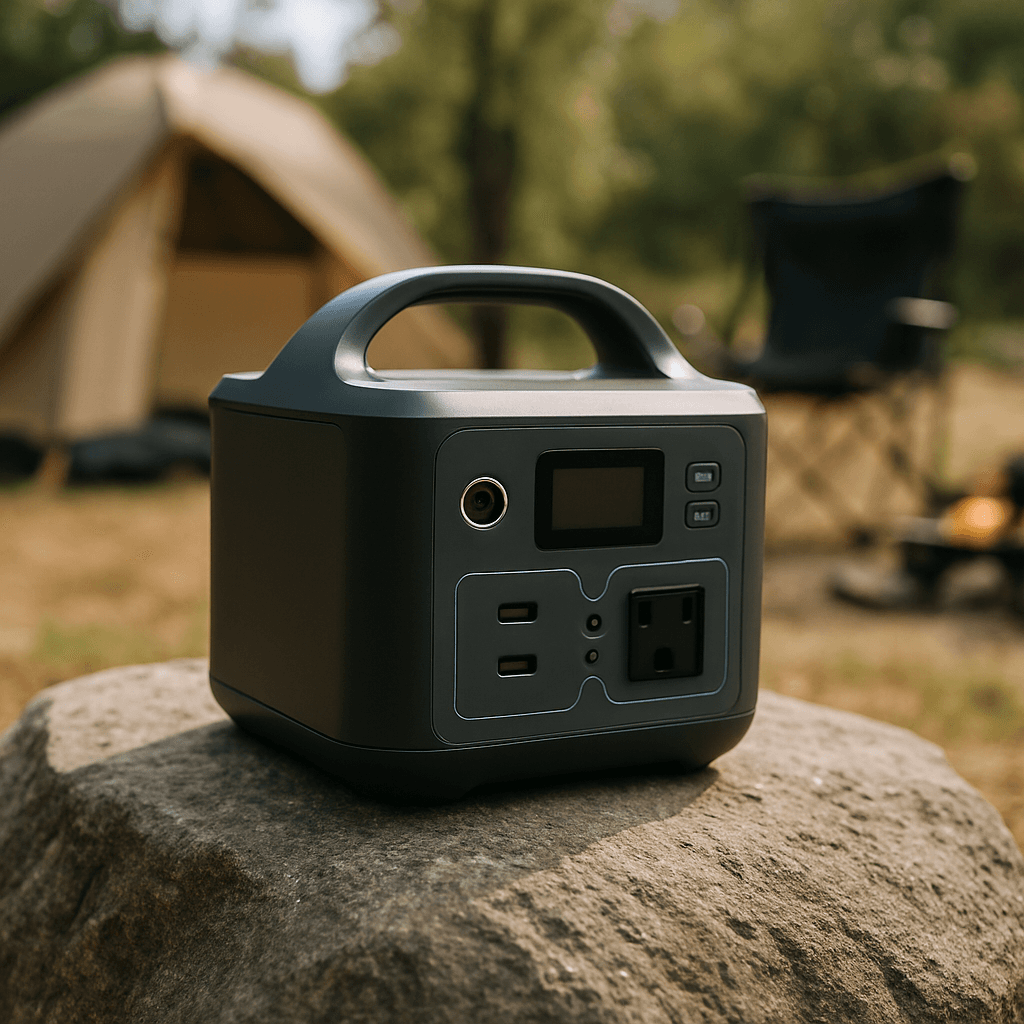
EcoFlow River 3 Review: Best Budget Power Station?
This page contains affiliate links. See our affiliate disclosure.
The short answer: the EcoFlow River 3 is a very portable 245Wh power station for phones, laptops, lights, and light camping, and an independent test measured 210Wh of usable energy and a one-hour full recharge. It is not a fridge or CPAP-overnight unit: at 40W, a CPAP would run it flat in about five hours. EcoFlow's US store lists it at $239, and retailers have promoted it at around $195-$199.
Spec Sheet
Specs are cross-checked against EcoFlow's River 3 product page; test figures come from StorageReview's October 2024 review, an independent test we did not run ourselves.
| Spec | Value |
|---|---|
| Capacity | 245Wh |
| Measured usable energy | 210Wh (86% of rated), per StorageReview |
| AC output | 300W continuous, 600W with X-Boost; 2 outlets |
| Other ports | USB-C 100W, USB-A 12W each (24W total), car port 126W |
| Battery chemistry | LiFePO4, 3,000+ cycles to 80% (EcoFlow) |
| Weight | 7.8 lb |
| AC recharge | 0-100% in about 60 minutes (it drew about 322W from the wall at full speed) |
| Solar recharge | As fast as 2.6 hours |
| Fan | Rated 30dB; "didn't make much noise" in testing |
| Price | $239 on EcoFlow's US store; about $195-$199 at some retailers |
What Independent Testing Found
StorageReview measured "the full discharge power of 210Wh before turning it off" against a 245Wh rating (86%), and noted it pulled 270Wh from the wall for a full recharge. Charging took about an hour on AC, matching EcoFlow's claim, and the fan was quiet. The practical takeaway is to plan around about 210Wh of usable energy, not the 245Wh on the box.
River 3 vs River 3 Plus
EcoFlow sells the River 3 in several versions. The Plus is a step up in output and capacity:
| River 3 | River 3 Plus | |
|---|---|---|
| Capacity | 245Wh | 286Wh |
| AC output | 300W (600W X-Boost) | 600W (1,200W X-Boost) |
| Weight | 7.8 lb | about 10.4 lb |
| AC outlets | 2 | 3 |
Specs are from EcoFlow's product page. Choose the Plus if you want to run a small kettle, a hair dryer, or a mini fridge on peak, and the base model if weight and price matter most.
Standout Features
- Genuinely pocketable at 7.8 lb, one of the lightest units in our top-ranked list.
- One-hour full recharge, confirmed independently.
- X-Boost extends the usable output to 600W for resistive, heating-type loads.
- LiFePO4 chemistry at a budget price.
The Downsides
- Not built for a fridge or major appliance. 245Wh covers phones, a laptop, lights, and small electronics, not multi-day home backup.
- 300W base output rules out microwaves and space heaters.
- High cost per watt-hour: $239 is about $0.98 per rated Wh, versus about $0.47 for the 768Wh Bluetti AC70 and $0.42 for a 1,000Wh class unit. You are paying for portability.
What This Actually Runs
Based on the measured 210Wh of usable energy:
- Phone charging (about 15Wh per charge): about 14 full charges
- Laptop (about 55Wh per charge): about 3.8 charges
- CPAP, 40W without humidifier: about 5 hours, which is less than one night (see our CPAP guide for what size you need)
- LED camping lantern (5W): about 42 hours
- Small mini fridge (60-80W): about 2.5-3.5 hours
Who This Fits
Solo travelers, light campers, students, and anyone who wants genuinely portable backup for phones and small electronics. For a fridge, medical equipment beyond brief use, or multi-day home backup, size up with our wattage sizing guide and best power stations under $500.
Final Verdict
The River 3 does what it promises: portable, fast-charging backup at an accessible price. Buyers who understand it is a device charger, not a home backup unit, will find it one of the best compact options available in 2026.
Disclosure: WattStation HQ may earn a commission if you purchase through links on this page, at no extra cost to you. This does not affect our rankings — see our editorial policy.
Frequently Asked Questions
Can the EcoFlow River 3 power a mini fridge?
Briefly. A small mini fridge drawing 60-80W would run for about 2.5 to 3.5 hours on a full charge, which makes this unit impractical as multi-day fridge backup.
Can the River 3 run a CPAP overnight?
Not a full night at a typical 40W draw: 210Wh of usable energy lasts about 5 hours. A low-power machine or one that draws closer to 25W could stretch that, or you could pair the River 3 with recharging, but a larger unit is the safer choice for unattended overnight backup.
What does X-Boost actually do?
X-Boost lets the unit run resistive loads such as small heaters or kettles that are rated above its 300W limit, up to 600W, by adjusting the output so they draw less than their nameplate wattage. It is aimed at heating-type loads; for motors, compare the device's startup draw against the unit's 600W surge rating.
Related Articles
 Power Station Reviews
Jackery Explorer 2000 v2 Review: Light, Quiet, and Strong Value at $899
The Jackery Explorer 2000 v2 packs 2,042Wh and 2,200W into 38.9 lb. Independent test data, current prices, runtimes, and how it compares with the Bluetti Elite 200 V2 and Anker C2000 Gen 2.
 Power Station Reviews
EcoFlow Delta Pro 3 Review: EcoFlow's New Flagship Analyzed
4,096Wh, 4,000W and 120/240V output at $2,799 (list $3,699). Independent test data, runtimes, expansion, warranty terms, and who actually needs this much power.
 Power Station Reviews
Renogy Lycan 5000 Review: Off-Grid Power Analyzed
The Renogy Lycan 5000 pairs a wheeled, rugged design with expandable capacity for serious off-grid use. Full specs, runtime estimates, and who it's for.