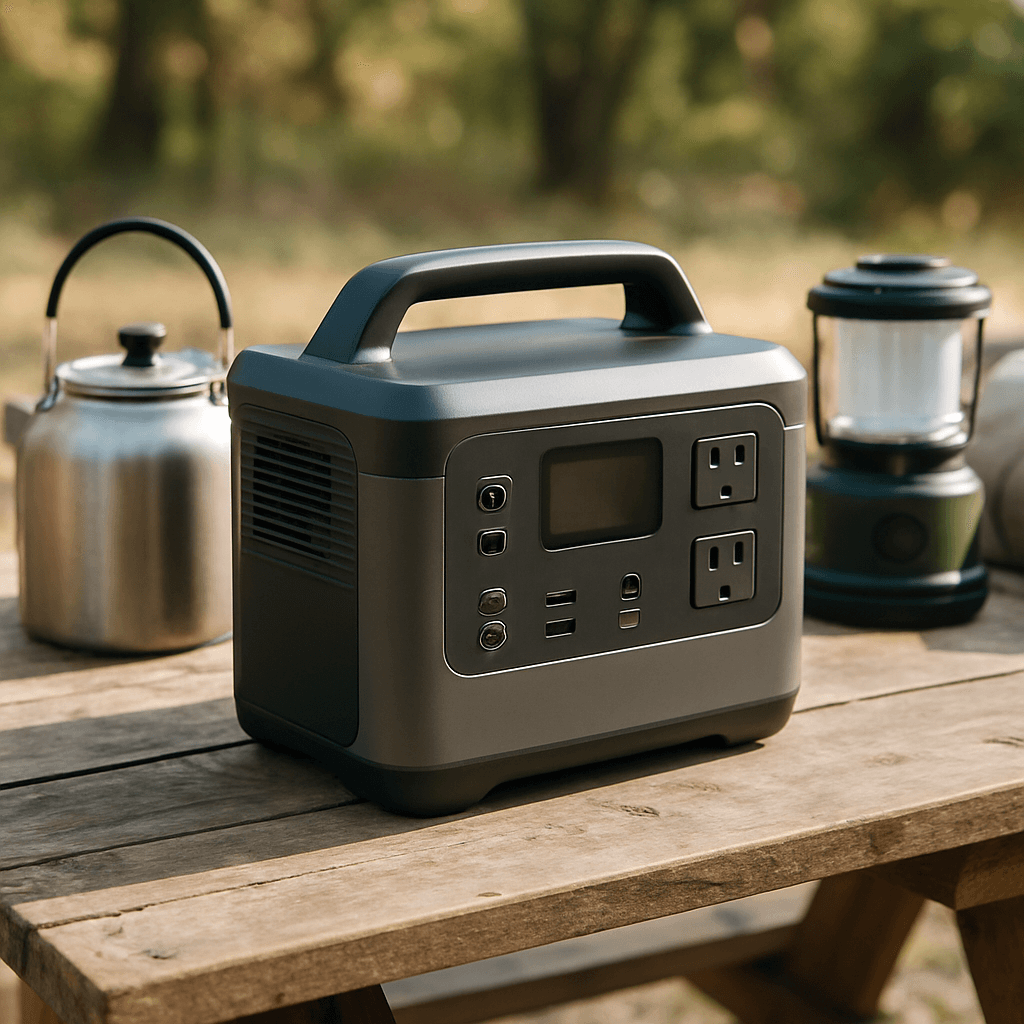
Jackery Explorer 1000 v2 Review: Is It Worth It in 2026?
This page contains affiliate links. See our affiliate disclosure.
Our take: the Jackery Explorer 1000 v2 is one of the lightest and quietest 1,000Wh power stations, and at Jackery's current $499 fall-sale price it is a good buy for camping, apartment outage backup, and short CPAP backup. At its $799 list price it is hard to recommend over the Anker SOLIX C1000 Gen 2, which costs less, charges in about half the time, and has twice as many outlets. Here is the data behind that call.
By the Numbers
Specs are cross-checked against Jackery's official Explorer 1000 v2 product page; test figures come from OutdoorGearLab's July 2026 review, an independent test we did not run ourselves.
| Spec | Value |
|---|---|
| Capacity | 1,070Wh |
| Measured usable AC energy | 910Wh (85% of rated), per OutdoorGearLab |
| Continuous AC output | 1,500W |
| Battery chemistry | LiFePO4, rated 4,000+ cycles to 70% capacity |
| Weight | 24.4 lb as measured (Jackery lists 23.8 lb) |
| AC recharge | Almost 2 hours on standard charging (OutdoorGearLab); Jackery also advertises a 1-hour "emergency charge" mode |
| Solar input | Up to 400W; 3-4 hours in ideal sun |
| AC outlets | 3, with tight spacing |
| Price | $799 list; $499 in Jackery's fall sale through Oct 5, 2026 (AndroidGuys) |
| Warranty | 3 years standard plus a 2-year extension that Jackery ties to Jackery.com purchases (policy) |
What Independent Testing Found
OutdoorGearLab scored it 67/100 and ranked it #7 of 14 power stations. Its findings:
- Capacity: 910Wh delivered from a rated 1,070Wh, which it called "a solid 85% efficiency," the highest absolute number among the 1,000Wh units it tested.
- Noise: "Even when pushing the 1000 v2 near its max wattage, the fans stayed nearly silent."
- Charging: "almost 2 hours to complete a full recharge" on standard AC (563 Wh per hour), and a "slower charge speed" was listed as a reason to skip it. Our earlier version of this review said "about an hour," which matches only the app-controlled emergency mode.
- Ports: "only three AC outlets," with tight spacing for bulky plugs.
How It Compares With Its Closest Rivals
| Jackery Explorer 1000 v2 | Anker SOLIX C1000 Gen 2 | Bluetti Elite 100 V2 | EcoFlow DELTA 3 | |
|---|---|---|---|---|
| Price seen | $499 (sale) | about $429 | $489 | $599 |
| Measured usable | 910Wh | 890Wh | 890Wh | 870Wh |
| AC recharge | almost 2 hours | 56 min (49 ultra-fast) | 1.8 hours | 50 min |
| Weight | 24.4 lb | 25.2 lb | 25 lb | 28.1 lb |
| AC outlets | 3 | 6 | 4 | 6 (3 grounded) |
Measured figures are from OutdoorGearLab, July 2026. At $499 the Jackery costs about $0.47 per rated watt-hour ($0.55 per measured watt-hour) against about $0.42 for the Anker. See our best power stations under $500 for the full comparison.
Strengths
- Lightest and quietest in its class. It is the lightest of the four units compared above, and the fans stay nearly silent near full load.
- Highest measured usable energy of the group at 910Wh.
- LiFePO4 longevity. Jackery rates it for 4,000-plus cycles to 70% capacity.
- 1,500W output covers most household devices, including a coffee maker or microwave.
Weaknesses
- Slow standard recharge, close to double the Anker and EcoFlow units above.
- Only three AC outlets, and not expandable.
- List price is high: $799 makes the value case depend on catching a sale.
- 1,070Wh runs out fast on heavy appliances: a 1,200W space heater drains it in under an hour.
Runtime You Can Expect
Based on the measured 910Wh of usable energy:
- Mini fridge (80W average): about 11 hours
- Full-size refrigerator (150W average): about 6 hours
- CPAP, 40W without humidifier, 8-hour nights: about 2.8 nights (about 1.4 nights with a heated humidifier)
- Laptop charging (about 55Wh per charge): about 16 charges
- Window AC (900W): about 1 hour
Estimates assume constant load. Use our wattage sizing guide and CPAP guide for your own devices.
Who Should Buy This
It suits campers and van lifers who prioritize low weight and quiet, apartment dwellers who want outage backup without a bulky unit, and CPAP users who want two to three nights of buffer. If you need fast turnaround between outages, more outlets, or expansion, look at the Anker or EcoFlow units above, or compare it with its closest sibling in our Explorer 1000 vs 1000 Plus comparison and our Jackery vs EcoFlow comparison. For multi-day whole-home backup, see our top-ranked power stations.
Disclosure: WattStation HQ may earn a commission if you purchase through links on this page, at no extra cost to you. This does not affect our rankings — see our editorial policy.
Frequently Asked Questions
How long does the Jackery Explorer 1000 v2 take to charge?
About 2 hours for a full charge on standard AC power, according to OutdoorGearLab's testing. Jackery also advertises a roughly 1-hour "emergency charge" mode that you switch on in its app, and 3 to 4 hours from 400W of solar in ideal sun.
Can the Jackery Explorer 1000 v2 run a full-size refrigerator?
Yes, for several hours. A standard refrigerator averaging 150W would run for about 6 hours on the measured 910Wh of usable energy, longer if you run it intermittently with a timer. For multi-day fridge backup you would want a larger or expandable unit.
Is the Explorer 1000 v2 better than the Anker SOLIX C1000 Gen 2?
It is lighter and quieter and delivers slightly more measured energy (910Wh versus 890Wh), but the Anker costs less per watt-hour, charges in under an hour, has six outlets instead of three, and offers 2,000W of output. For most buyers the Anker is the better value; the Jackery wins if weight and noise matter most.
Is the v2 worth it over the original Explorer 1000?
Yes. The v2 uses LiFePO4 cells instead of the original's lithium-ion battery, which gives it a much longer cycle life and faster charging. Unless you find the original at a steep discount, the v2 is the better long-term buy.
Related Articles
 Power Station Reviews
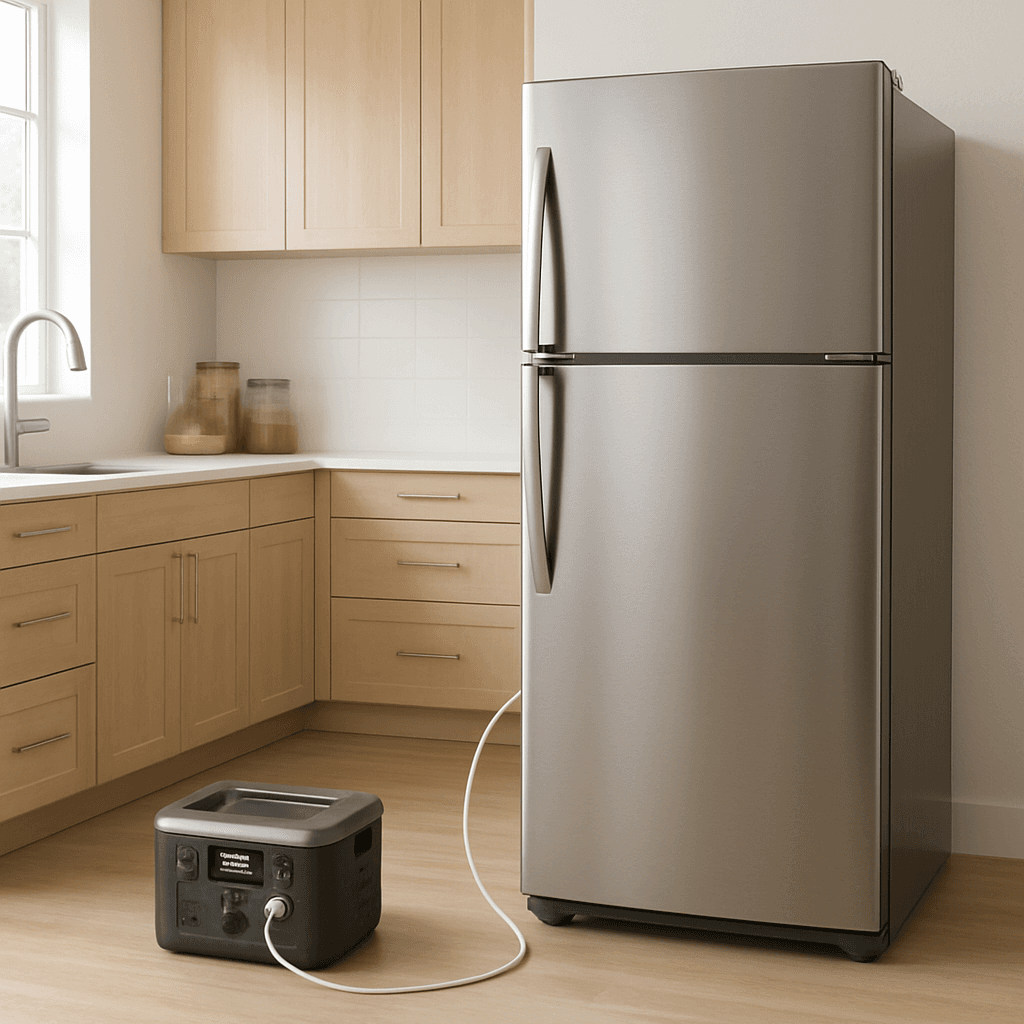
Jackery Explorer 2000 v2 Review: Light, Quiet, and Strong Value at $899
The Jackery Explorer 2000 v2 packs 2,042Wh and 2,200W into 38.9 lb. Independent test data, current prices, runtimes, and how it compares with the Bluetti Elite 200 V2 and Anker C2000 Gen 2.
 Power Station Reviews
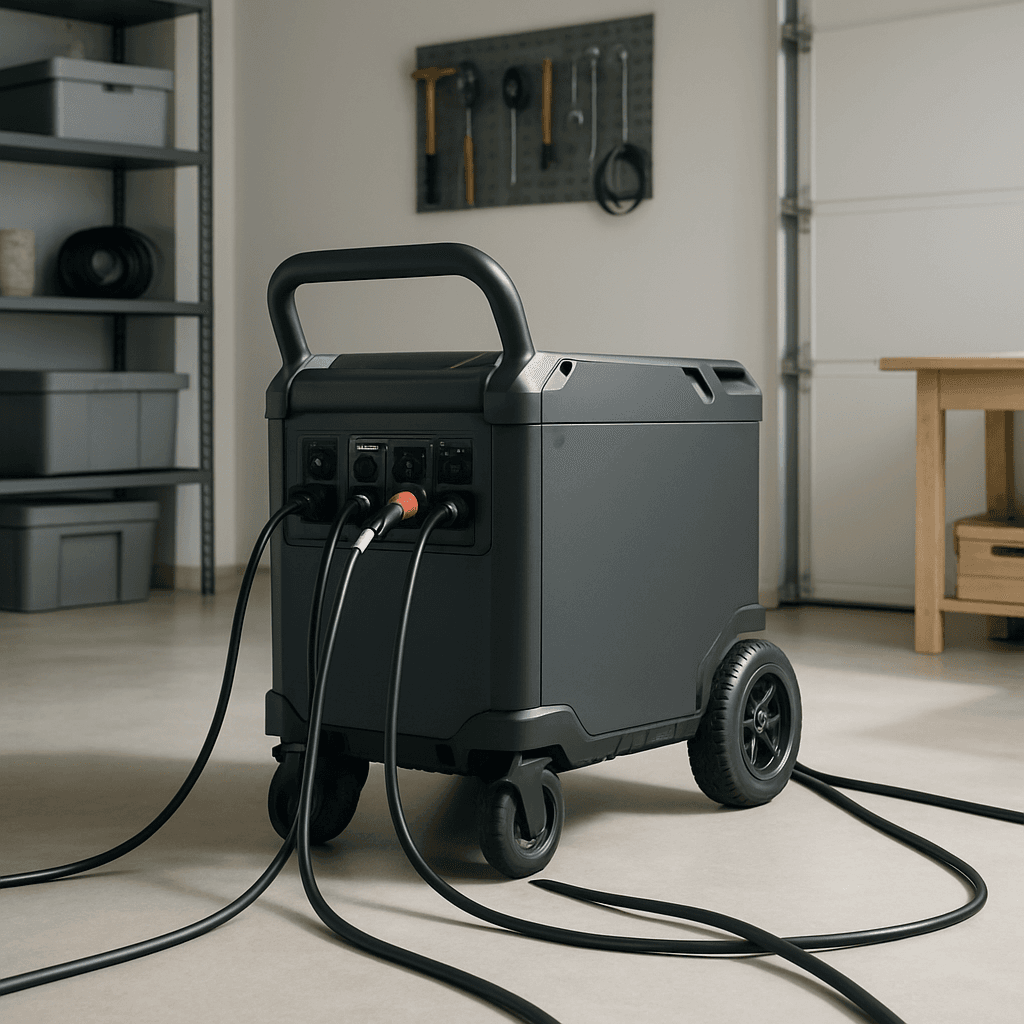
EcoFlow Delta Pro 3 Review: EcoFlow's New Flagship Analyzed
4,096Wh, 4,000W and 120/240V output at $2,799 (list $3,699). Independent test data, runtimes, expansion, warranty terms, and who actually needs this much power.
 Power Station Reviews
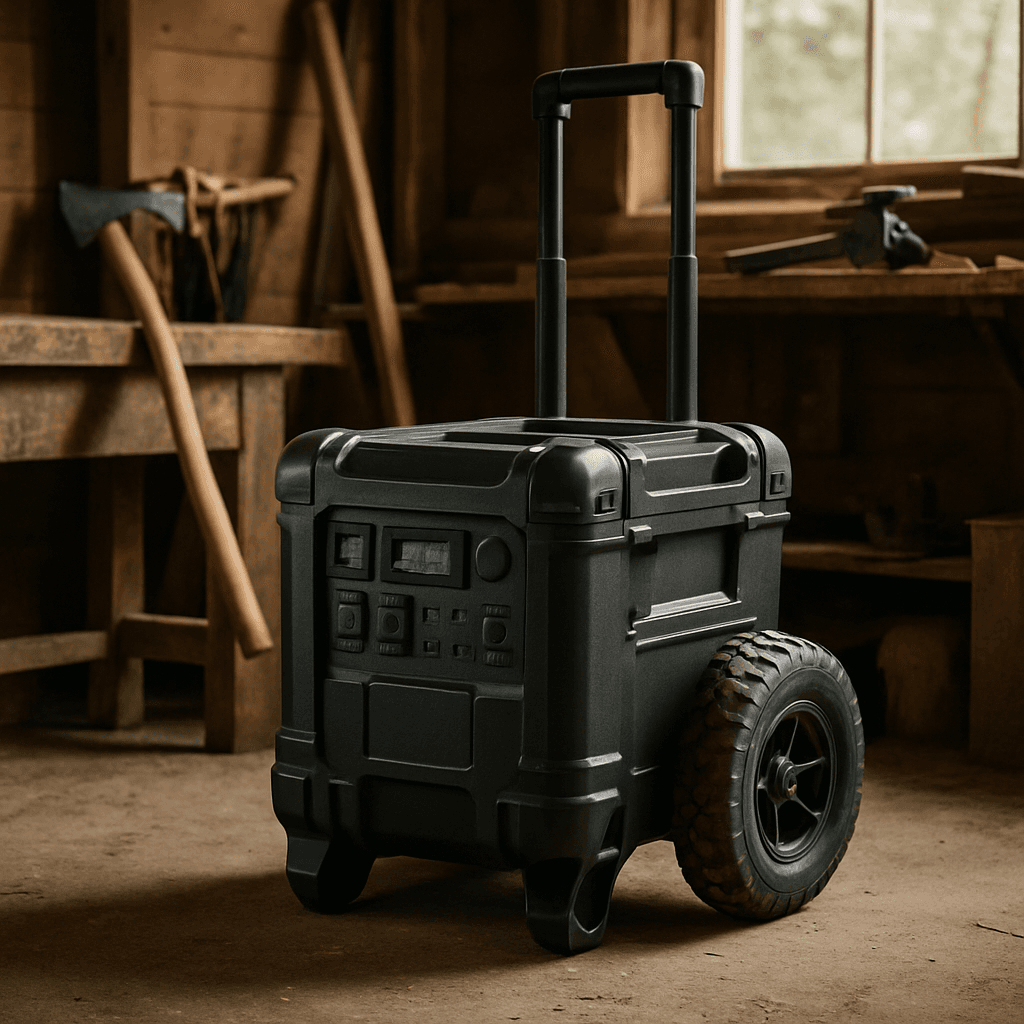
Renogy Lycan 5000 Review: Off-Grid Power Analyzed
The Renogy Lycan 5000 pairs a wheeled, rugged design with expandable capacity for serious off-grid use. Full specs, runtime estimates, and who it's for.