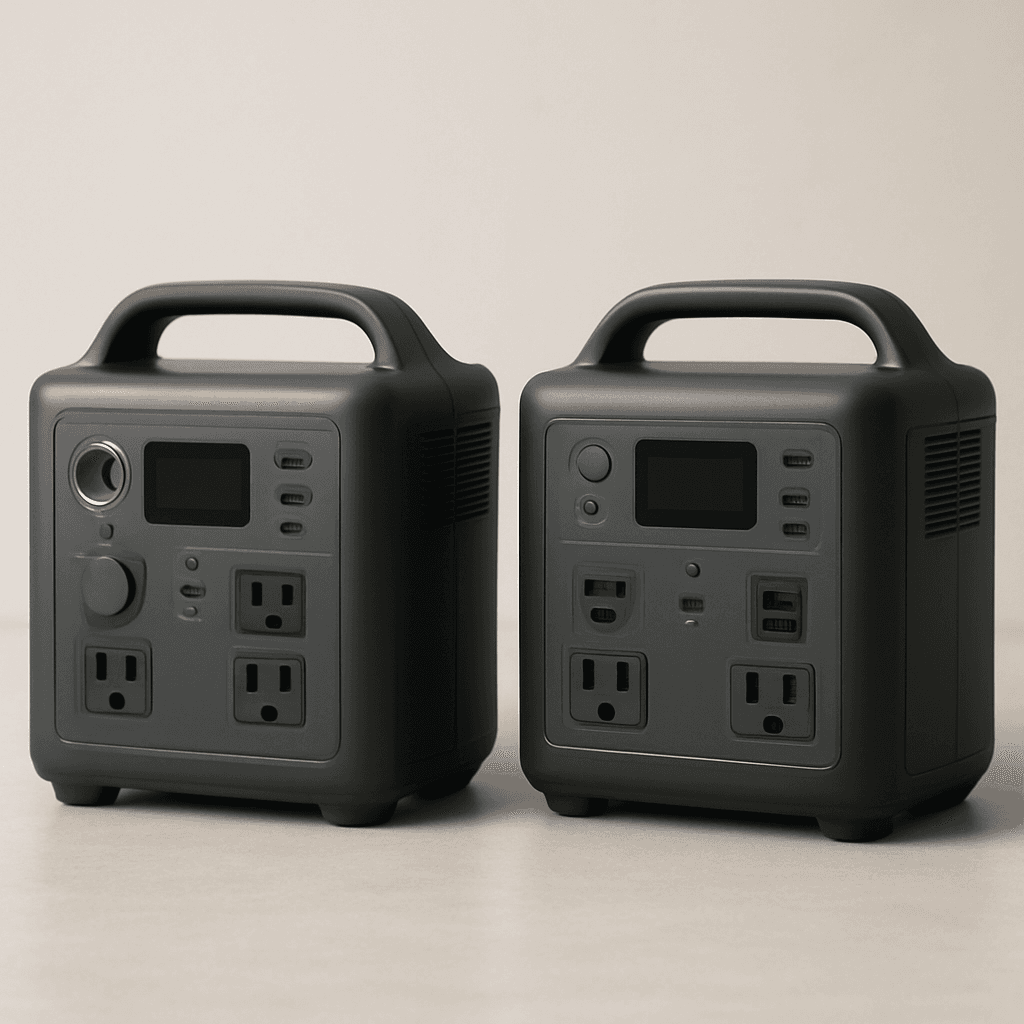
Jackery Explorer 1000 v2 vs 1000 Plus (2026): Which to Buy?
The short answer: buy the Explorer 1000 v2 if you want the lighter, quieter unit for camping, RVs, and apartment backup, especially at its $499 sale price. Buy the Explorer 1000 Plus only if you want to expand later (up to 5kWh) or need 2,000W of output. At the sale prices seen in 2026 both cost about $0.47 per rated Wh, so the choice comes down to weight and expansion, not price per Wh.
Core Specs Comparison
Specs are cross-checked against Jackery's Explorer 1000 v2 page and Explorer 1000 Plus page, plus Jackery's own side-by-side comparison (a manufacturer source). Measured v2 figures are from OutdoorGearLab's July 2026 test.
| Spec | Explorer 1000 v2 | Explorer 1000 Plus |
|---|---|---|
| Capacity | 1,070Wh | 1,264Wh |
| Measured usable | 910Wh (85%), OutdoorGearLab | no lab test found |
| Continuous / surge output | 1,500W / 3,000W | 2,000W / 4,000W |
| Battery | LiFePO4, 4,000 cycles to 70% | LiFePO4, 4,000 cycles to 70% |
| Expansion | None | Up to 5kWh with add-on battery packs |
| Weight | 23.8 lb (24.4 lb measured) | about 32 lb (14.5 kg) |
| AC recharge | Almost 2 hours standard (OutdoorGearLab); 1 hour in app "emergency" mode | About 1.7 hours (reviewers); 100 minutes (Jackery) |
| Max solar input | 400W | 800W |
| Fan noise (Jackery's figures) | 22dB | 30dB |
| List price | $799 | $999 |
| Sale price seen | $499 (fall sale through Oct 5, 2026) | $599 in April 2026; $619-$699 more recently |
Weights for the Plus vary between reviewers (some list about 25 lb); Jackery's UK comparison gives 14.5 kg, which is about 32 lb, and The Solar Lab lists 32 lb. Check Jackery's current spec sheet. The 2,000W/4,000W output and 800W solar input match 9to5Toys's April 2026 write-up.
The Core Difference: Expansion and Output
The v2 is a sealed 1,070Wh unit; you cannot add batteries. The Plus is the entry point to Jackery's expandable line and can grow to about 5kWh with up to three add-on packs, which makes it a starter for a home-backup setup. It also delivers 2,000W continuous against 1,500W, which matters for a 1,800W space heater, a larger power tool, or a well pump with a high starting surge. At the same time, the Plus gives up roughly 8 lb of portability.
What Independent Testing Found
OutdoorGearLab scored the v2 67/100 (#7 of 14) and found it "nearly silent" near full load, with a decent 85% usable energy but slow standard charging. We found no comparable lab test for the Plus. Mountain Weekly News tested it in May 2024 and reported about 1.7 hours of wall charging and a refrigerator, lights, a laptop, and a router running at once through a simulated outage. The Solar Lab's review of the Plus concluded it suits buyers who prioritize portability and expansion, because other units offer similar capacity for less money.
Price and Value
| Explorer 1000 v2 | Explorer 1000 Plus | |
|---|---|---|
| At list price | $0.75 per rated Wh | $0.79 per rated Wh |
| At best recent sale | $0.47 per rated Wh ($499) | $0.47 per rated Wh ($599) |
Both models are routinely discounted far below list, so avoid paying list price for either. Expansion batteries are an extra cost, so the Plus only pays off if you will use them. Check our Black Friday guide for what each brand has charged during holiday sales, and see our best power stations under $500 for alternatives like the Anker C1000 Gen 2 that charge in under an hour.
Estimated Runtime Comparison
The v2 figures use OutdoorGearLab's measured 910Wh; the Plus assumes the same 85% efficiency (about 1,074Wh), since we found no measured value.
| Device | Explorer 1000 v2 | Explorer 1000 Plus (base) |
|---|---|---|
| Mini fridge (80W average) | about 11 hours | about 13 hours |
| Full-size fridge (150W average) | about 6 hours | about 7 hours |
| CPAP (40W, 8-hour nights) | about 2.8 nights | about 3.4 nights |
| Space heater at 1,500W | about 36 minutes | about 43 minutes |
| Space heater at 1,800W | Not supported | about 36 minutes |
For your own loads, use our wattage sizing guide and CPAP guide.
Which Should You Buy?
Choose the Explorer 1000 v2 if:
- Weight and noise matter (camping, RV, van, small apartments).
- 1,070Wh and 1,500W cover your loads.
- You can catch the $499 sale price.
Choose the Explorer 1000 Plus if:
- You want to grow to 2-5kWh later and would rather not replace the unit.
- You need 2,000W for a larger appliance or tool.
- You want 800W of solar input for faster solar recharging.
If neither expansion nor 2,000W is a priority, the v2 is the better buy. If you know you will need much more capacity, skip the 1000 class and consider the Jackery Explorer 2000 Plus or the EcoFlow Delta 2 Max. See our Jackery vs EcoFlow comparison and the full v2 review.
Disclosure: WattStation HQ may earn a commission if you purchase through links on this page, at no extra cost to you. This does not affect our rankings — see our editorial policy.
Frequently Asked Questions
Can I add expansion batteries to the Explorer 1000 v2?
No. The v2 is a fixed 1,070Wh design. Only the Explorer 1000 Plus (up to about 5kWh with three add-on packs) and larger models like the 2000 Plus can be expanded.
Is the Explorer 1000 Plus heavier than the v2?
Yes, by about 8 lb: roughly 32 lb versus 23.8 lb according to Jackery's own comparison figures. Jackery also lists the Plus as louder at 30dB versus 22dB for the v2.
Is the Explorer 1000 Plus worth the extra money over the v2?
Only if you will use the expansion or the extra 500W of output. At 2026 sale prices (about $599 versus $499) it costs $100 more for 18% more capacity, which works out to the same price per Wh, plus 8 lb of extra weight.
Which charges faster, the 1000 v2 or the 1000 Plus?
On standard AC, the Plus (about 1.7 hours) is a bit faster than the v2 (almost 2 hours in OutdoorGearLab's test). The v2 has an app-controlled emergency mode that Jackery rates at about an hour.
Related Articles
 Comparisons & Buying Guides
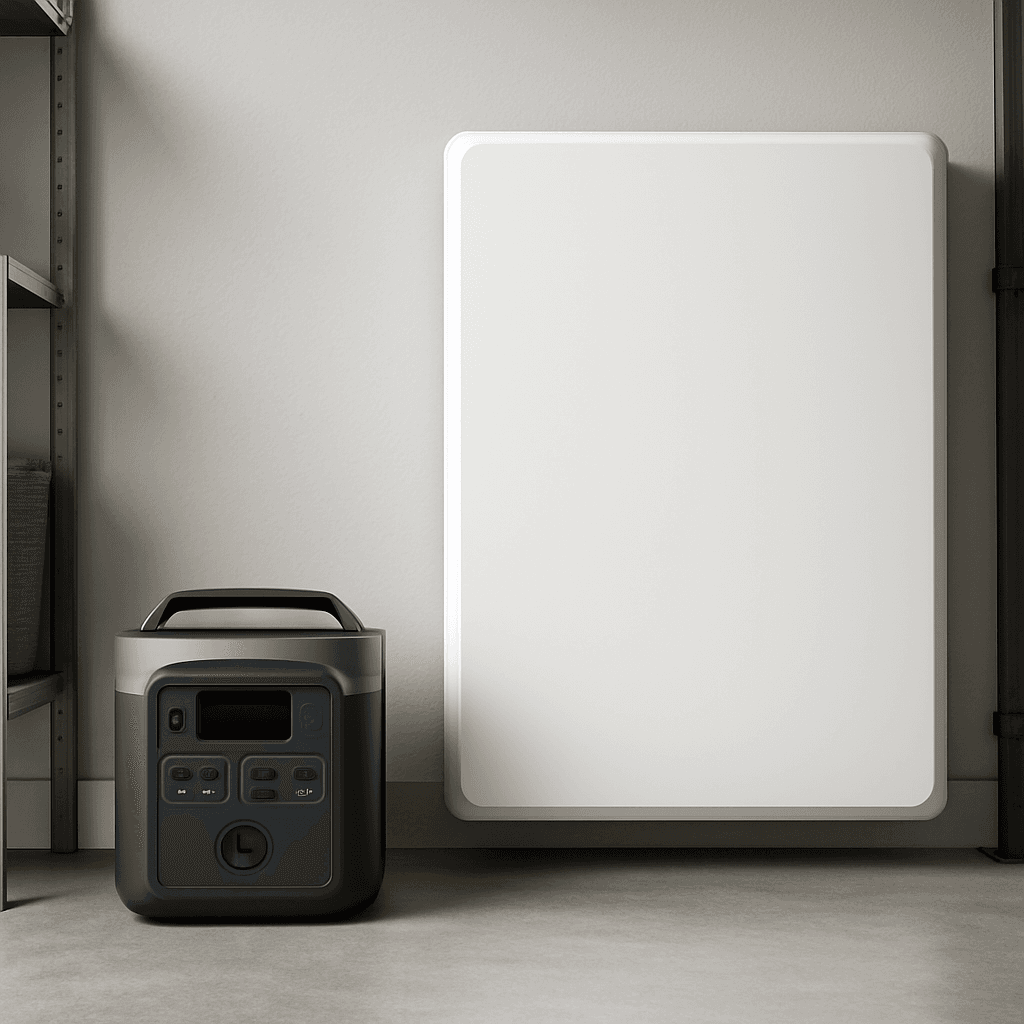
Portable Power Station vs. Whole-Home Battery System: Which Do You Actually Need?
A Tesla Powerwall costs $11,500-$16,000+ installed. A portable power station covers most of the same essentials for a fraction of that. Here's how to actually decide.
 Comparisons & Buying Guides
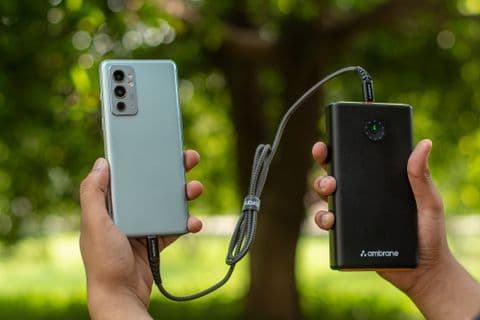
Power Bank vs. Power Station: What's the Real Difference?
They both store and dispense electricity, but a power bank and a power station aren't interchangeable. Here's what actually separates them and which one you need.
 Comparisons & Buying Guides
Can You Rent a Portable Power Station Instead of Buying One?
Renting is a real option if you only need backup power for a single trip or event. Here's where to actually rent one, real costs, and when renting beats buying.