
Best Power Station for Boats: IP Ratings, Safety and What Actually Works
The short answer: use a portable power station aboard a boat for electronics, lights, and charging, keep it dry below deck, and never make it the only power source for a bilge pump. Most mainstream stations have no waterproof rating at all (EcoFlow's DELTA 2 is IP20 and Bluetti's Elite 200 V2 has no IP rating), a few are splash-resistant (Goal Zero's Yeti 1500 is IPX4), and only a handful of marine-focused units claim IP65 or IP67. For a bilge pump, anchor light, or navigation gear you can't lose, use the boat's own fused battery circuit and treat the power station as backup.
Which Power Stations Have a Real IP Rating?
An IP rating tells you protection against solids (first digit) and liquids (second digit). It does not cover salt corrosion, which is a separate question.
| Station | IP rating | What it means |
|---|---|---|
| EcoFlow DELTA 2 | IP20 | Essentially no water protection |
| Bluetti Elite 200 V2 | None listed | Keep it dry |
| Goal Zero Yeti 1500 | IPX4 | Withstands splashing water from any direction |
| Jackery Explorer 1500 Ultra | IP65 (reviewers) | Dust-tight and resists low-pressure water jets; confirm on Jackery's spec sheet |
| Dakota Lithium PowerBox | IP67 (reviewers) | Dust-tight and rated for temporary immersion; confirm with the maker |
Ratings come from the brands and review sites. Review sites and retailer listings don't always match, and we found no independent salt-fog testing for any of these units, so check the exact model's spec sheet before relying on it. IP ratings apply only when port covers are closed.
What Marine Use Requires
- Keep it dry: mount the unit below deck or under cover, even if it is IP-rated.
- Secure it: a fixed mount or padded compartment keeps it from sliding in rough water.
- Solar: a small foldable or fixed panel extends time away from shore power. See our solar panel sizing guide.
- Enough output: fish finders, GPS, radios, cabin lighting, and device charging.
- Pure sine wave AC: for marine electronics and chargers.
Typical Marine Electronics Load
| Equipment | Typical watts |
|---|---|
| Fish finder or GPS | 10-30W |
| VHF radio | 5-25W |
| Cabin lighting | 10-40W |
| Phone or device charging | 10-20W each |
| Bilge pump | 300-1,100W (startup surge higher) |
A day on the water with a fish finder (25W × 8h), VHF (10W × 8h), lights (20W × 4h), and phone charging comes to about 400Wh, so a 768Wh unit such as the Bluetti AC70 covers it. A Jackery Explorer 1000 v2 (910Wh measured usable) gives more margin for a weekend. Use our runtime calculator for your own gear.
The Bilge Pump Rule
A portable power station can run auxiliary loads, but it shouldn't be the only supply for a bilge pump:
- Bilge pumps belong on the boat's own dedicated, fused circuit from a properly installed battery, following ABYC's standard for bilge pumps (H-22).
- A battery's protective shutdown can cut power at the worst moment, and an audible warning from a bilge isn't likely to be heard at the helm.
- Surge: like a sump pump, a bilge pump has a startup spike; see our running watts vs surge watts guide and sump pump guide.
Fixed lithium installations on boats fall under ABYC's E-13 standard, which requires a battery management system. A "meets ABYC" claim on a product page doesn't mean the unit is certified the way you'd expect, so ask for documentation, and have a marine electrician review any permanent installation.
Power Station vs the Boat's 12V System
Most boats already run a 12V DC system. A portable station is useful for redundancy (a dead boat battery doesn't take your navigation electronics with it), for 120V AC devices, and because you can take it off the boat for camping or home backup. For small boats with no real electrical system, it can be the primary electronics supply. Some units accept 12V DC input; check your unit's manual and your boat's wiring before assuming it will charge from the engine or alternator.
Saltwater and Storage
IP-rated units still aren't saltwater-proof. Rinse and dry exposed ports after spray, keep covers closed, and store the unit where it won't sit in a damp bilge. Between trips, don't leave it at 100% or empty for weeks in a hot cabin; see our maintenance guide for storage charge guidance, and check on it periodically.
Disclosure: WattStation HQ may earn a commission if you purchase through links on this page, at no extra cost to you. This does not affect our rankings — see our editorial policy.
Frequently Asked Questions
Is any power station fully waterproof for marine use?
No. Even IP65 and IP67 units are rated for jets or temporary immersion with the covers closed, not for living in a bilge, and IP ratings say nothing about salt corrosion. Keep the unit dry and secured.
Can I run a bilge pump from a portable power station?
Not as the only source. Keep the bilge pump on a dedicated, fused circuit from the boat's own battery, and use the power station for other loads or as a backup.
Which power stations are IP-rated?
Per their makers and reviewers: Jackery's Explorer 1500 Ultra (IP65), Dakota Lithium's PowerBox (IP67), and Goal Zero's Yeti 1500 (IPX4). Most mainstream units, including the EcoFlow DELTA 2 (IP20) and Bluetti Elite 200 V2, have no meaningful rating.
Can I charge a power station from my boat's engine or alternator?
Some stations accept 12V DC input, but check your unit's manual and your boat's electrical system first; a car-style input is usually slow and limited.
Power Stations We'd Look At for This
Picked from our reviews for this scenario. Prices change often, so check the current price before you buy.
This page contains affiliate links. See our affiliate disclosure.
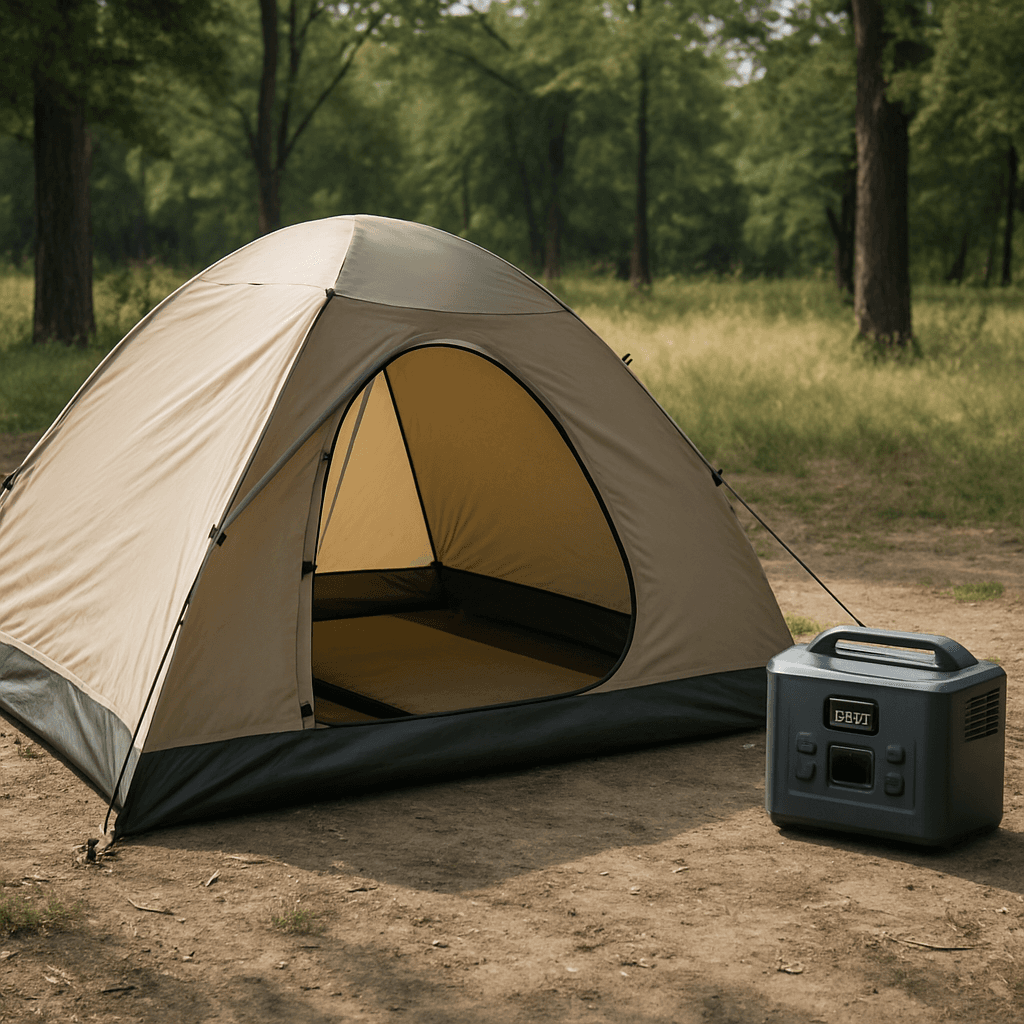
Bluetti AC70
4.3/5 in our review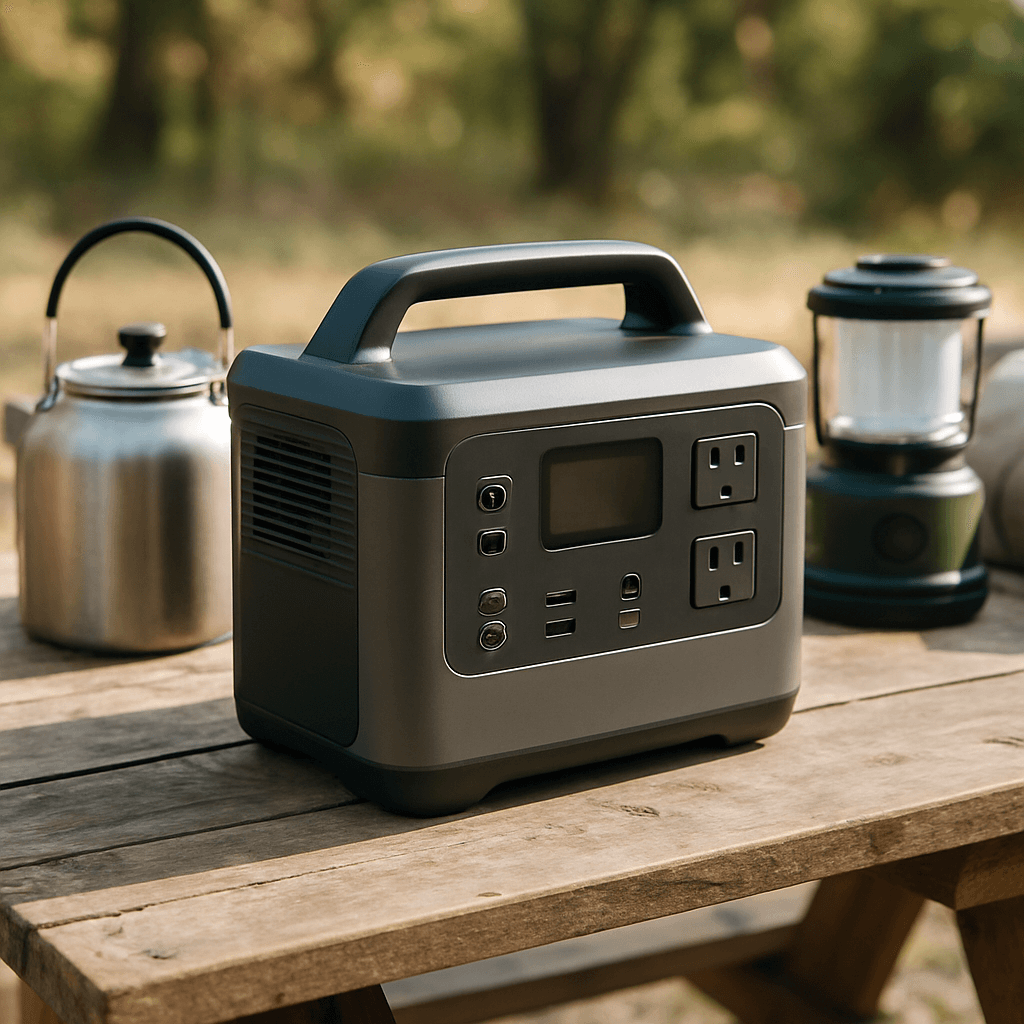
Jackery Explorer 1000 v2
4.4/5 in our review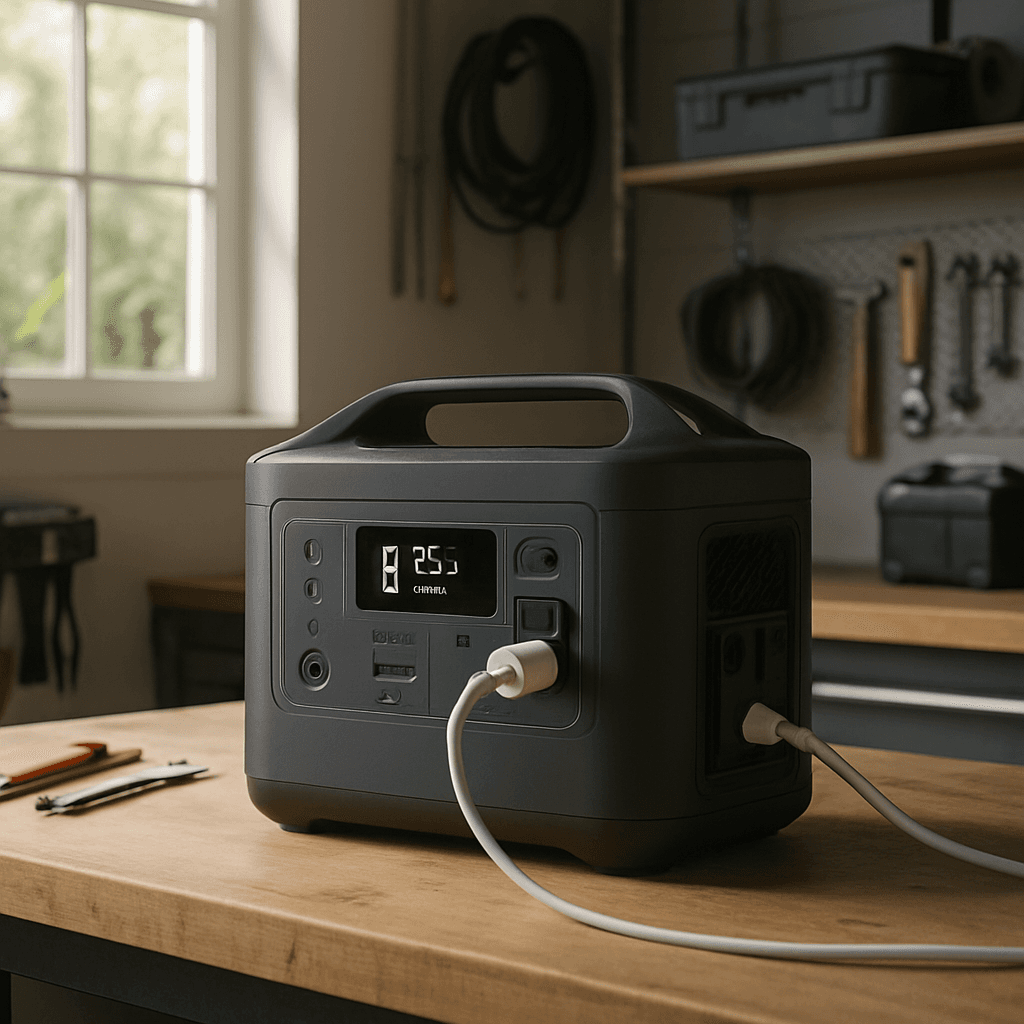
Bluetti Elite 200 V2
4.5/5 in our reviewRelated Articles
 Use Cases
RV AC Soft Start: Run a 13,500 BTU AC on a 2,000W Inverter, Not 3,000W
A soft start can cut a 13,500 BTU RV air conditioner's startup surge by about two thirds. What that means for inverters and power stations, the real runtime math, costs, and when it is worth it.
 Use Cases
Can a Power Station Work as a UPS for Your Computer or Router?
Many power stations offer a UPS or EPS mode that switches to battery power during an outage. Here's how it actually works, and where it falls short of a dedicated UPS.
 Use Cases
Portable Power Stations for Van Life: Complete Setup Guide
Everything you need to know to build a reliable power system for van life or full-time RV living, from sizing to solar to daily habits that make it last.