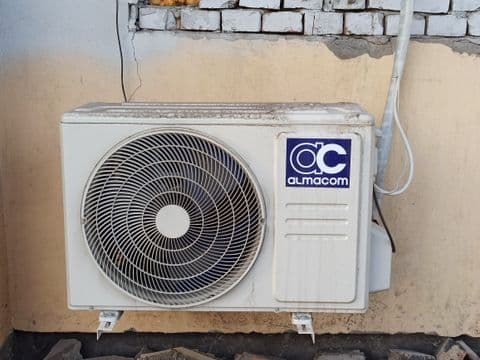
Can a Power Station Run a Mini Split AC? Wiring, Watts and Runtime
The short answer: sometimes, but only for a few hours, and only if the wiring works. Two things decide it. First, a 12,000 BTU mini split draws about 1,000-1,150W while cooling, so a 2,000Wh-class power station runs it for roughly 1.7 to 1.9 hours. Second, most mini splits are hard-wired to a dedicated circuit and have no plug, so a licensed electrician has to add a safe way to feed them (an inlet with a transfer switch or interlock) before a power station can power one. If you can't wire it, a plug-in window or portable AC is the realistic alternative.
Step 1: Can You Even Connect It?
Check the outdoor unit's data plate and the way it is installed:
| Question | What to look for | What it means |
|---|---|---|
| Voltage | 115V or 208/230V on the nameplate | 9,000 to 12,000 BTU units are often 115V; 18,000 to 24,000 BTU units are usually 208-230V. A few small units need 230V, so the nameplate is the only reliable source |
| Plug or hard-wired? | A cord with a plug, or wires to a disconnect box | Most are hard-wired on a dedicated breaker. A homeowner on a public electrician forum found their wall unit had no plug and was told it could not be powered directly |
| Circuit rating | MCA (minimum circuit ampacity) and MOCP (maximum breaker) | Typical 115V 12,000 BTU units list an MCA of about 18-19A and a 20A breaker. These size the wire and breaker, not the actual running draw |
If the unit is hard-wired, the correct fix is an electrician installing a power inlet with a transfer switch or mechanical interlock at or near the breaker panel. Never back-feed a house circuit with a plug-to-plug cord: it can energize utility lines and kill a lineworker. If the unit is 230V, you need a station with a 120/240V output and a compatible connection. Of the units in our lineup, the EcoFlow Delta Pro 3 lists both 120V and 240V outputs.
Step 2: How Much Power Does It Draw?
Published figures vary by model, so use your unit's nameplate when you can. Typical numbers:
| Mini split size | Running watts while cooling | Startup |
|---|---|---|
| 9,000 BTU | about 700-900W | brief spike; inverter models ramp up gradually |
| 12,000 BTU | about 1,000-1,150W (115V models list rated cooling input of roughly 1,000 to 1,150W) | brief spike, often quoted at 1,500-2,200W |
| 18,000 BTU | about 1,300-1,800W | brief spike, often quoted at 2,000-3,000W |
Startup surge figures differ widely between sources, and modern inverter units generally start more gently than fixed-speed ones, so treat these as planning ranges. At 115V the 12,000 BTU unit's nameplate MCA of 18-19A works out to roughly 2,200W; actual draw is lower, but it tells you a 2,400W-class station has little margin.
Step 3: Runtime You Can Expect
Runtime is usable watt-hours divided by running watts. These use independently measured usable energy:
| Power station | Usable energy | 9,000 BTU (800W) | 12,000 BTU (1,000W) | 18,000 BTU (1,500W) |
|---|---|---|---|---|
| Jackery Explorer 2000 v2 | 1,710Wh (OutdoorGearLab) | about 2.1 hours | about 1.7 hours | about 1.1 hours |
| Bluetti Elite 200 V2 | 1.91kWh (StorageReview) | about 2.4 hours | about 1.9 hours | about 1.3 hours |
| EcoFlow DELTA Pro 3 | 3.79kWh (OutdoorGearLab) | about 4.7 hours | about 3.8 hours | about 2.5 hours |
Mini splits cycle and modulate once the room reaches temperature, so real runtime can be longer than the continuous calculation, especially if you pre-cool the room before the power goes out and keep blinds shut. Budget conservatively, since cycling depends on the unit and outdoor temperature. Use our runtime calculator with your own wattage.
Which Power Station?
For a 115V 12,000 BTU unit, look for at least 2,400W continuous with good surge headroom, and enough watt-hours for the hours you need:
- Jackery Explorer 2000 Plus: 3,000W continuous, expandable to 12kWh, so it has the output margin and a growth path.
- Bluetti Elite 200 V2: 2,600W continuous, expandable to 8,192Wh, and the best price per Wh in the class.
- EcoFlow Delta Pro 3: 4,000W with 120/240V output and 3.79kWh measured, which makes it the only one here that suits 230V units.
All three output pure sine wave power, which compressors need. Always confirm it on the spec sheet, especially with budget brands; running a compressor on modified sine wave can make it run hotter or fail to start.
Alternatives That Work Better
- Plug-in window or portable AC: a small unit in the bedroom is far more realistic on a power station than a whole-house mini split, and nothing needs wiring. Pre-cool the room while grid power is still on.
- Whole-home options: for multi-day cooling, a generator or an installed home battery is usually the right tool. See portable power station vs gas generator.
- Cool the room, not the air: closed blinds, a fan, and minimizing heat from other appliances stretch every watt-hour.
For storm-season planning, see our hurricane checklist and Florida hurricane guide.
Disclosure: WattStation HQ may earn a commission if you purchase through links on this page, at no extra cost to you. This does not affect our rankings — see our editorial policy.
Frequently Asked Questions
Can I plug a mini split into a portable power station?
Only if the unit has a plug and its voltage matches the station's output. Most mini splits are hard-wired to a dedicated circuit, so they need an electrician to install an inlet and a transfer switch or interlock before a power station can feed them. Never back-feed a house circuit with a plug-to-plug cord.
How long will a power station run a mini split?
About 1.7 to 1.9 hours for a 12,000 BTU unit (about 1,000W) on a 2,000Wh-class station, and about 3.8 hours on a 4,096Wh DELTA Pro 3, using measured usable energy. Cycling and pre-cooling can extend that.
What size power station do I need for a 12,000 BTU mini split?
At least 2,400W continuous output with surge headroom, plus the watt-hours for your target runtime: roughly 1,000Wh for each hour of cooling at 1,000W. For a few hours of relief, a 2,000Wh unit is the minimum; a 230V unit needs a station with 240V output.
Is a mini split more efficient than a window AC?
Generally yes per BTU, which is why it is the most efficient AC to consider for battery backup, but the wiring requirement makes a plug-in window or portable unit easier to power in practice.
Power Stations We'd Look At for This
Picked from our reviews for this scenario. Prices change often, so check the current price before you buy.
This page contains affiliate links. See our affiliate disclosure.
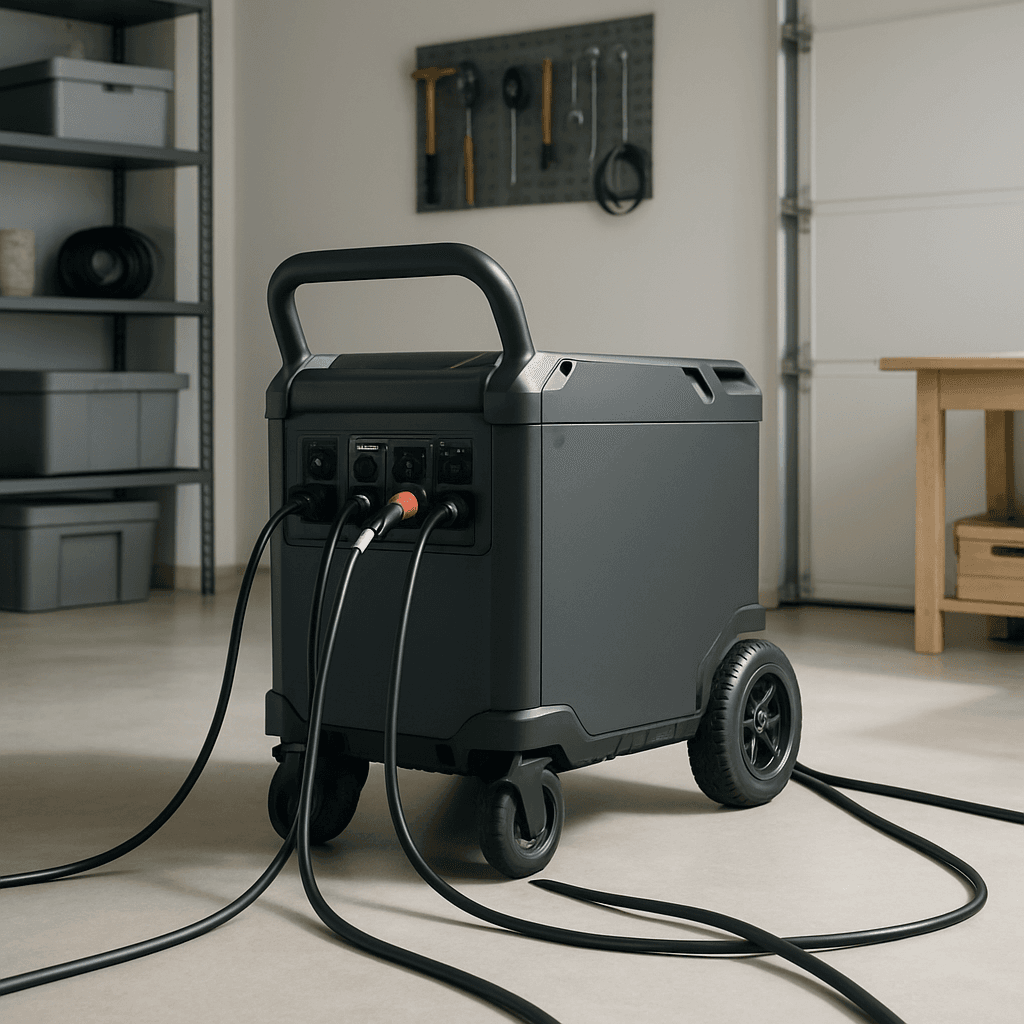
EcoFlow Delta Pro 3
4.4/5 in our review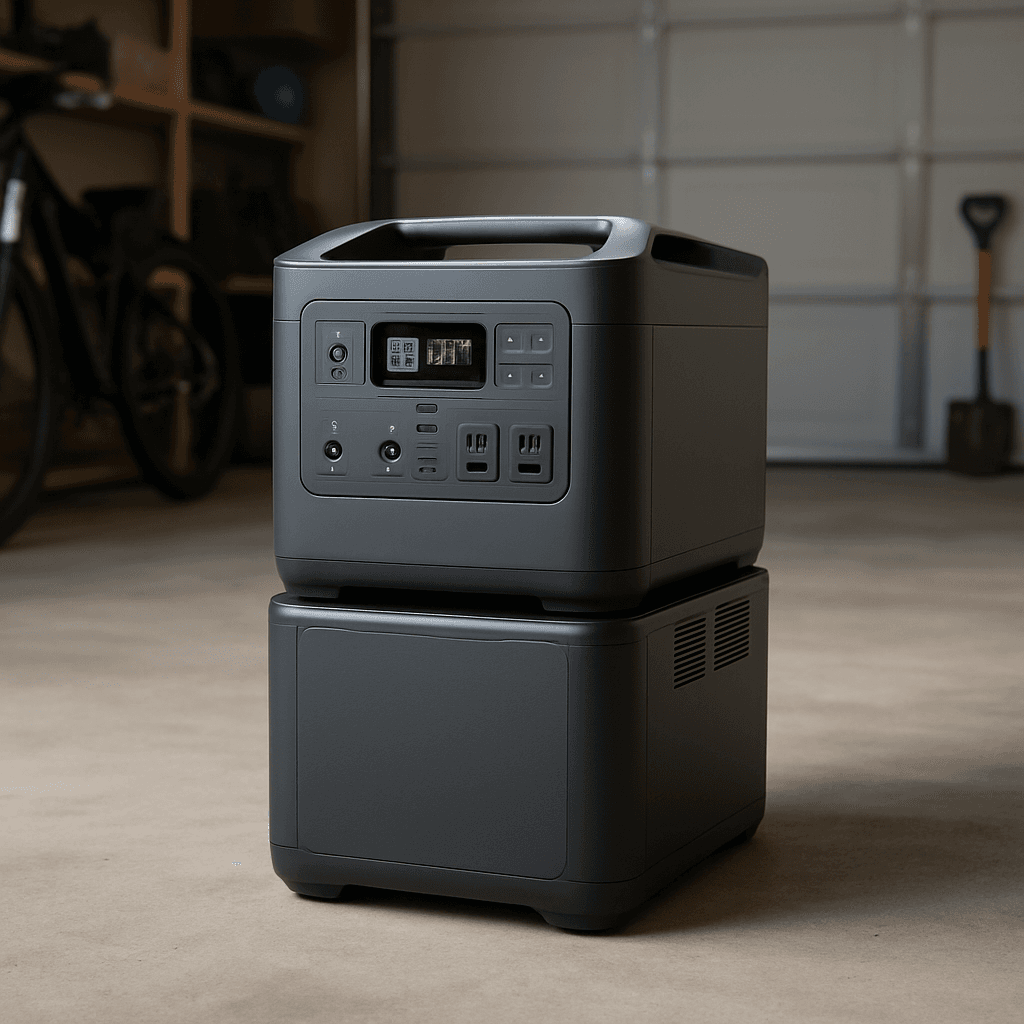
Jackery Explorer 2000 Plus
4.4/5 in our review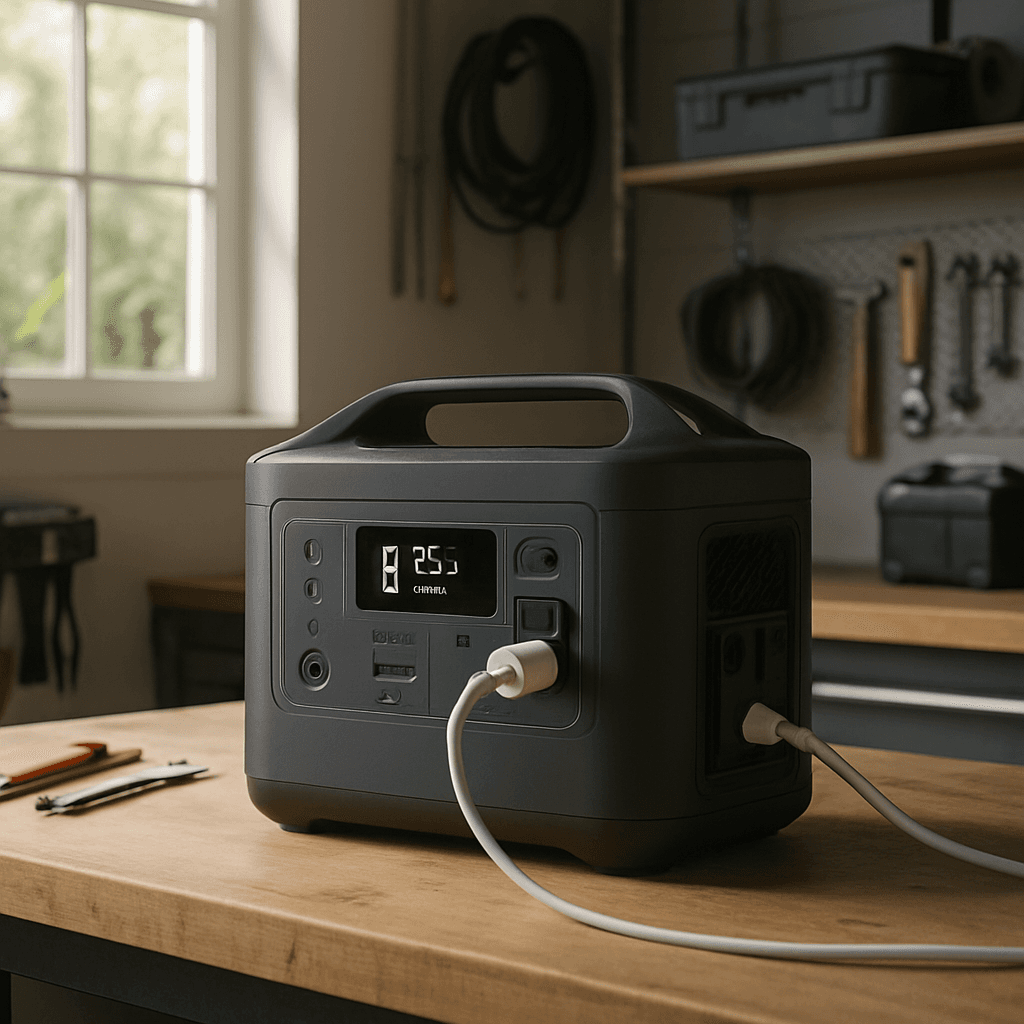
Bluetti Elite 200 V2
4.5/5 in our reviewRelated Articles
 Use Cases
RV AC Soft Start: Run a 13,500 BTU AC on a 2,000W Inverter, Not 3,000W
A soft start can cut a 13,500 BTU RV air conditioner's startup surge by about two thirds. What that means for inverters and power stations, the real runtime math, costs, and when it is worth it.
 Use Cases
Can a Power Station Work as a UPS for Your Computer or Router?
Many power stations offer a UPS or EPS mode that switches to battery power during an outage. Here's how it actually works, and where it falls short of a dedicated UPS.
 Use Cases
Portable Power Stations for Van Life: Complete Setup Guide
Everything you need to know to build a reliable power system for van life or full-time RV living, from sizing to solar to daily habits that make it last.