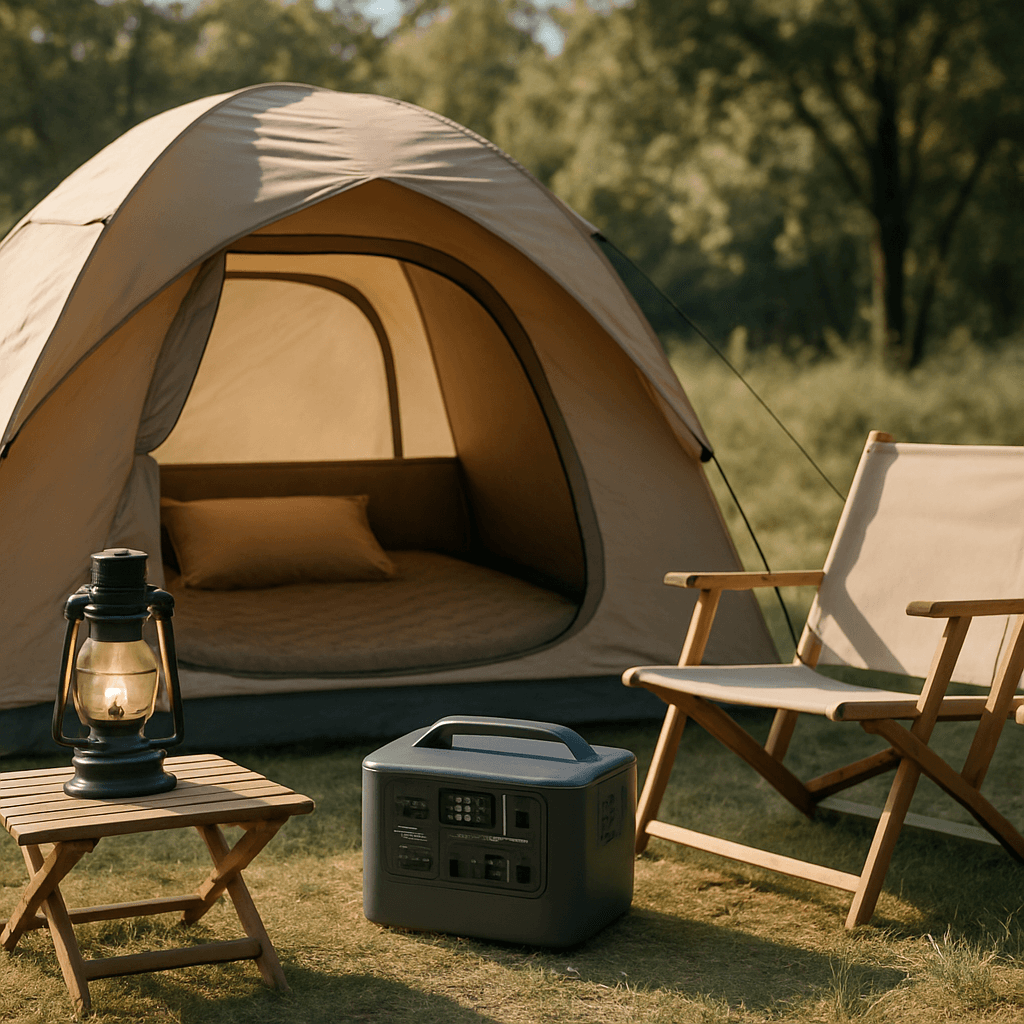
Most weekend camping trips need only 200–500Wh total — phone charging, lighting, and small electronics, no fridge — well within reach of an entry-level unit like the EcoFlow River 3 (245Wh). Weekend camping is one of the easiest use cases to size for — the loads are predictable, the duration is short, and you almost never need the largest capacity units on the market.
Typical Weekend Camping Load
| Device | Watts | Hours (2 days) | Total Wh |
|---|---|---|---|
| Phone charging (2 people) | 15W each | 4h total | 60Wh |
| LED lantern/string lights | 10W | 6h | 60Wh |
| Portable speaker | 15W | 4h | 60Wh |
| Camp fan | 20W | 6h | 120Wh |
| Camera battery charging | 20W | 2h | 40Wh |
| Total | ~340Wh |
This is a light, realistic weekend load — most solo or couple camping trips land in the 200-500Wh range total, well within reach of a single charge from an entry-level unit.
What This Means for Sizing
A 245-300Wh unit like the EcoFlow River 3 comfortably covers a typical weekend without needing a recharge. If you're bringing a cooler or mini fridge, a slightly larger unit like the Bluetti AC70 (768Wh) gives you meaningful headroom.
Adding a Cooler or Mini Fridge Changes the Math
A 12V cooler or mini fridge typically draws 40-80W and cycles on and off rather than running continuously, but budgeting for roughly 8-12 hours of cumulative runtime per day is a safe estimate. See our fridge runtime guide for exact numbers, since this single item often doubles or triples your total weekend power budget.
Camping at a Festival Instead?
Multi-day music festivals have a different, heavier load profile than typical weekend camping — see our power stations for music festivals guide if that's closer to your actual trip.
Group Camping Trips
If you're camping with a larger group sharing one power station, multiply your per-person device charging estimate by the group size, and add any shared equipment (a group cooler, shared lighting, a portable speaker system). Group trips often justify a mid-capacity unit like the Jackery Explorer 1000 v2 even without a fridge, simply due to the number of devices charging.
Don't Forget Solar for Longer Trips
For trips longer than a weekend, or if you want to avoid carrying a fully-charged unit as your only power source, pairing with a small foldable solar panel extends your trip indefinitely without adding much weight — see our solar panel bundle guide for good starter combinations.
Frequently Asked Questions
Is 245Wh really enough for a whole camping weekend?
For phone/device charging, lighting, and small electronics without a fridge, yes — 245Wh comfortably covers a typical 2-day trip with room to spare. Add a fridge or cooler and you'll want to size up significantly.
Should I bring a bigger power station than I calculate I need?
A little buffer (20-30% above your calculated need) is reasonable to account for colder weather reducing battery efficiency or an unplanned extra device, but there's rarely a reason to bring a 2,000Wh+ unit for a standard weekend trip — see our full sizing guide for the general framework.
Related Articles
 Use Cases
RV AC Soft Start: Run a 13,500 BTU AC on a 2,000W Inverter, Not 3,000W
A soft start can cut a 13,500 BTU RV air conditioner's startup surge by about two thirds. What that means for inverters and power stations, the real runtime math, costs, and when it is worth it.
 Use Cases
Can a Power Station Work as a UPS for Your Computer or Router?
Many power stations offer a UPS or EPS mode that switches to battery power during an outage. Here's how it actually works, and where it falls short of a dedicated UPS.
 Use Cases
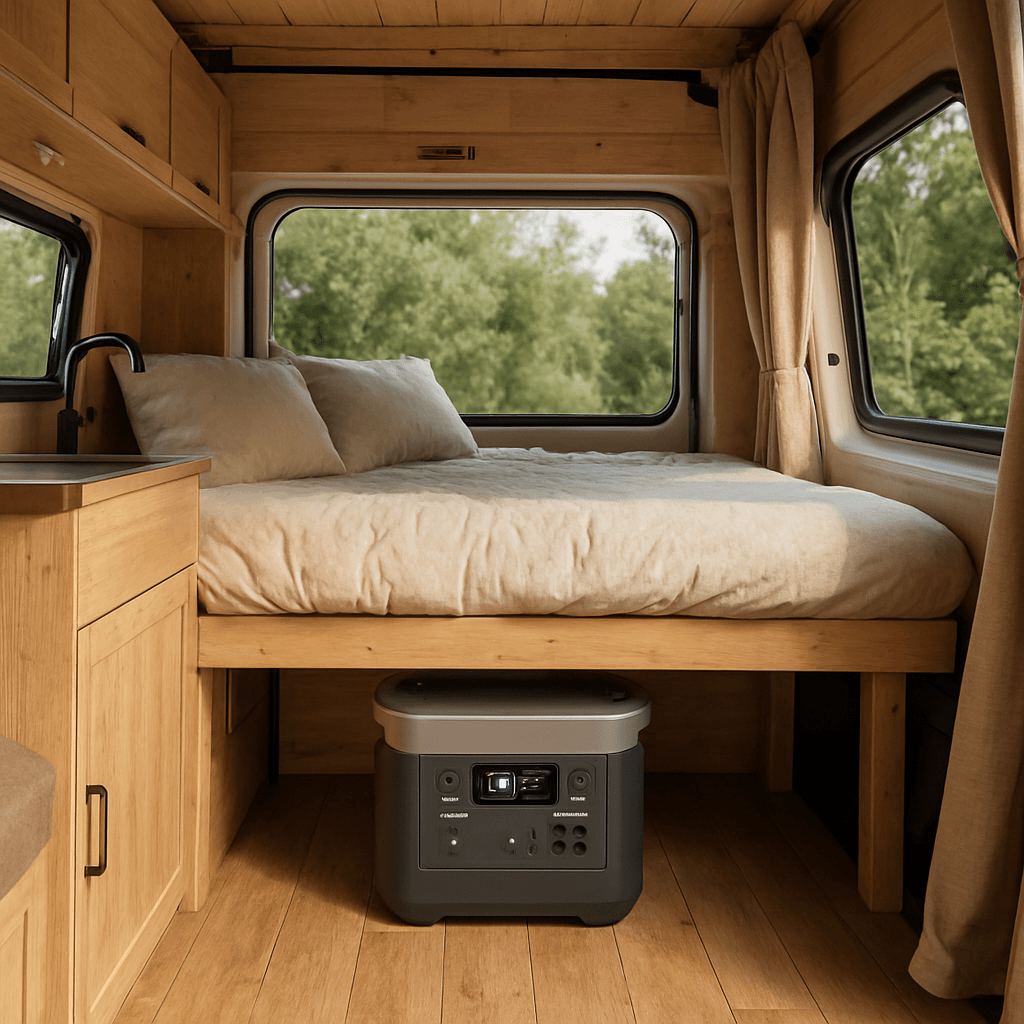
Portable Power Stations for Van Life: Complete Setup Guide
Everything you need to know to build a reliable power system for van life or full-time RV living, from sizing to solar to daily habits that make it last.